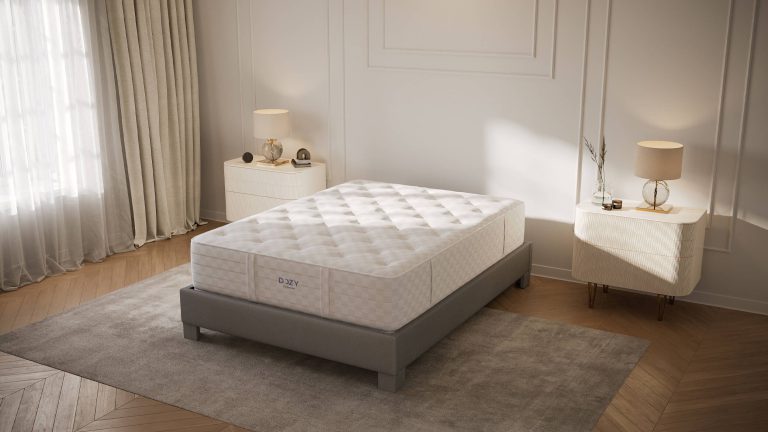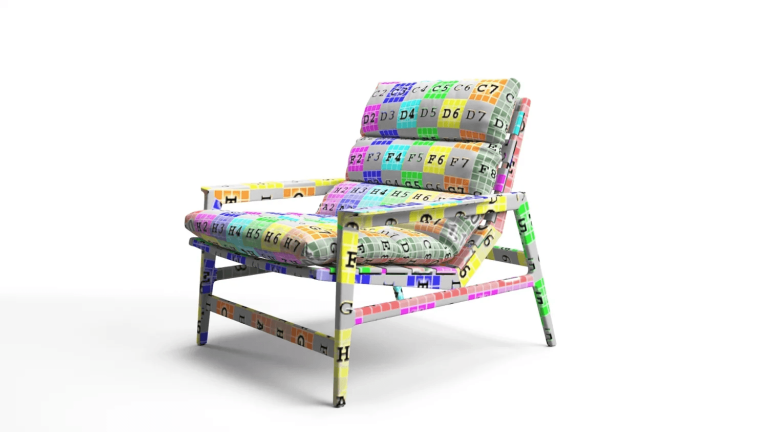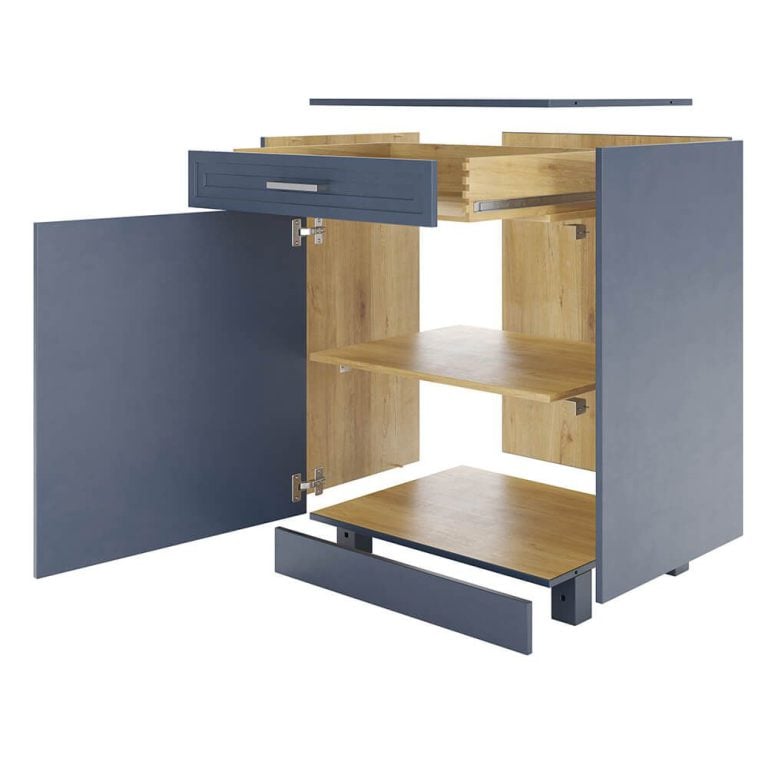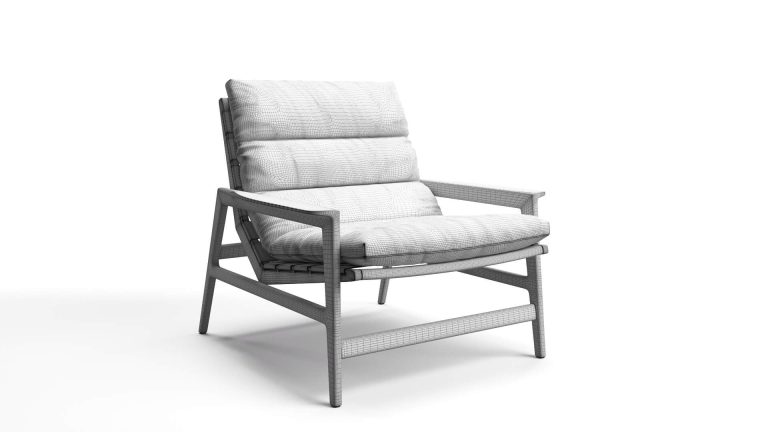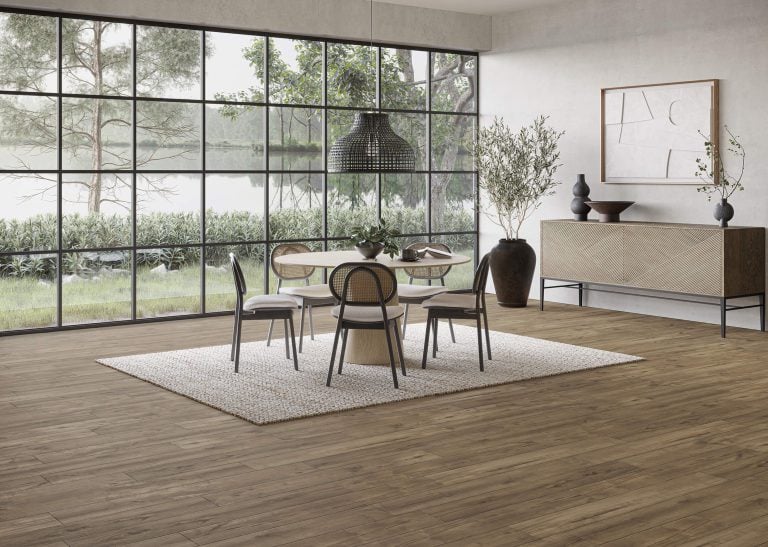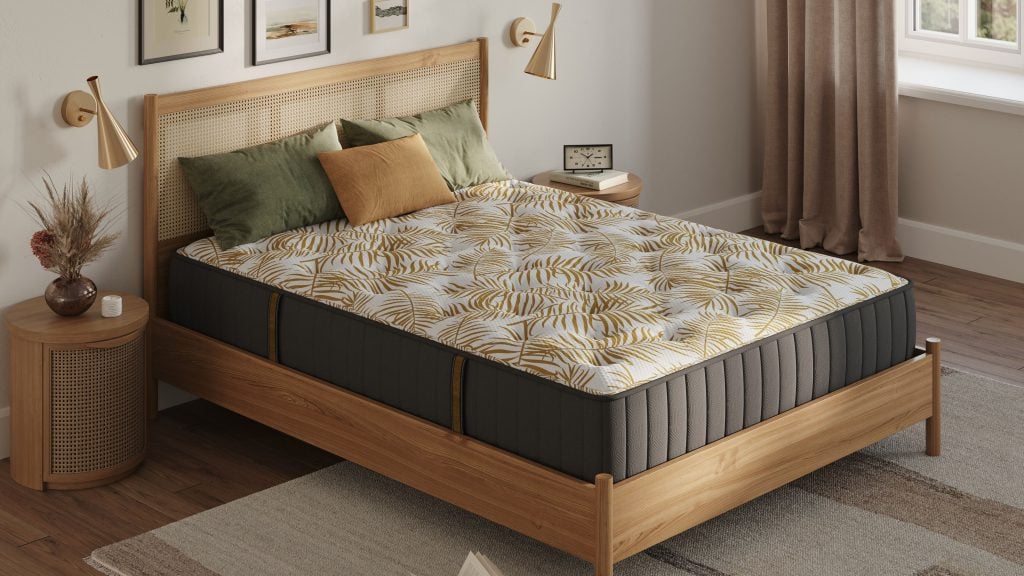
Mattress product rendering means making photoreal images and animations of mattresses from 3D models. You send your specs, layer stack and cover samples or photos. A CGI studio sends back white background shots, bedroom scenes, layer cutaways and short videos. Everything is built from the product data you approve, so the construction, proportions and cover match the real mattress.
If you make or sell mattresses and need images for product pages, marketplaces and campaigns across a whole range, this guide is for you. It covers when rendering beats a photoshoot, how to show what’s inside, how to keep a range consistent and how to get started. We do this as 3D rendering for mattress brands, and if you’re planning campaigns, our mattress advertising ideas show where these images end up.
Mattress Photoshoot or CGI: When Each One Makes Sense
A mattress shoot sounds easy: a bed, a room, a camera. In practice, mattresses are hard to photograph. Bright light washes out the quilting on white covers, big flat surfaces show every wrinkle, and you can’t show the inside without cutting a sample open.
| Task | Photoshoot | Mattress rendering |
|---|---|---|
| Show the layers inside | Needs a cut sample and careful styling | Built from the layer stack you approve |
| Every size in the range | One sample per size, or retouching | Same model, resized to each spec |
| New cover or color | New samples and a new shoot | Cover changed on the approved model |
| Same room for every model | Studio time booked again | Scene saved and reused |
| People sleeping or relaxing | Real talent, natural expressions | Possible, but takes more work to look natural |
| A one-off image of a sample you already have | Fast and simple | Needs a model first |
Photography still wins when you need real people and real emotion, or when you have a sample and need one quick shot. Many brands use both: CGI for the range, cutaways and seasonal updates, and photos for brand stories with people. We compared the two for bedroom furniture in bedroom renders vs photos.
Dozy Sleep: Layers, Bedrooms and Motion From One Model
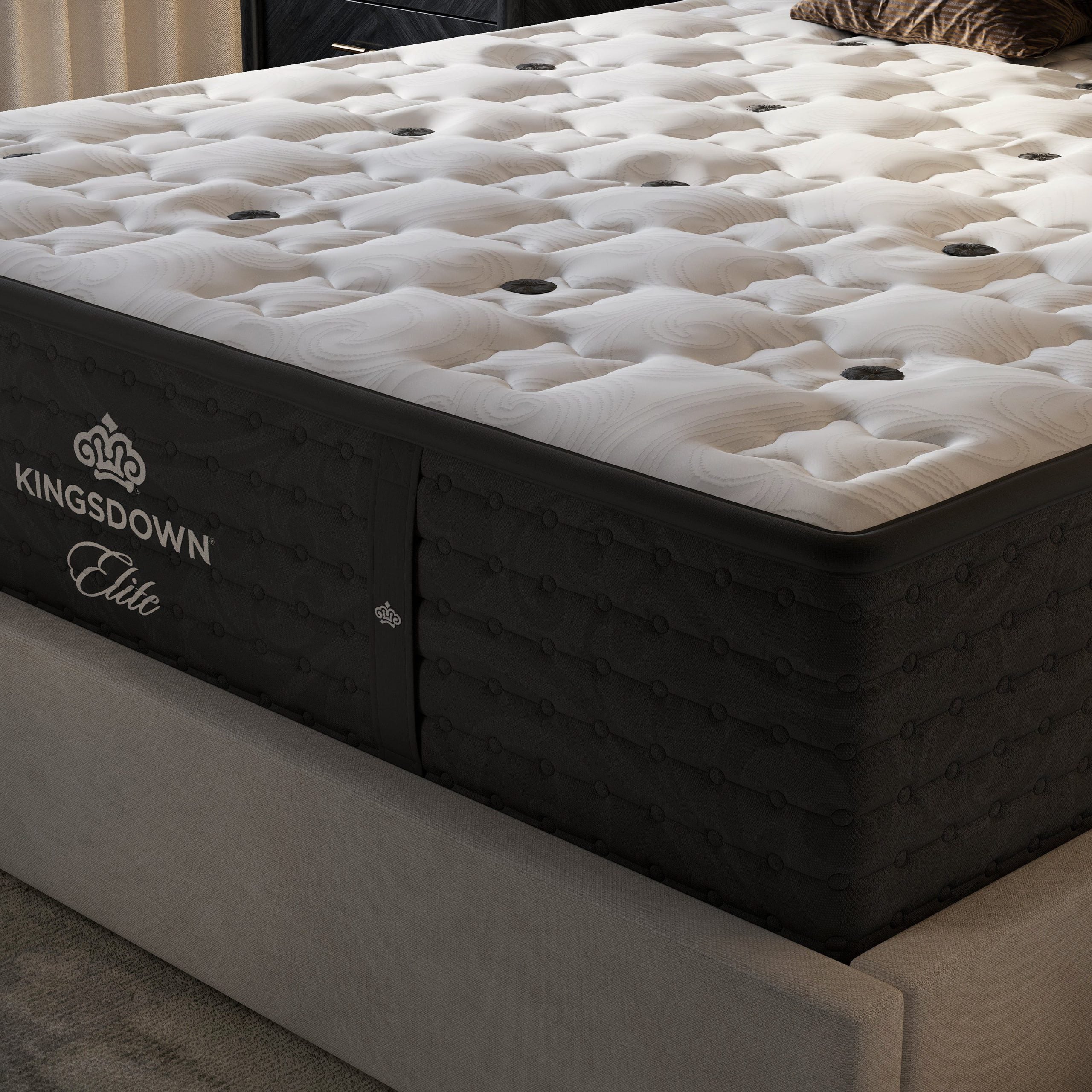
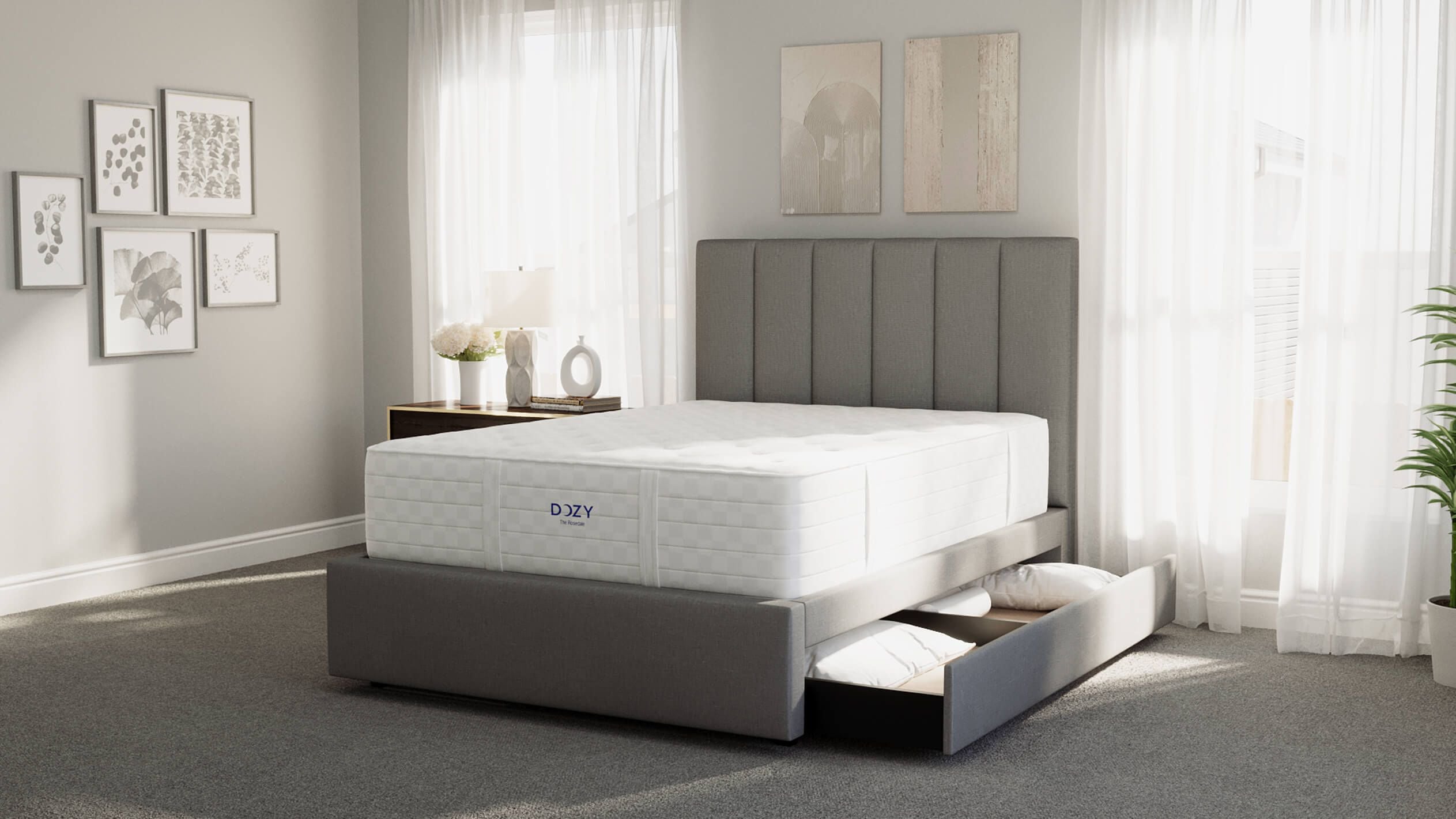
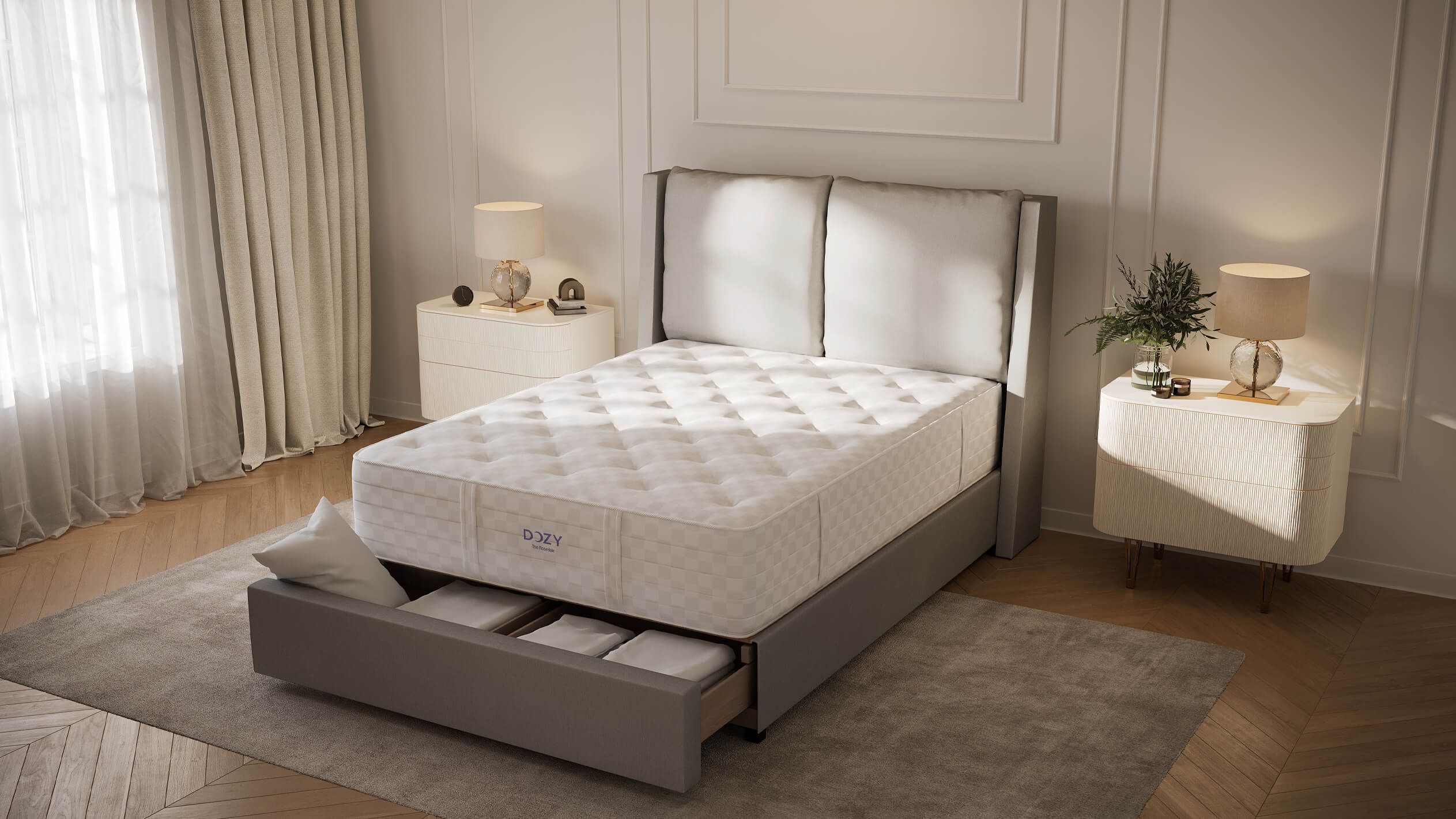
Canadian sleep brand Dozy Sleep has worked with us since January 2022. The same product models now carry their white background images, exploded views of the inner layers, bedroom scenes, 360 views and an animation with people that shows how the mattress responds when a sleeper turns. Silo images go to the product pages, and the lifestyle images and videos go to social media.
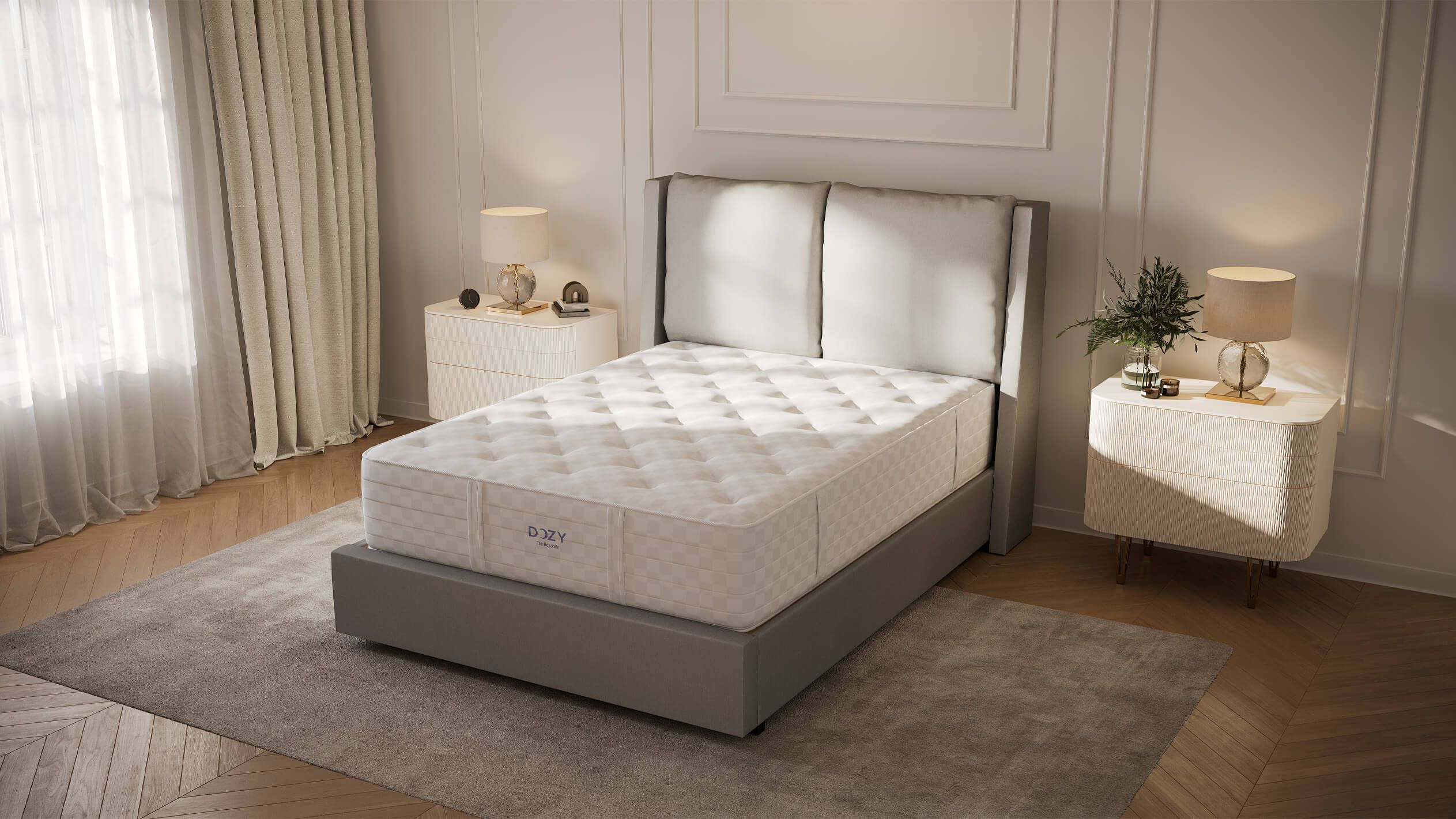
Other sleep brands use the same approach in different ways. Omi, an organic mattress maker, has run more than 30 projects with us since its first test project in 2019, for its website, digital catalog and social posts. Nolah started with white background renders from several angles and then added bedroom scenes matched to its own references. Doctor Sleep added lifestyle images with people and a seasonal animation for a Valentine’s offer.
Which Visuals Does Your Mattress Brand Need?
What do your buyers want to know? Pick the image that answers each question.
| Visual | What it answers | Where it is used |
|---|---|---|
| White background images from several angles | What does it look like? | Product pages, marketplaces |
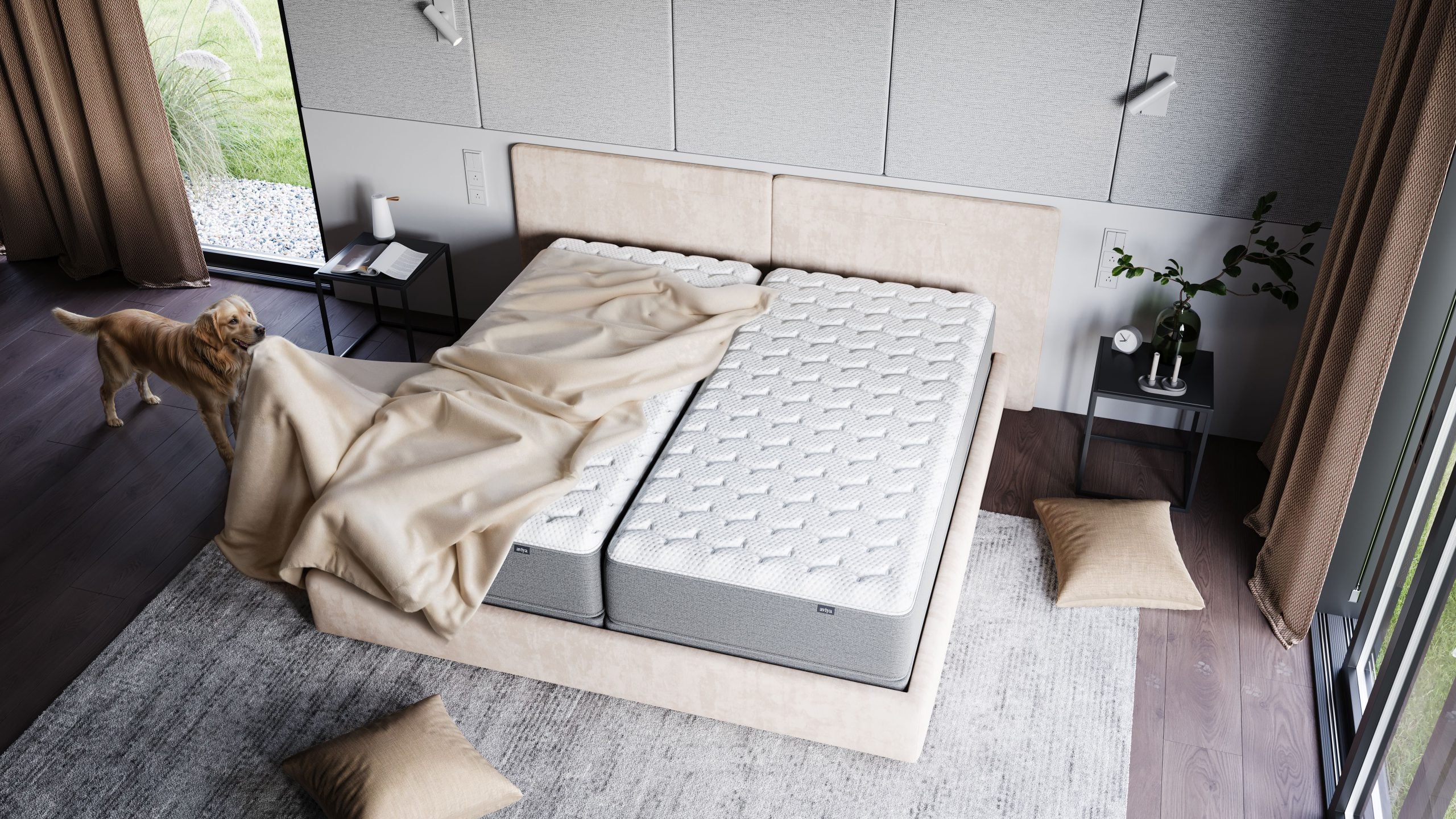
| Bedroom scenes | Will it suit my bedroom? | Homepage, social, catalog |
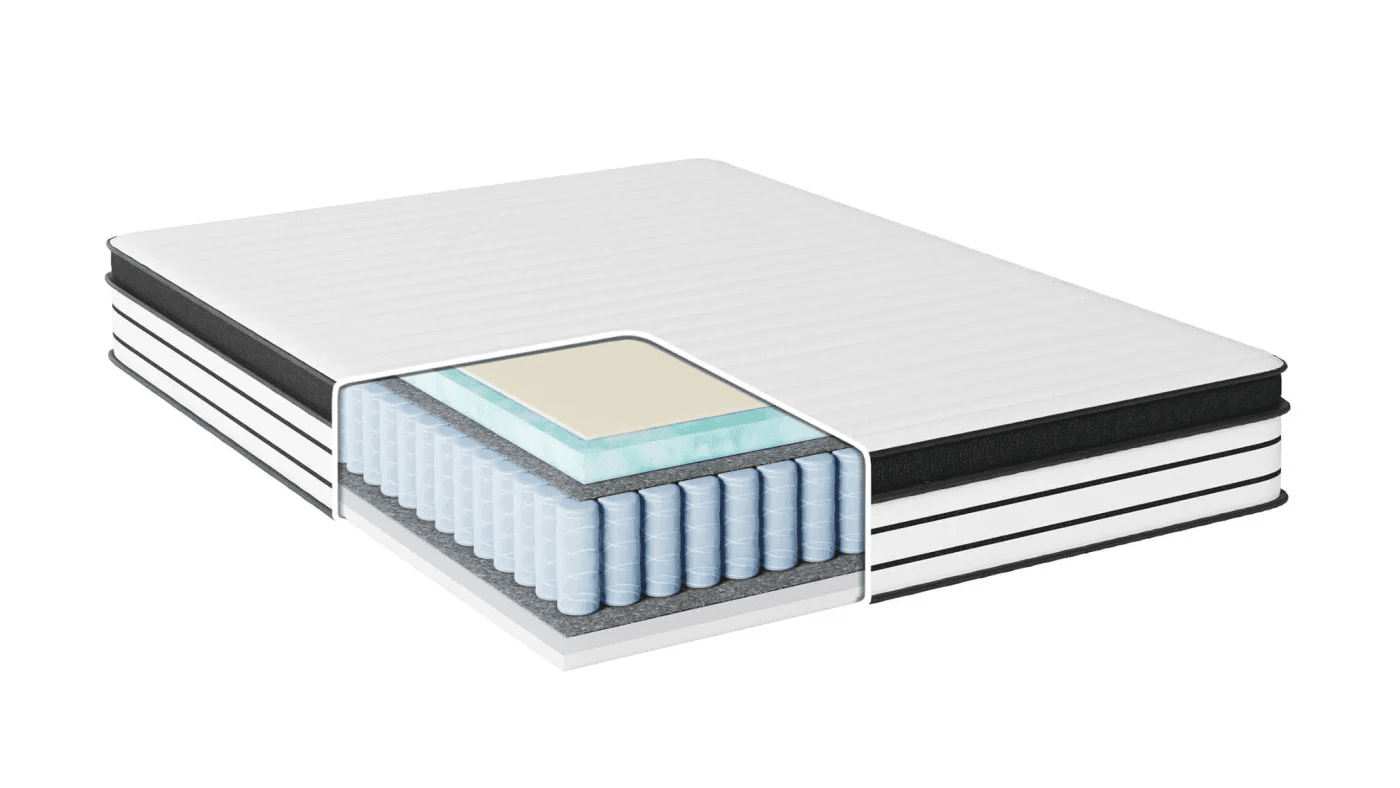
| Layer cutaway | What is inside? | Product pages, comparison charts |
| Cover close-ups | How is it made? | Product pages, marketplaces |
| Size lineup | Which size do I need? | Product pages, carousel ads |
| Base and frame views | Does it work with my base? | Product pages, retailer listings |
| Animation | How does it feel and respond? | Product pages, social ads |
| 360 spin or AR model | Can I look at it myself? | Product pages, marketplaces that support 3D |
Most brands begin with the first three. Close-ups, size lineups and animation usually come next, once the model is approved, since they reuse it.
How to Show Mattress Layers Accurately
Layers are what set one mattress apart from another, and shoppers compare them. A cutaway or an exploded view shows them all in one image, but only if it matches the product exactly.
- Order and thickness come from your spec sheet. We model each layer at its real height, so the proportions on screen match the mattress.
- Names match your product page. If your page says “cooling gel memory foam”, so does the callout.
- Colors help the reader, not mislead them. You can show foam in brand colors, but coils, fabric and edge support should look like what they are.
- One cutaway style for the whole range. Use the same angle, cut position and label layout, and models are easy to compare.
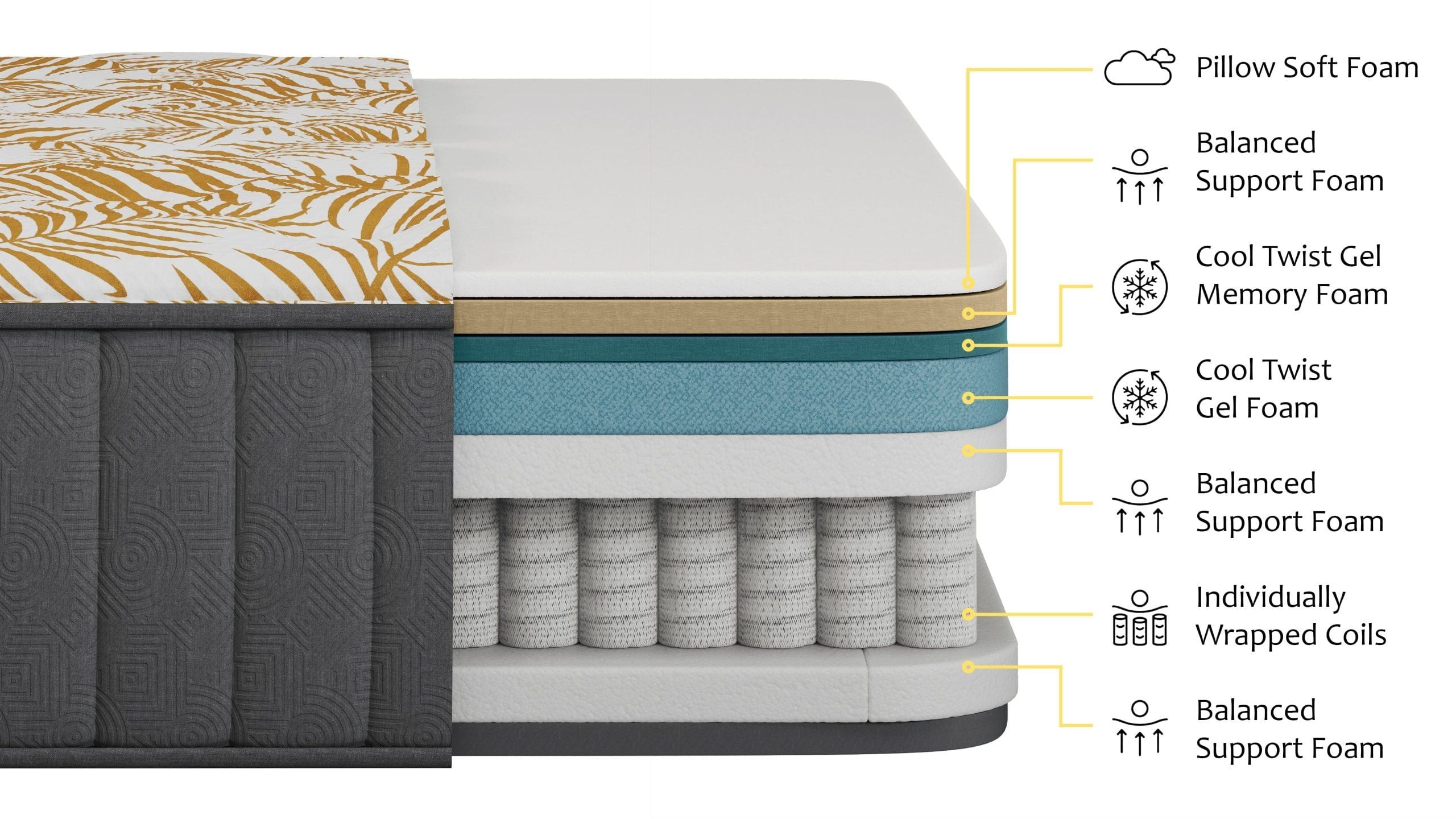
Cutaways are part of our product feature rendering. You can also animate the same model so the layers come apart one by one.
What Mattress Images Can and Cannot Confirm
A render shows construction, proportions, cover pattern and color, and how the mattress sits on a frame or base. It can’t show firmness, temperature or how the mattress feels after a month. Those claims go in your product copy, backed by your own tests and certifications. Images that stick to what they can show will support those claims.
How to Keep a Mattress Range Visually Consistent
Shoppers compare models side by side, and that only works when every image follows the same rules.
- Fix the camera angles once. Front, top, side, 45 degrees and close-up, at the same height and distance for every model.
- Use one room per collection. Same bedroom, bedding and styling, so only the mattress changes.
- Keep scale real across sizes. A twin and a king in the same room should look like a twin and a king.
- Light every model the same way. With matching light, white covers don’t look warmer in one image and cooler in the next.
- Apply one cutaway and label style. See the layers section above.
What We Need From You
- Specifications for every size: length, width and height
- The layer stack, top to bottom, with thicknesses and the names you use for each layer
- Cover photos or a physical sample, plus quilting, border, handle and label details
- Bases, frames or adjustable bases you want to show
- References for rooms, bedding and light, or your existing photos
- Where the images will be used, so we can agree on formats and angles
From Spec Sheet to Approved Images
- Brief and input files. You send the specs, layer stack, cover references and where the images will run. We confirm the scope and price.
- Geometry and clay approval. We build the model and show it in neutral gray, so you check shape, proportions and layer heights before any texture goes on.
- Covers, foams and light. The cover fabric, quilting, border and labels are added and lit in a neutral studio setup.
- Scenes and cutaways. The approved model goes into white background shots, bedroom scenes and layer views.
- QA and delivery. We check every image against the spec and your comments, then deliver the final files.
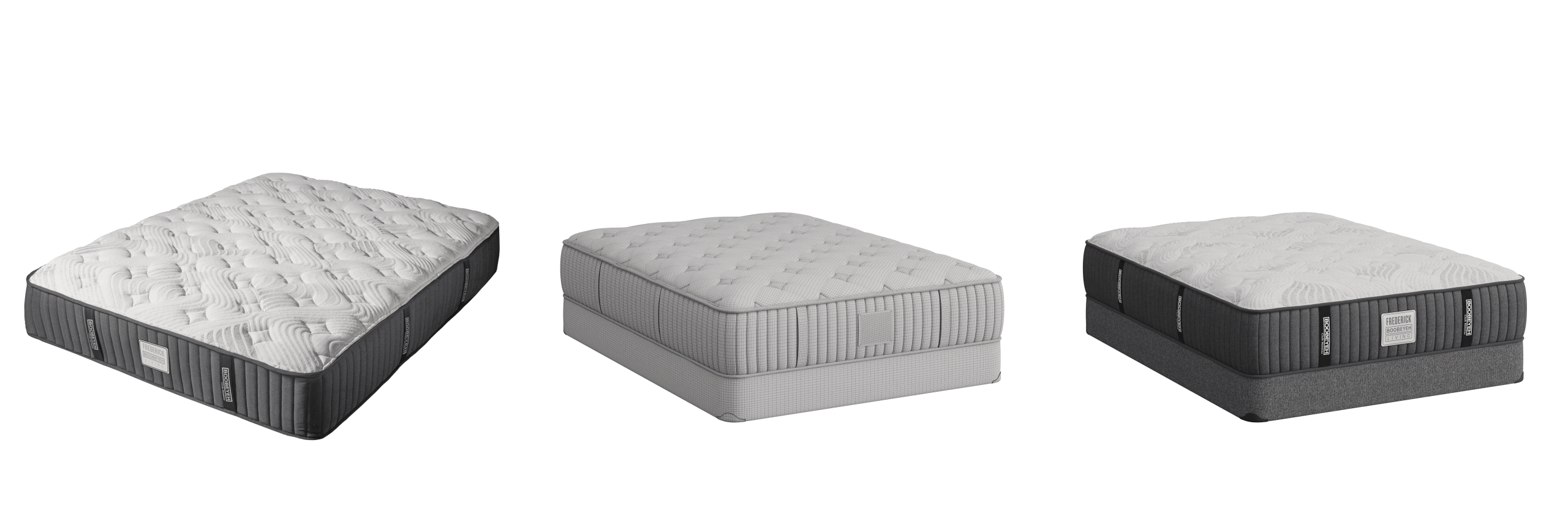
Before you sign off, check each image against this list:
- Layer order and heights match the spec sheet
- Cover pattern, quilting and border match the sample
- Logos, labels and handles are in the right place
- Size and proportions are right for the size shown
- The image has the format and resolution the channel needs
What You Get
- High-resolution JPG files for websites and marketplaces
- PNG or TIFF files for print and catalogs, with a transparent background for white background images where you need it
- MP4 files for animations and short videos
- The approved 3D model, ready to reuse for new covers, sizes and campaigns
- GLB or USDZ files for 360 viewers and AR, where your platform supports them
Which Mattresses to Start With
Start with one mattress: your best seller, the one with the trickiest construction, or the one in your next promotion. One approved model gives you a white background set, a cutaway and a bedroom scene, enough to test on a real product page. The rest of the range then follows the same angles, rooms and cutaway style.
Start With One Mattress
Send us the specs and cover references for one mattress and tell us where the images will be used. We will recommend the formats, agree on the scope and price, and render the first images so you can judge the quality on your own product.
Send One MattressFAQ
Can you render a mattress from photos and a spec sheet?
Yes. Clear cover photos from several angles and a spec sheet with dimensions and the layer stack are enough for most mattresses. A physical cover sample helps if the fabric has a fine texture or sheen.
Can you show what is inside the mattress?
Yes. We build each layer at its real thickness and show it as a cutaway, an exploded view or an animation where the layers come apart.
Can one model cover every size and cover variant?
Yes. Once the model is approved, we build the other sizes from your specs and put new covers on the same model. Variants usually cost less than the first model, because the approved geometry and scenes get reused.
Can you show a mattress on an adjustable base?
Yes. We can show the base in its different positions, as stills or an animation, using the specs you send.
Can the model be used for AR or a 360 viewer?
Usually, yes. We can prepare the model as a GLB or USDZ file for platforms that support 3D and AR. Each platform has its own requirements, so we check them before export.
What does mattress rendering cost?
It depends on how many models, sizes, covers and image types you need. You can request our price list on the mattress rendering page, and we agree on scope and price before work starts.