Situational marketing is a brand’s response to any event relevant to a mass audience. Usually, those are holidays, social events, and pop culture or sports sensations. Content tied to such a moment feels timely, so it travels further on social media than a regular product post.
But how exactly does situational marketing help a business, and how does a home brand make it work? Below, we explain the term, show real examples and share a holiday calendar to plan around. As a 3D rendering studio, we create holiday scenes for furniture and decor brands every season, so the examples come from our own projects.
Situational, Seasonal and Real-Time Marketing: The Difference
The three terms often get mixed up. Here is how they compare:
| Type | Trigger | Timing |
|---|---|---|
| Situational marketing | A specific holiday or event | Planned for a known date |
| Seasonal marketing | A season, such as summer or winter | Planned ahead, runs for weeks |
| Real-time marketing / newsjacking | Breaking news or a viral moment | A reaction within hours |
The best-known real-time marketing examples are brand replies to a viral meme, posted while it’s still trending. For furniture and decor brands, the first two types work better, because product visuals have to be ready before the date arrives.
1. Generate New Leads
Content about a popular event reaches people who don’t follow the brand yet. A holiday post shows up in feeds and searches next to everything else people browse that week, which puts the brand in front of new prospects. In furniture marketing, holiday room scenes are a common way to do this. Many of these leads are organic: they found the brand because the content matched what they were already doing, such as decorating for a holiday. The sales team still has to follow up, but it starts from a warmer point than a cold ad.
2. Boost Sales
Holiday discounts and limited offers create urgency, and situational content is how shoppers learn about them in time. Special offers work best when they’re announced before the event, through social posts with holiday-themed product images, event-related videos for the website and newsletters that build up to the sale date. When the discount starts, the audience already knows about it. That’s the job of holiday advertising: carrying the offer to people while they’re planning their purchases.
3. Create Viral Content
Festive images and videos, holiday-themed articles and news-related posts share one quality: they’re relevant right now. That’s why people share them more readily than evergreen content. Reacting quickly to the news of the day is also one of the recurring product advertising trends. The catch is a short shelf life. A Valentine’s Day animation loses its pull on February 15, so timing matters as much as the visual itself. Between holidays, sports events and cultural moments, marketers always have a next occasion to prepare for.
4. Enhance Customer Engagement
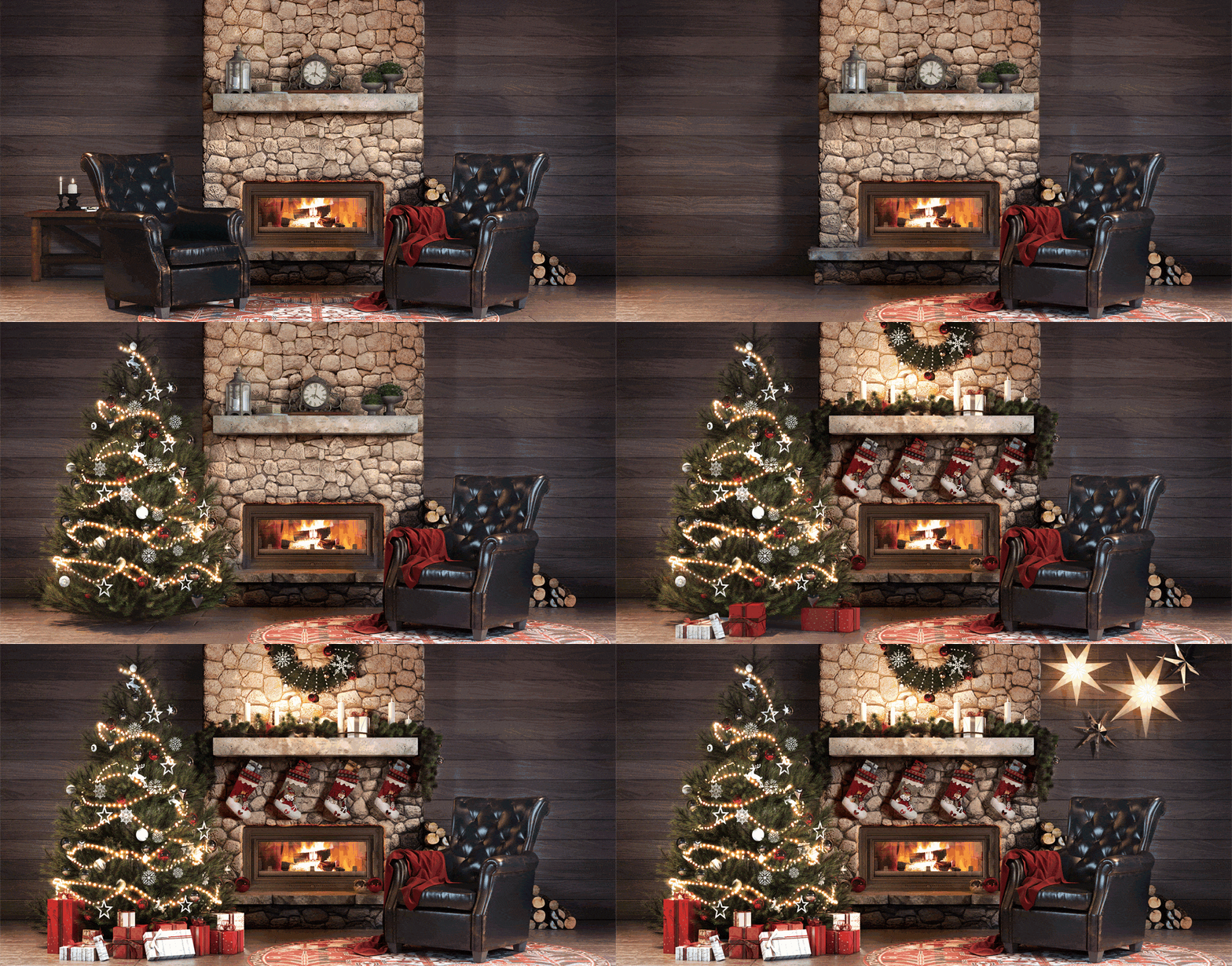
Likes, shares, comments, views and subscriptions all count as customer engagement. They show that people don’t just scroll past a post but actually stop to read or watch it, and content about a familiar event makes that stop much easier. Regular communication matters too: social media marketing and conversational marketing keep a brand in touch with customers and make it feel more relatable. Interactive visuals give people another reason to react. AR/VR, 3D configurators, product videos, animated social media video production and 360° views invite people to explore a product instead of just looking at it.
5. Improve Brand Awareness
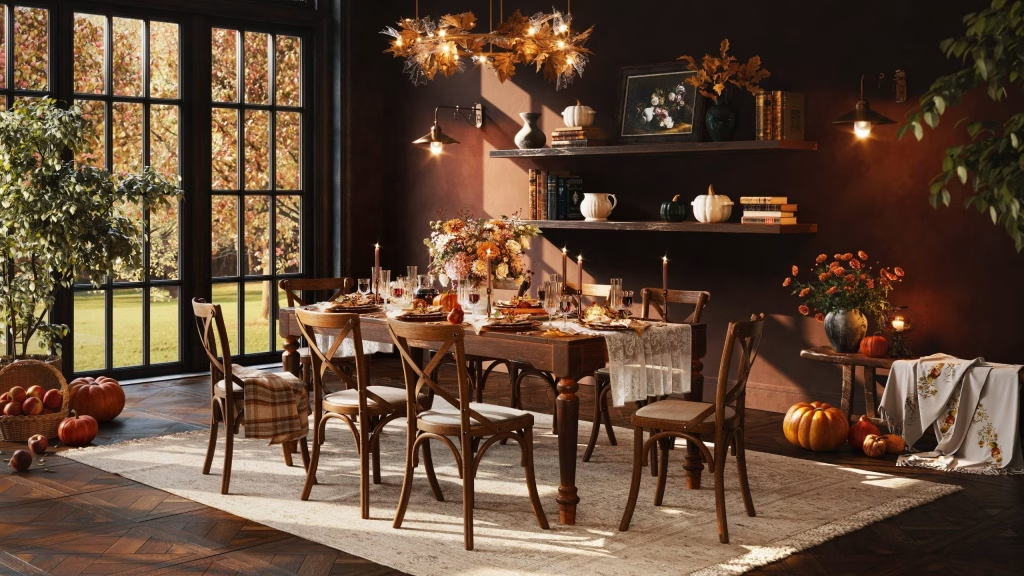
Brand awareness measures how recognizable a company is to its audience. Holiday marketing campaigns help because they put the brand in front of the same people at the same points every year, when attention is high. Recognition built this way also helps later, when a brand weighs brand stretch vs brand extension to enter new categories. Marketers can prepare festive images and animations ahead of major holidays and join relevant social trends. CGI rendering services let brands show products in seasonal settings without staging a new photoshoot for every holiday.
Situational Marketing Examples: Halloween Scenes
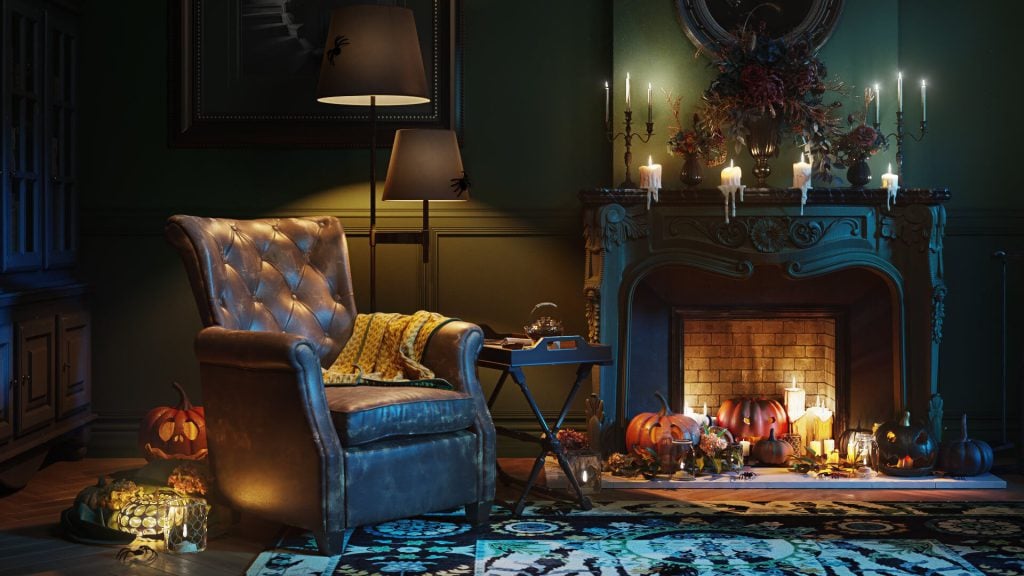
Halloween is a good test for situational marketing in the home category. The decor is instantly recognizable, and shoppers start looking for ideas in early fall. Here is how it looks in practice.
Client Example: Holiday Lifestyle Scenes for a Plant Brand
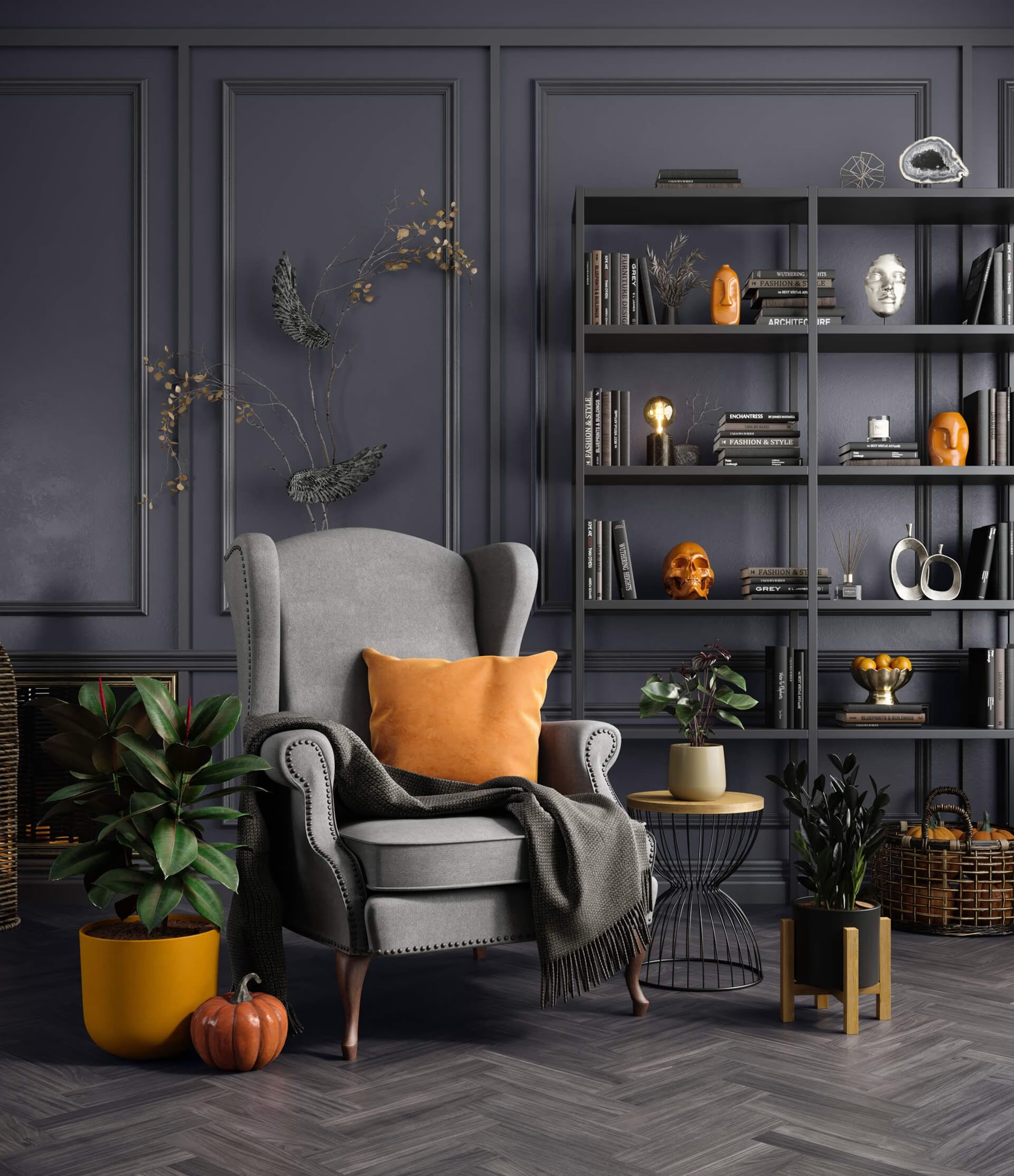
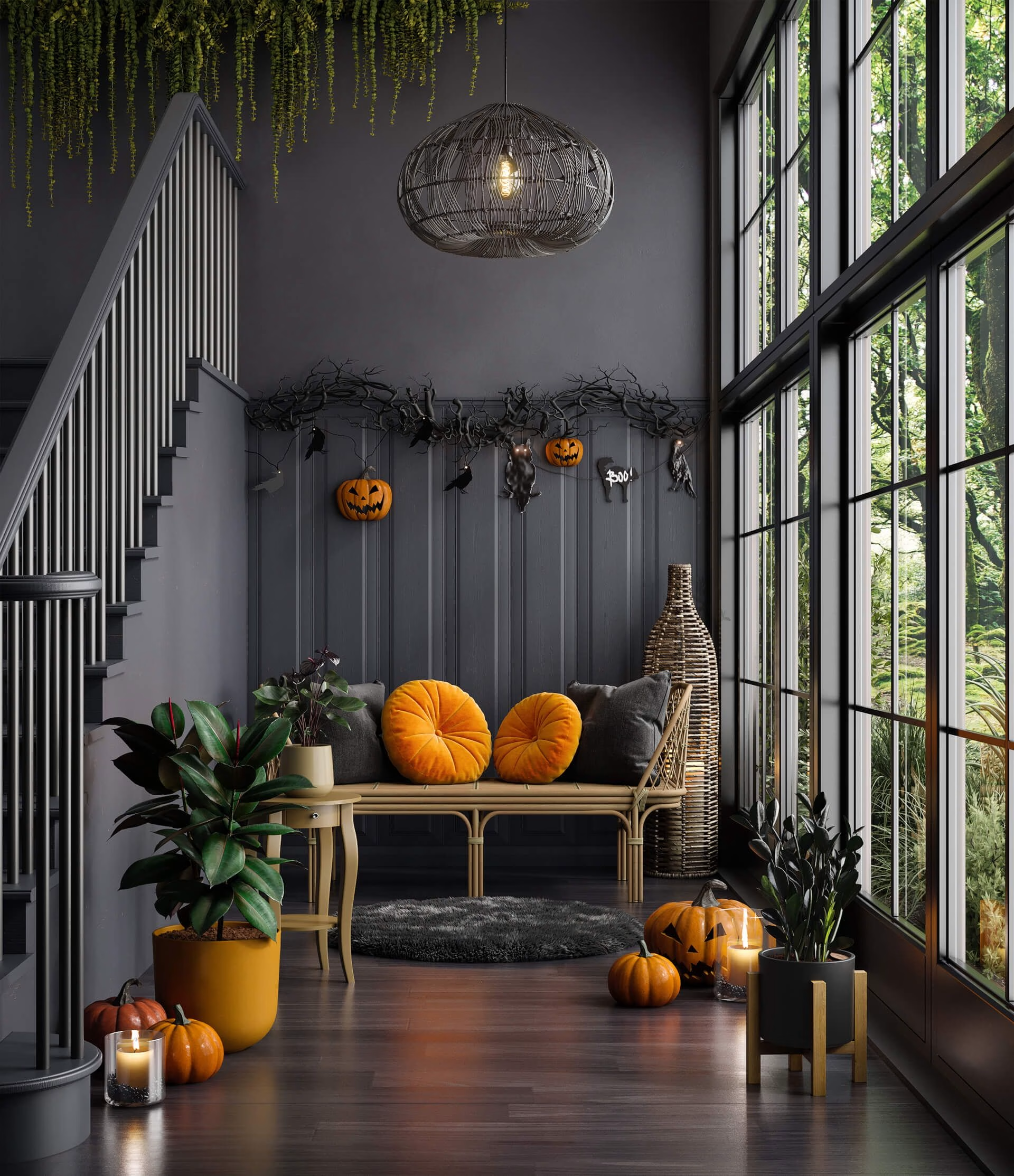
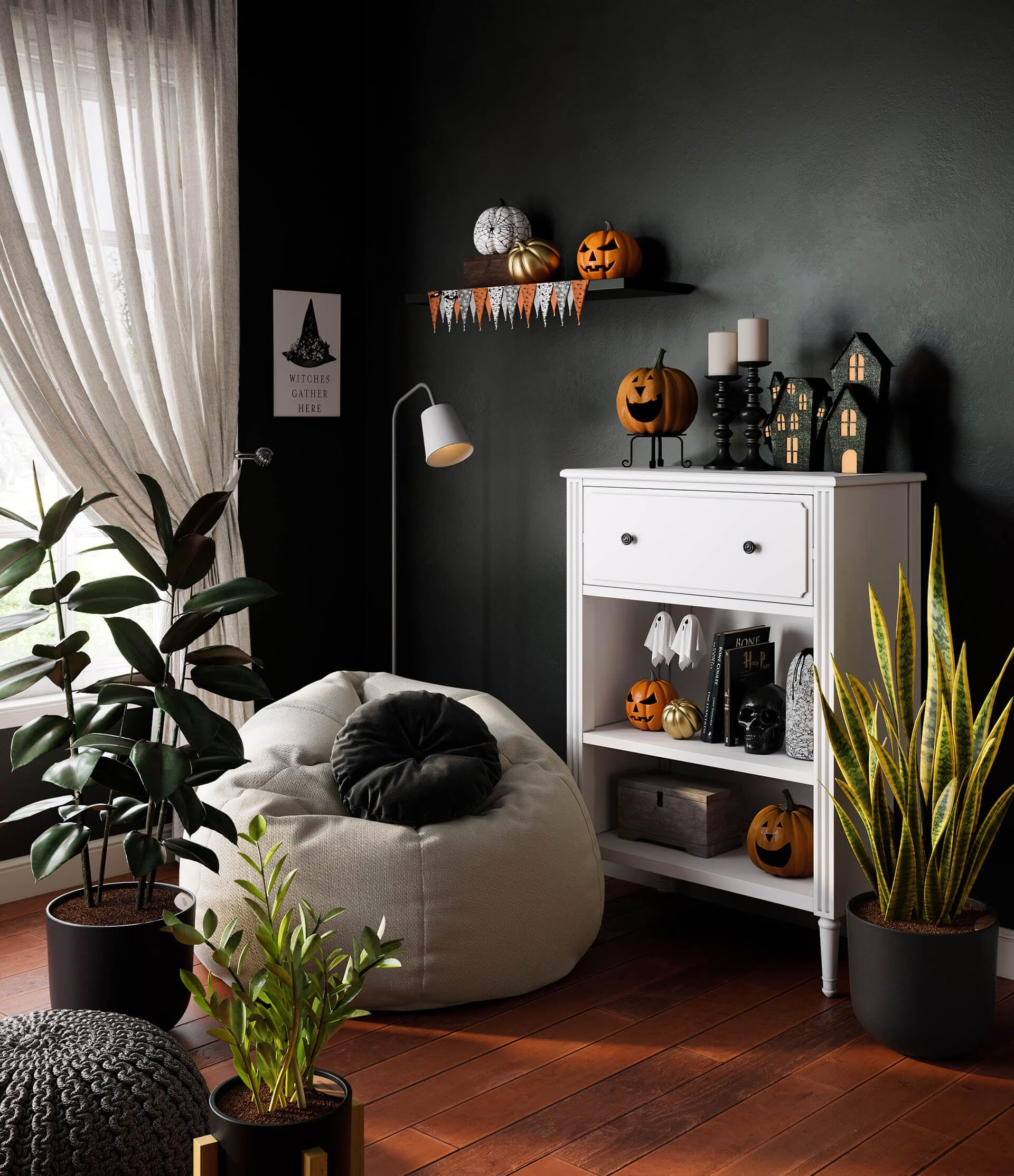
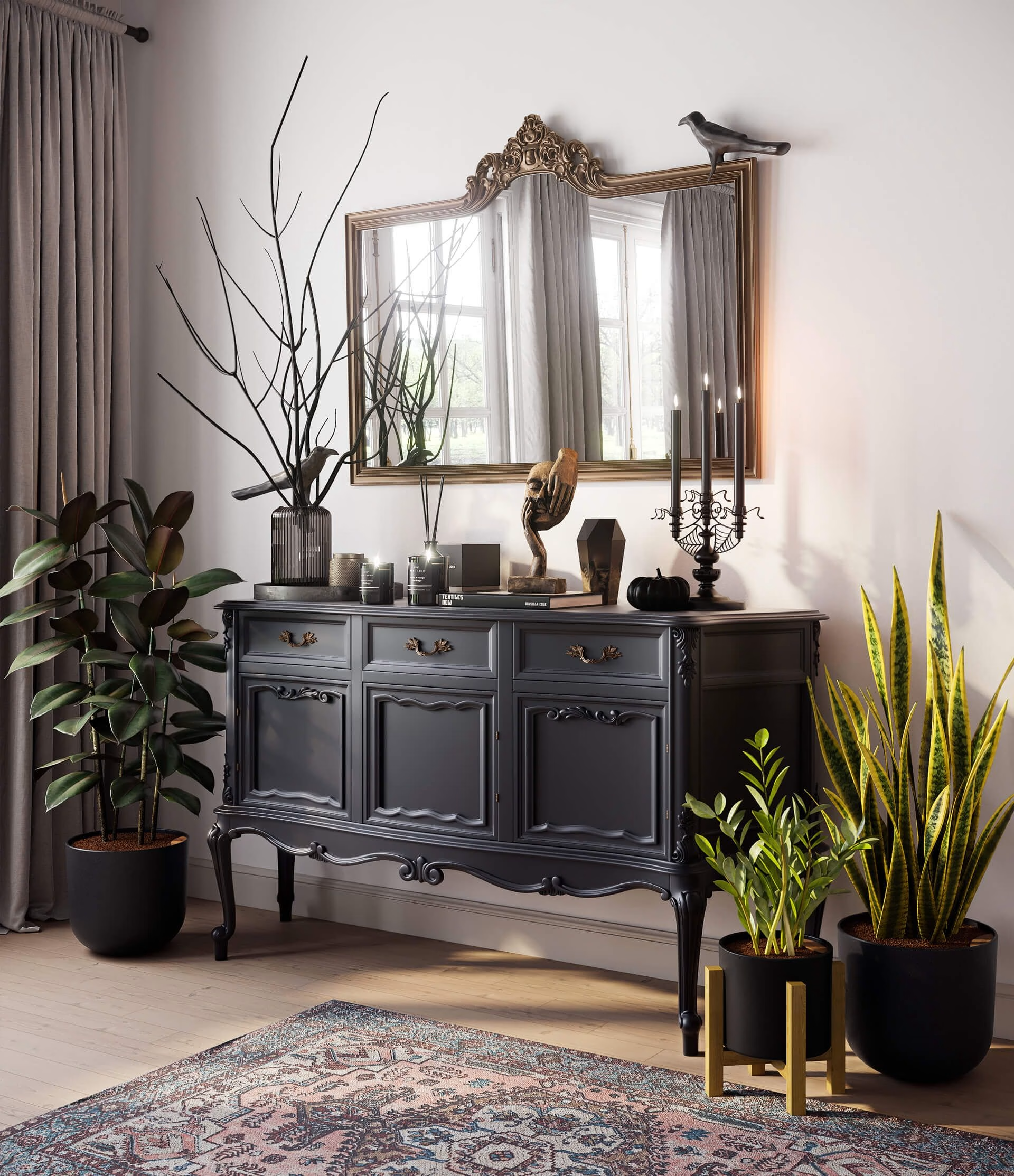
Easyplant, a houseplant brand, ordered a series of holiday lifestyle renders for its website and social media, Halloween included. The scenes range from a playful entryway with jack-o’-lanterns and a “Boo!” garland to a dark reading corner and a gothic sideboard with crows and black candles. In every frame, the plants stay the brightest, greenest thing in the room. The full project is in our Easyplant case.
One Scene, Day and Night
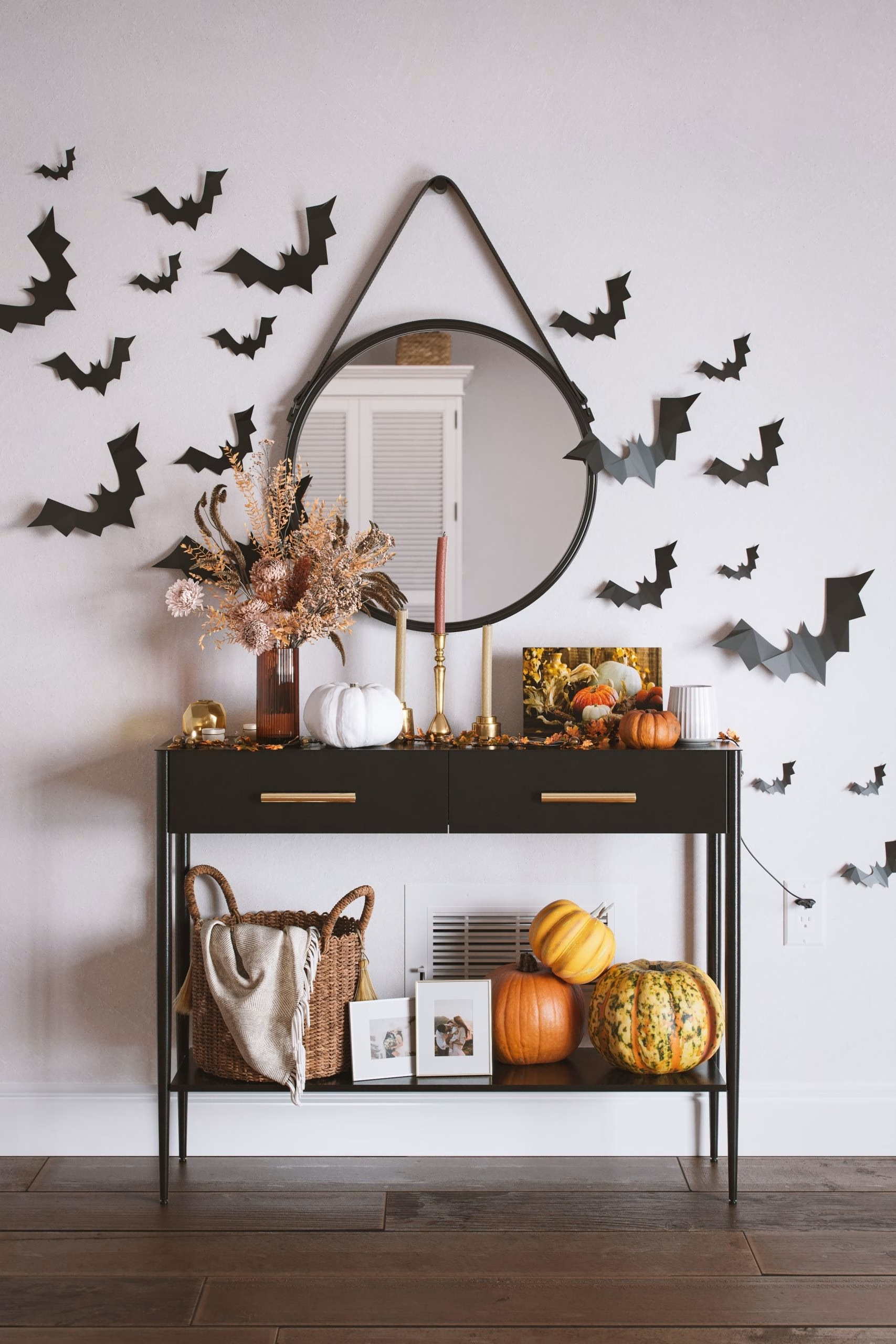
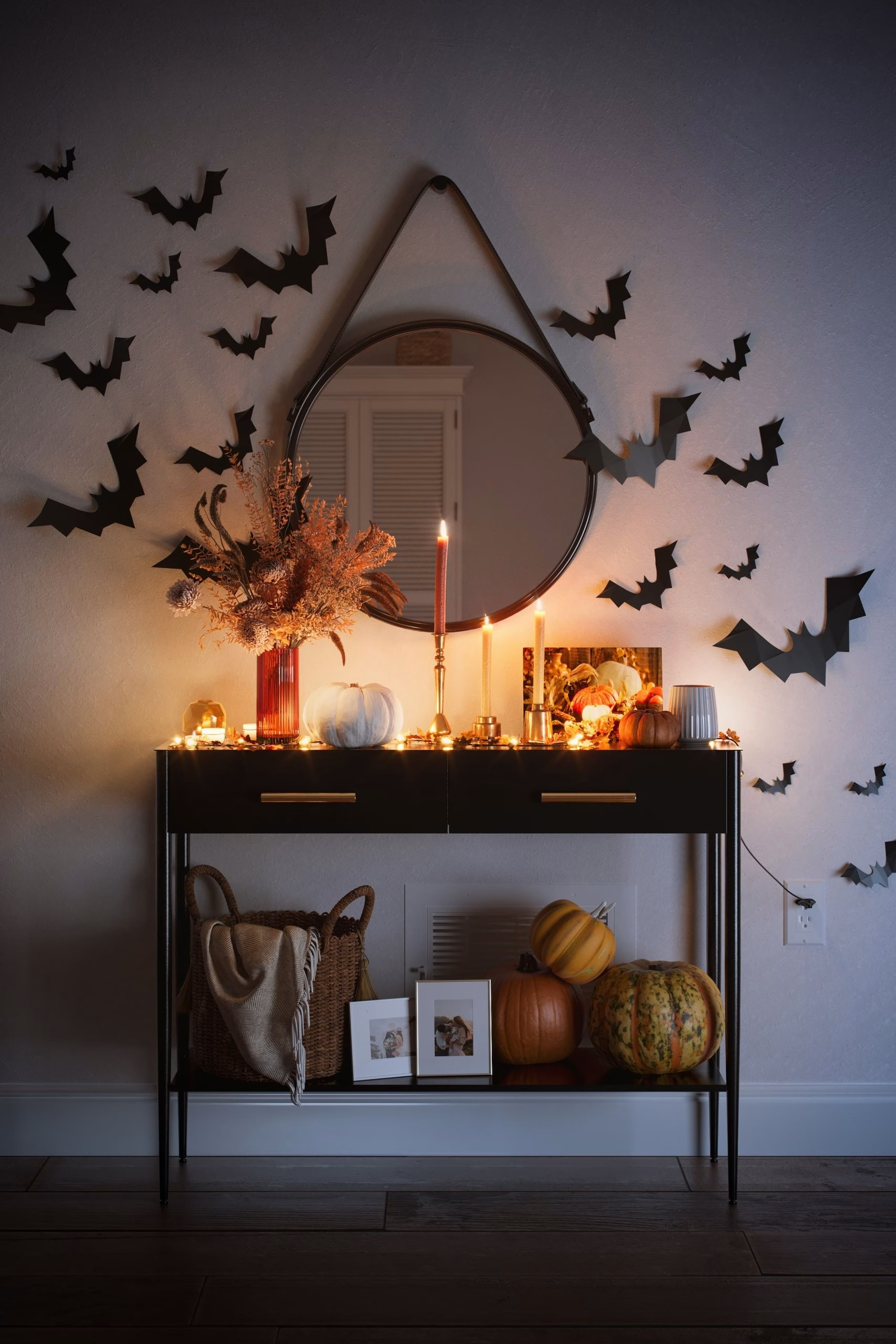
Here is the same console table with bat decor, rendered in daylight and in evening light. A brand gets two moods from one scene: a bright version for product pages and a darker one for social media closer to October 31.
Moody, Not Costumed
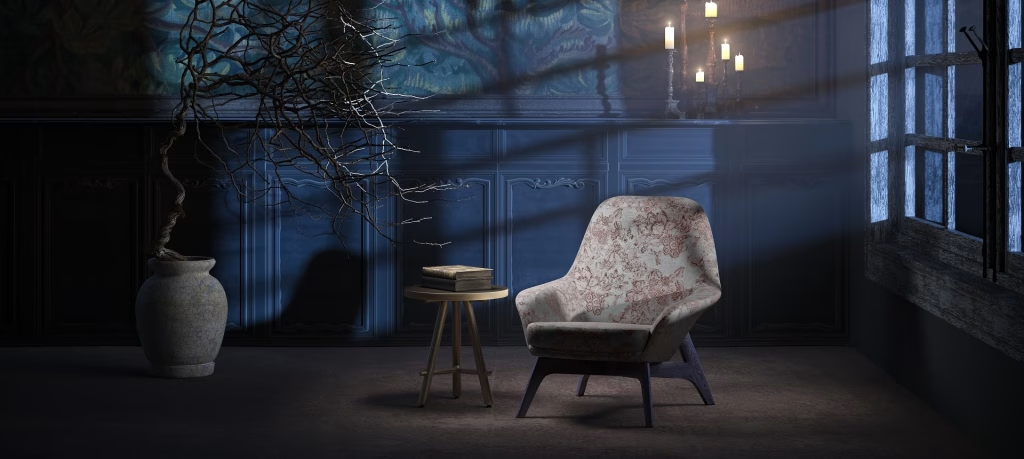
Halloween mood doesn’t have to come from props. This scene has no pumpkins at all: a toile lounge chair sits in a dark blue room with moonlight, bare branches and candles. The chair stays the hero, and the image still reads as late October.
Outdoor Spaces
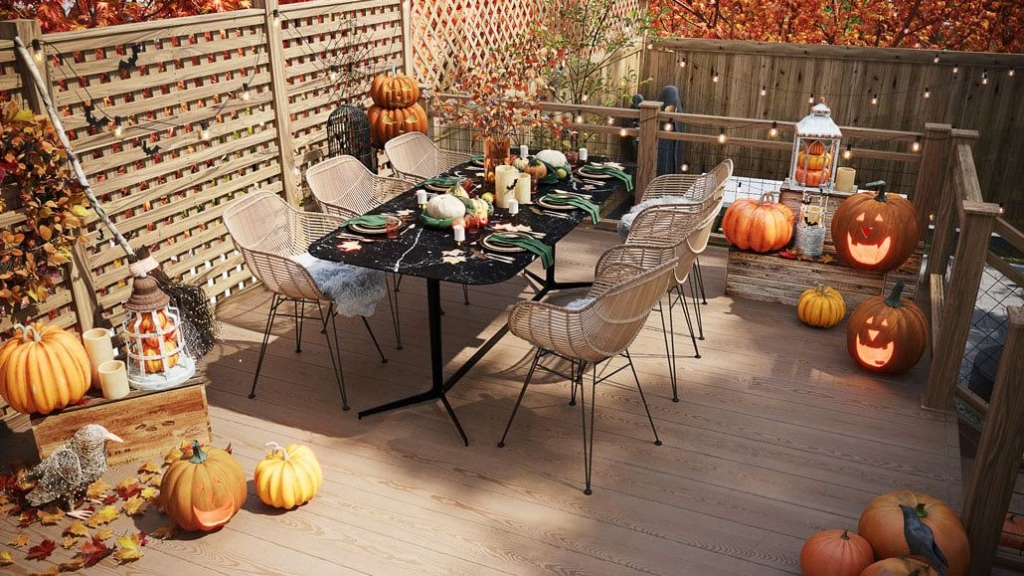
Halloween happens on the porch, too. A patio set with jack-o’-lanterns shows outdoor furniture in a season when most brands stop promoting it. See more examples of our outdoor furniture rendering. And for December campaigns, browse our winter 3D rendering ideas.
A Holiday Marketing Calendar for Home Brands
Use this calendar as a base for holiday marketing ideas throughout the year. It covers the US occasions that matter most for furniture and decor.
| Holiday | When | What to show |
|---|---|---|
| Valentine’s Day | February 14 | Bedrooms and dining setups for two, warm lighting, red and pink accents |
| Easter / spring | March or April | Pastel interiors, spring tablescapes, patio furniture coming out |
| Mother’s Day | Second Sunday in May | Reading nooks, accent chairs, decor pieces that work as gifts |
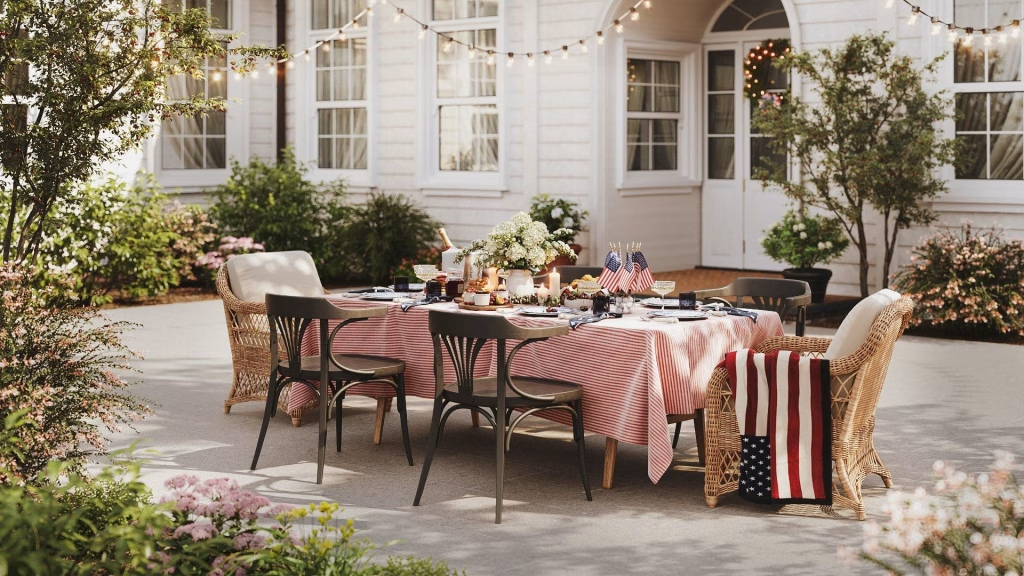
| July 4th | July 4 | Patios, outdoor dining, red, white and blue accents |
| Back to school | Late July to early September | Desks, home office corners, kids’ rooms, storage |
| Halloween | October 31 | Entryways, consoles, porches with pumpkins and candles |
| Thanksgiving | Fourth Thursday of November | Dining tables set for a family dinner, autumn decor |
| Black Friday | Day after Thanksgiving | Hero product shots and clean scenes for sale banners |
| Christmas / New Year | December 25 / January 1 | Living rooms with trees and fireplaces, festive lighting, party setups |
How to Prepare Holiday Visuals Ahead
Holiday visuals need planning, but they don’t need a new photo shoot for every date. Here is how to set them up:
- Build one base scene per year. Keep the room and furniture the same, and swap the seasonal decor for each holiday.
- Render day and night versions. Evening light with candles or string lights looks festive even with minimal decor.
- Plan formats from the start. Several camera angles from one scene cover 16:9 for banners, 1:1 for feeds and 9:16 for Stories and Reels.
- Reuse the scene for sales. The same holiday setup can carry a Black Friday or end-of-season discount with new copy.
- Add motion. A short animated loop stands out in social feeds, and our 3D animation for social media is built for exactly that.
Start With One Product
You don’t need a full catalog to try situational marketing. One product is enough for one holiday scene, and that scene can be redecorated for the next occasion. Send us your product files or photos, and we’ll place the item in a festive interior with 3D lifestyle rendering. Contact us to plan your first holiday scene.

CGI for every season
See the holiday scenes, lifestyle images and product visuals we create for e-commerce brands.
View our portfolio