Showcasing your furniture brand can easily be achieved using a lookbook. Furthermore, with recent improvements in CGI (Computer Generated Imagery) there are many ways to develop beautiful furniture lookbooks. Nonetheless, there is still a degree of expertise that is required to successfully produce a good lookbook with CGI.
Below, our 3D visualization company shares some tips and advice on producing furniture lookbooks with CGI, whether you are an experienced or a new marketer.
Read on!
What are Furniture Lookbooks?
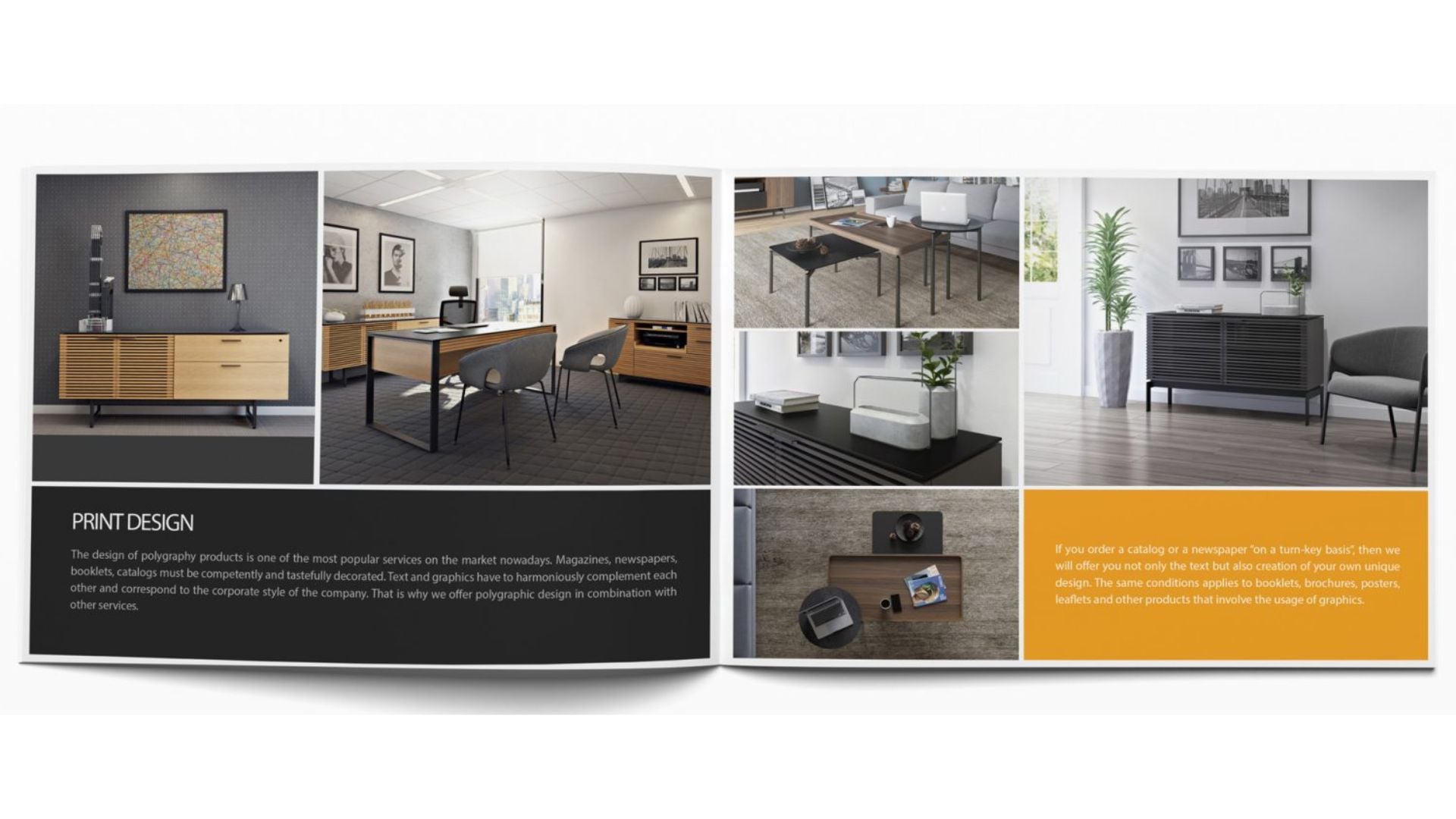
Generally, a furniture lookbook showcases a range of furniture and the associated features. Interior designers, furniture buyers and homeowners often use them, both for inspiration and for general exploration of different types of furniture. Using CGI, a furniture lookbook may concentrate on a particular furniture type, for example, sofas and chairs, or indeed on an assortment of furniture within a wide collection.
Lookbooks can be developed in various formats, including print magazines and online catalogs. Most furniture brands are now employing CGI to generate visually appealing and realistic, yet cost-effective, visuals of their furniture. This enables them to then demonstrate how furniture may appear in a number of situations and from differing viewpoints. This is part of an industry trend to utilize 3D furniture visualization.
Furniture lookbooks are a useful way to explore different types of furniture.
Below are some tips for producing a furniture lookbook with CGI:
Keep it realistic
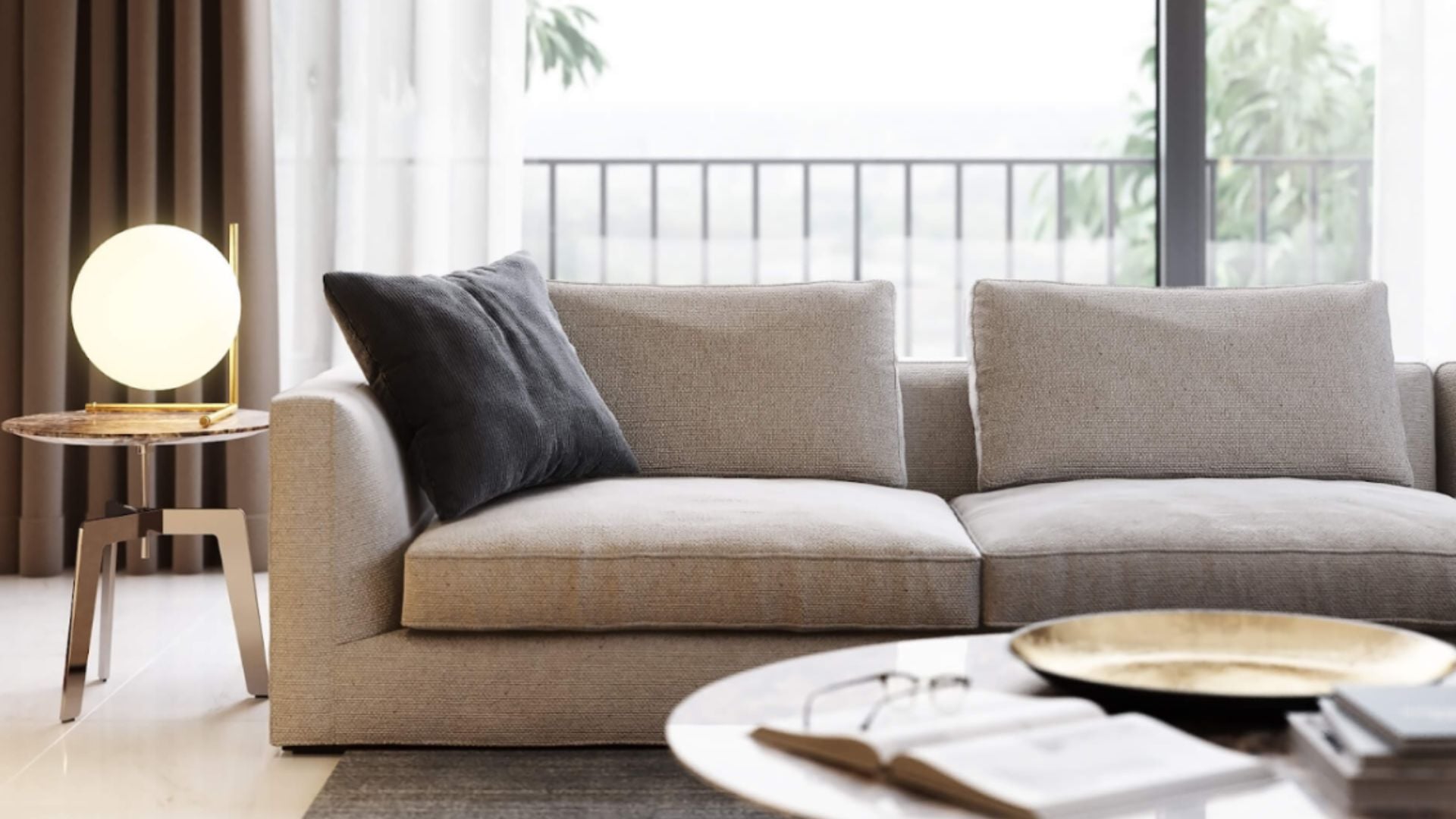
It is important that you first establish a defined concept for your furniture lookbook. This will ensure that the visuals are both consistent and convey a story.
Although CGI is highly versatile, it is important that you endeavor to produce images that closely resemble reality. This involves consideration of aspects such as lighting, shadows and textures. Ideally, the images should resemble photographs.
Good 3D models are fundamental in producing a high-quality furniture lookbook. To develop a lookbook with CGI, you should use realistic textures and materials. This will allow your CG images to look like photographs and thus appear more authentic. Again, as with good furniture photography, the aim is to produce images that seem to represent a real product in a real room.
Various types of lighting can be implemented in CGI to help to produce the desired overall mood of your furniture lookbooks. For example, our artists can utilize spotlights, ambient and natural lighting to produce different moods and atmospheres for 3D rendering.
What makes a lookbook render look fake
Typically, there are a number of reasons why CGI may fail to look realistic. Prior to finalizing a lookbook, it is advisable to check for these issues:
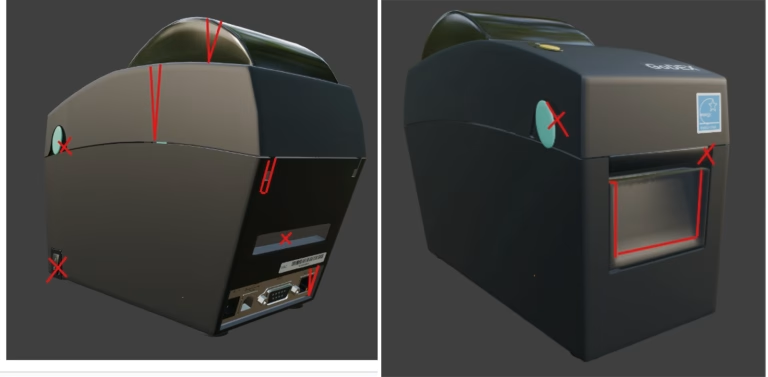
- Weak geometry. Should it be evident that an item is digital, for example, from its edges, joints or screws, then the 3D model will require refinement.
- Wrong scale between objects. Each item within a room set should be appropriately sized in relation to the others. Incorrect proportions, for example, where a dining table appears to be a coffee table or chairs do not fit under it, will immediately reveal the image.
- Mismatched perspective. Both the product and the background should have the same horizon line. If they were set up with differing ones, then the furniture will appear to have been pasted on.
- Color grading instead of light. Rather than modifying the colors of an image, the warmth and coziness should come from the lighting within a 3D scene. Adding red and yellow tones to the image as a whole will result in skies, water and plants appearing unnaturally colored.
- An overlit hero product. Should the main furniture item be drastically brighter than the rest of a room, then it will appear flat and cut out. Direct the main light at the product and soften it with fill and bounce light. Shadows should also fall in the same manner within both the foreground and background.
Focus on the details
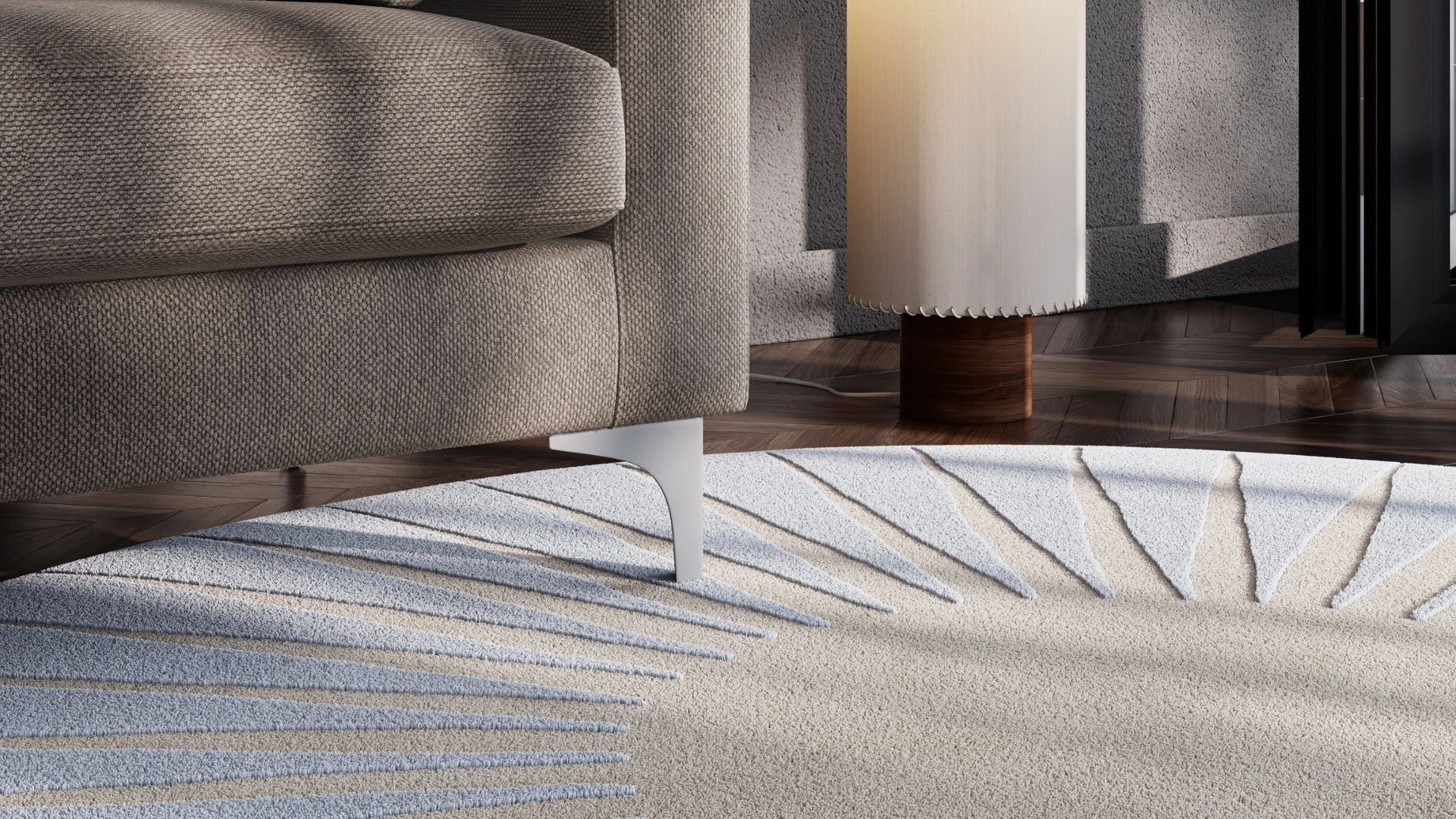
As CGI is so detail-oriented, use this strength to emphasize the distinctive features of your products in furniture lookbooks. For example, you could request that our CG specialists emphasize fine details within a furniture hardware 3D visualization to further distinguish your products.
Professional 3D artists continually check 3D models for small details such as reflections, shadows and textures. These can have a significant impact on the quality and realism of CG images.
Furthermore, real-life elements such as people, plants and objects can be introduced to your images. Doing so can add context and a sense of scale to your furniture and so increase the relevance and attractiveness of your images.
Use a variety of angles
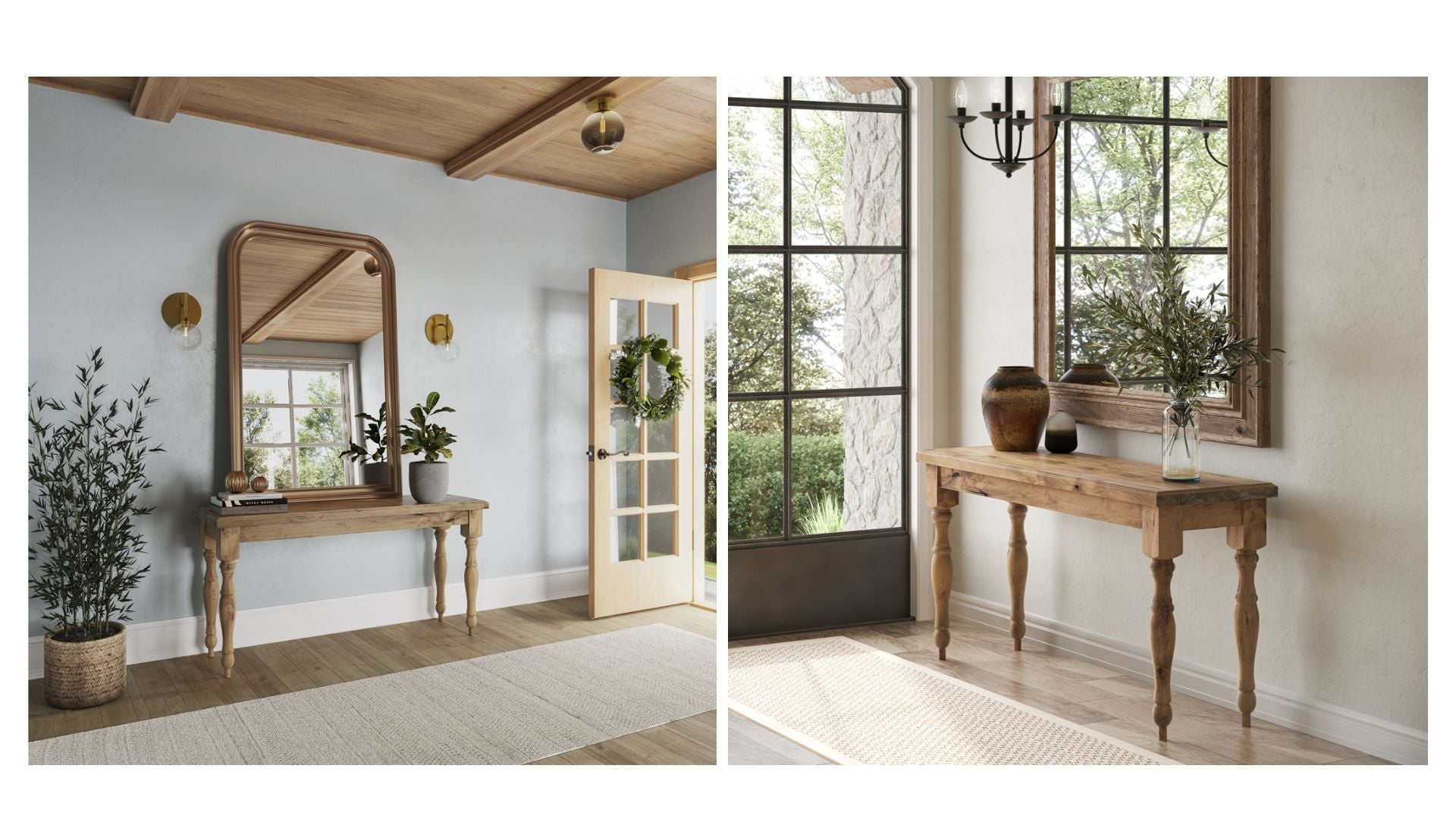
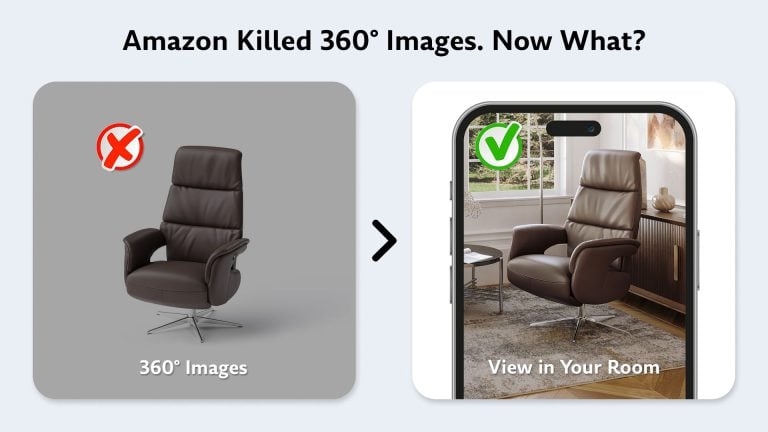
Being able to generate 360-degree renderings is an advantage of CGI and enables you to effectively illustrate all of your product’s features. Particularly with furniture, this is key, as it helps buyers to see whether your furniture will match and fit within their interior.
In addition, lifestyle renders can be used to showcase how your furniture would look with other items. Customers can therefore envisage how well your furniture will match their interior and can also begin to formulate their own ideas for styling. Professional 3D artists can develop lifestyle settings for any environment, be it a living room, a bedroom or even an exterior such as a patio. Consequently, you can emphasize the flexibility of your furniture design. Our 3D furniture visualization services include lifestyle scenes for each piece within a collection.
Finally, it should not be overlooked that CGI can be effectively employed in the production of unusual lookbooks. Interactive features, such as animations, can also be included.
Set the scene
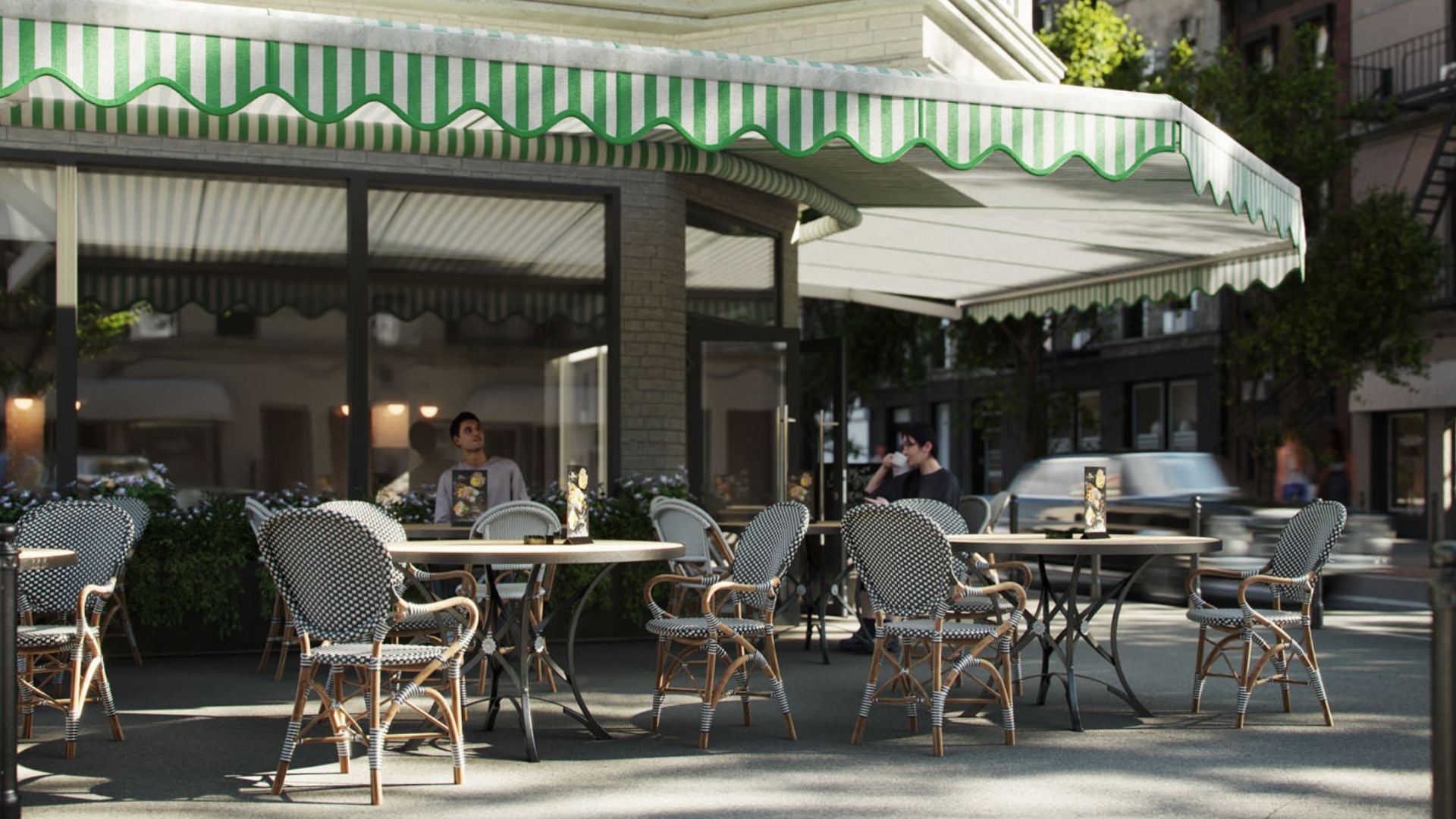
Establishing a particular mood is key to developing effective furniture lookbooks. Using 3D rendering services, you can create an environment which is in keeping with your furniture’s style. This may be a modern living room, a cozy bedroom or indeed any interior which is appropriate for your furniture.
Considering the style of the environment in which you present your furniture can be a valuable element in the creation of a lookbook with CGI. It may also serve to accentuate your furniture’s design.
If your furniture is modern in nature, then it will be advantageous to employ a minimalistic environment with clean lines. Conversely, if your furniture has a rustic or a farmhouse style, a natural wood interior would be suitable.
Moreover, should you wish to showcase your furniture outdoors, you may require a CGI environment to demonstrate it within a backyard or patio. Additional elements such as plants, trees and water features can also be included. This will allow your customers to imagine how your furniture would look in their own gardens.
Maintaining a consistent visual style for your furniture lookbook will give a sense of unity to your images. Furthermore, this is useful when the same visuals go to buyers at furniture trade shows.
Choose the right digital format
Currently, the majority of lookbooks are online. The format determines what a buyer can do with it:
- PDF. Simple to email to both buyers and dealers. However, as with print, it does not allow for zoom or motion.
- Flipbook. Mimics the turning of pages within a printed lookbook. This is particularly appropriate for displaying seasonal collections.
- Interactive online lookbook. Allows for zoom and 360-degree views. Short animations can also be incorporated. In addition, each piece featured can be linked to its relevant product page.
Once a digital lookbook has been released, corrections can easily be made. For example, should a fabric no longer be available or a new finish be introduced, the relevant image can simply be changed. With CGI, this means re-rendering an existing 3D model rather than undertaking a new photoshoot.
To further enhance the online searchability of your lookbook, assign meaningful file names to your images. Likewise, include appropriate alt text. Employ the words that people are likely to use in their searches (for example, “outdoor dining set”) rather than an internal collection code. Moreover, link the spreads of your lookbook to the relevant product pages of the pieces shown.
Example: a full catalog built from product photos
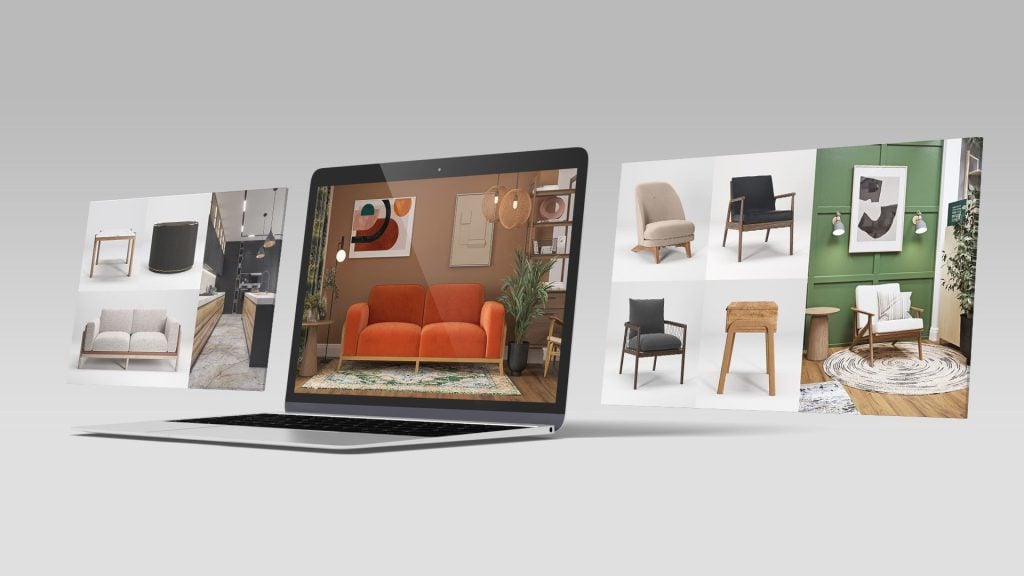
Sklum requested that we develop a digital catalog for their indoor and outdoor furniture. Initially, we only had access to product photos and neither 3D files nor scenes. Our artists then modeled each piece and placed it in specifically designed interiors and outdoor settings, allowing the entire range to be shown within rooms.
Create a concept
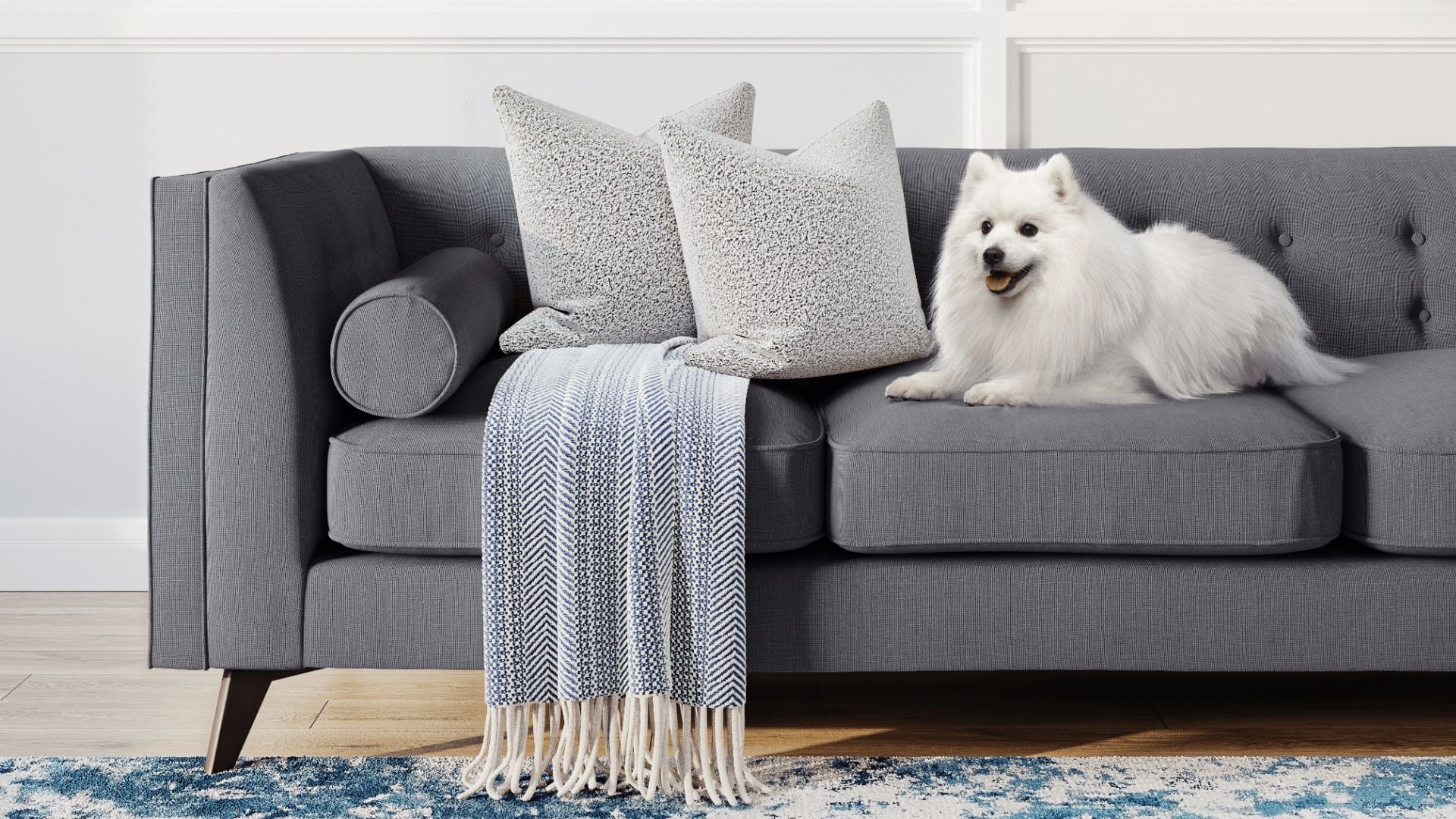
While for some products a simple lookbook may be sufficient, other products may necessitate a more elaborate approach in order to effectively communicate their nature and attract specific customers. Storytelling can be effectively utilized within a furniture lookbook.
Indeed, by devising a particular concept or theme for your furniture lookbook (again using CGI) which is in line with the style of your furniture, you can fully engage customers in the world of your products. For example, if your collection evokes nostalgia for previous decades, then you would wish to convey the elegance of your furniture through the lens of past fashions.
If your product is outdoor furniture, then you may wish to tell a story illustrating how enjoyable it is to unwind and have fun in picturesque locations such as a beach or a mountain.
Essentially, it is key to formulate a concept that is relevant to your target audience and which emphasizes the uniqueness of your products. Therefore, you can create a compelling and informative furniture lookbook.
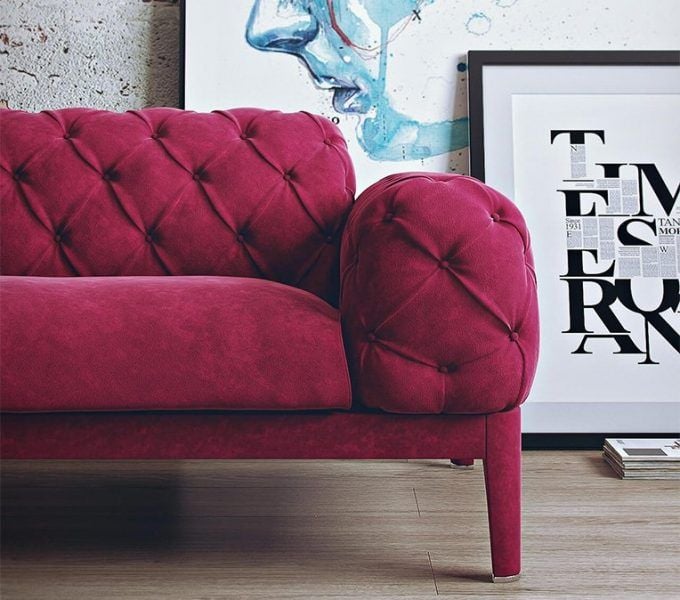
Check out CGI services we offer to learn all the innovative solutions you can use for your business.
3d modeling servicesAdhering to the above tips will enable you to utilize professional CGI services and get furniture lookbooks which effectively display your products and style.
We can help create furniture lookbooks by supplying 3D rendering services and photorealistic images for marketing campaigns and product promos. Contact us today to develop a lookbook for your furniture product line!