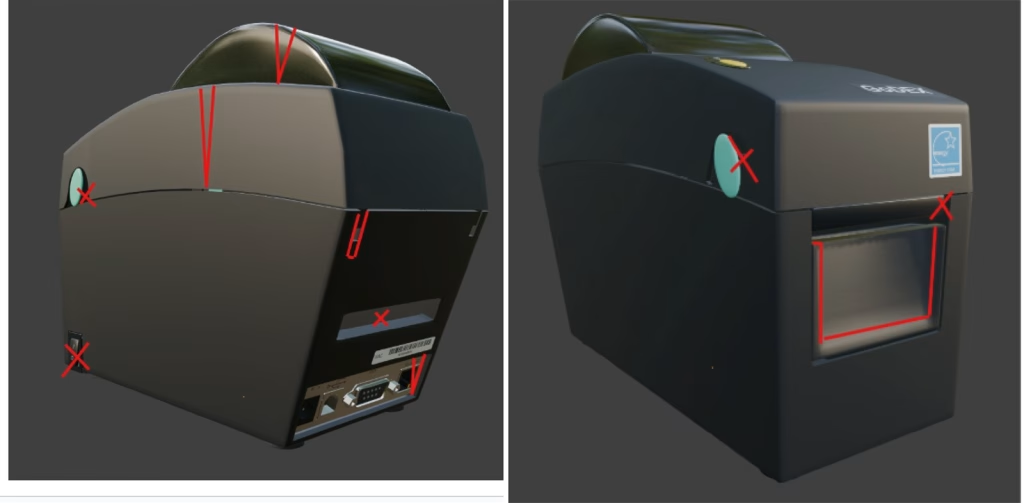
The printer looked perfect. Right proportions, clean surfaces, every button where the photos said it should be. Ivan, one of our mentors, had spent three hours babysitting the AI through the build, and for a moment it felt like the future had arrived early.
Then he put a material on it.
This September, our mentors at CGIFURNITURE, the senior artists who train the team and sign off on client work, put an AI modeling assistant through the same jobs our clients give us: a label printer from a 3D scan, a stool from a factory drawing, a shelf of catalog hardware, an armchair, a folding chair. Not toy tasks. Real briefs, real references, the kind of work a furniture brand pays for.
We are not here to say AI is useless. Some of what it did was genuinely helpful, and we say so below. But the stories our mentors brought back are the ones where a client would have returned the model. Each one has a moment when a good-looking result turned out to be something else. Those moments are the point.
The printer that fooled everyone until the paint went on
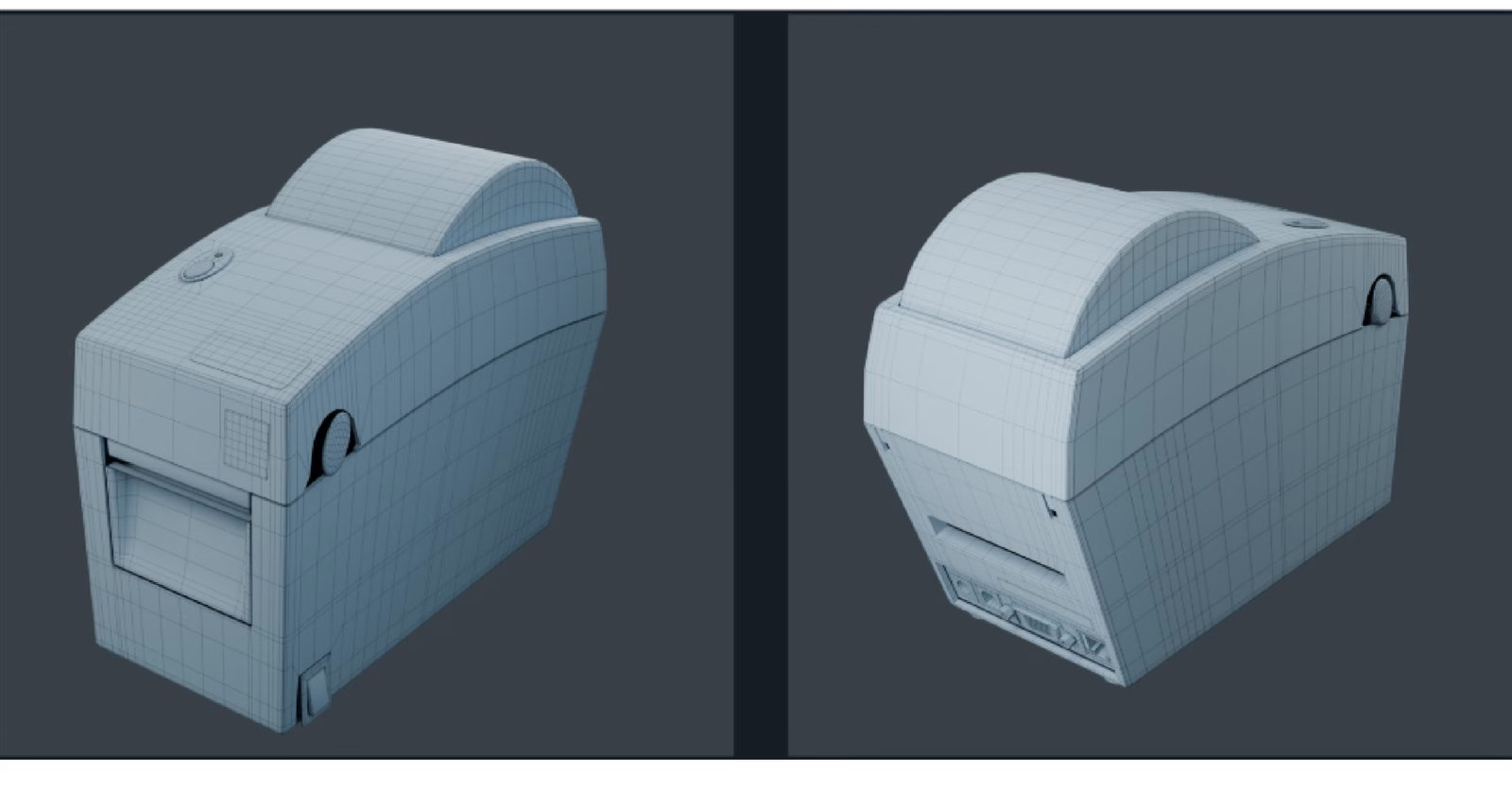
Ivan had the best possible starting point: a 3D scan of a desktop label printer, a folder of photos from every side, and a written description of each part. If an AI was ever going to nail a product, it was this one.
And for three hours, it looked like it had. The shape was right. The mesh was tidy. The AI even added materials nobody had asked for, as if to show off.
The trouble started the moment the model left the grey preview and got a real surface. A glossy plastic shows everything, and suddenly there was everything to see: a lid that did not sit flat, edges that should have been crisp and were lumpy, a section of the back wall that simply was not there, a port cutout in the wrong place. None of it was visible on the grey model. All of it would be visible in a product photo.
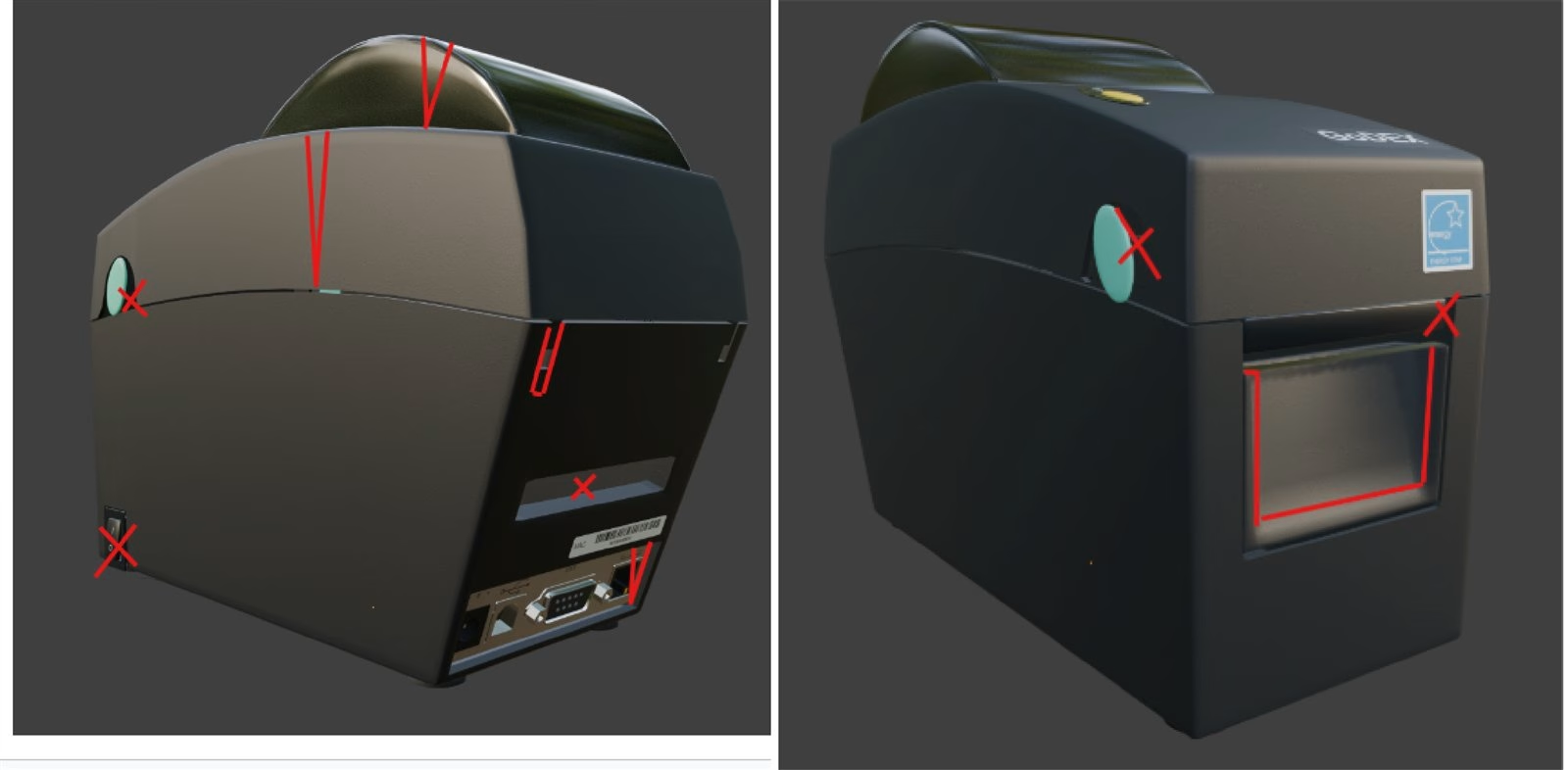
Ivan spent the rest of the day going back and forth, fixing one thing, finding the next. His verdict at the end: starting from a blank file would have been faster. We have no stopwatch on that claim, only his experience. But it is the same experience every mentor in this article came away with.
The stool that got worse every time we asked for a fix
A stool is about as simple as furniture gets. Four legs, a frame, a padded seat with a seam around it. Liliia gave the AI a client’s own factory drawings, the reference photos, the exact dimensions. Everything a junior artist would get on day one.
The first version came back in under ten minutes and, at a glance, it was a stool. Then Liliia looked the way a client looks. The seat sat at the wrong height. A row of stitching ran where the real stool has none. The legs attached in the wrong place and had the wrong shape. The seam that should look like fabric folded over a cushion was a plain tube wrapped around the edge.
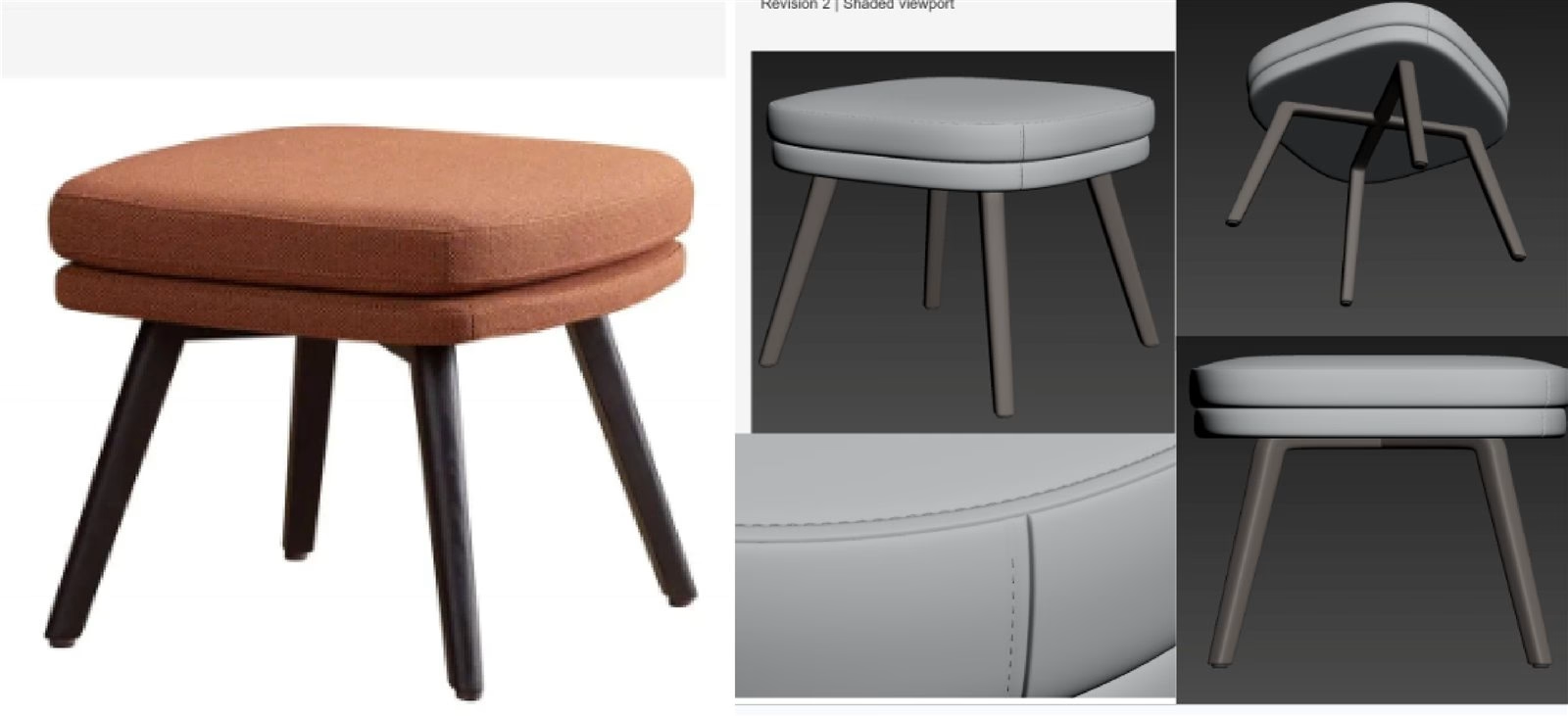
So she did what you do with a junior: she wrote up the corrections, clearly, point by point. The second version was worse. The seam now vanished on three sides, the stitching came and went, the legs were still wrong.
For round three she drew on the pictures, arrows and all, the way a project manager marks up a render. Round three fixed nothing that mattered.
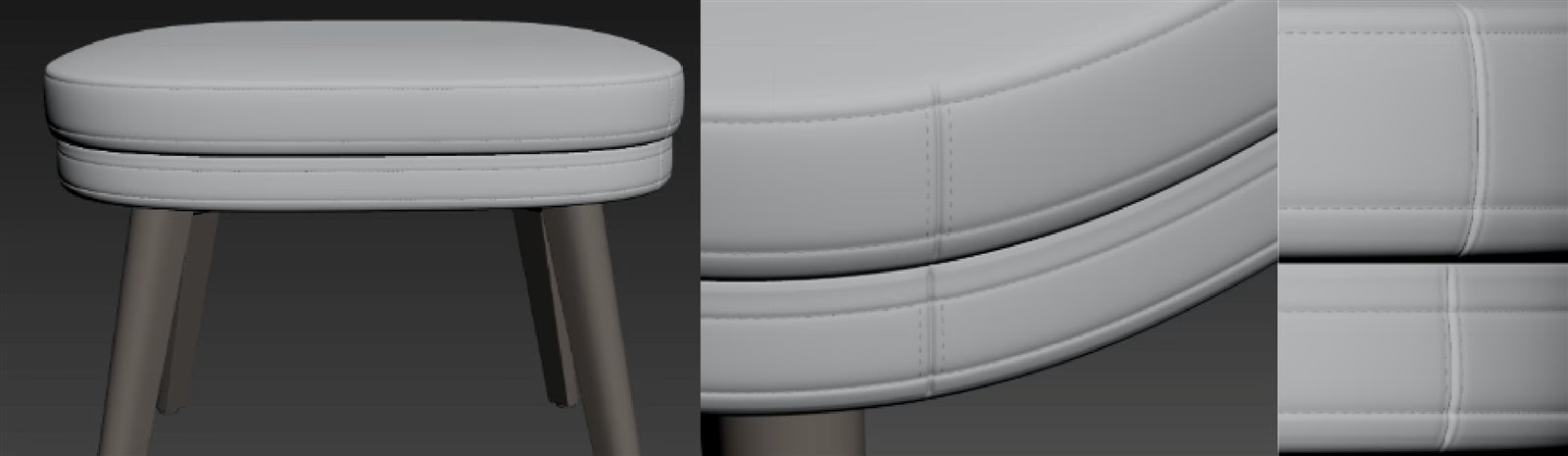
Three rounds, less than forty minutes of machine time, and a stool a client would not accept. A junior artist would have taken longer on the first pass, Liliia says, and would have got it right on the second. The AI never got there at all.
The catalog products where every arrow is a mistake
Oleksandr works on the kind of products that fill an online catalog: an industrial relay the size of a matchbox, a hand dryer for a public restroom, a countertop grill. Unglamorous, precise, and sold by the thousand. For each one the AI got what a retailer sends us: product photos, and for two of them a 3D scan as well.
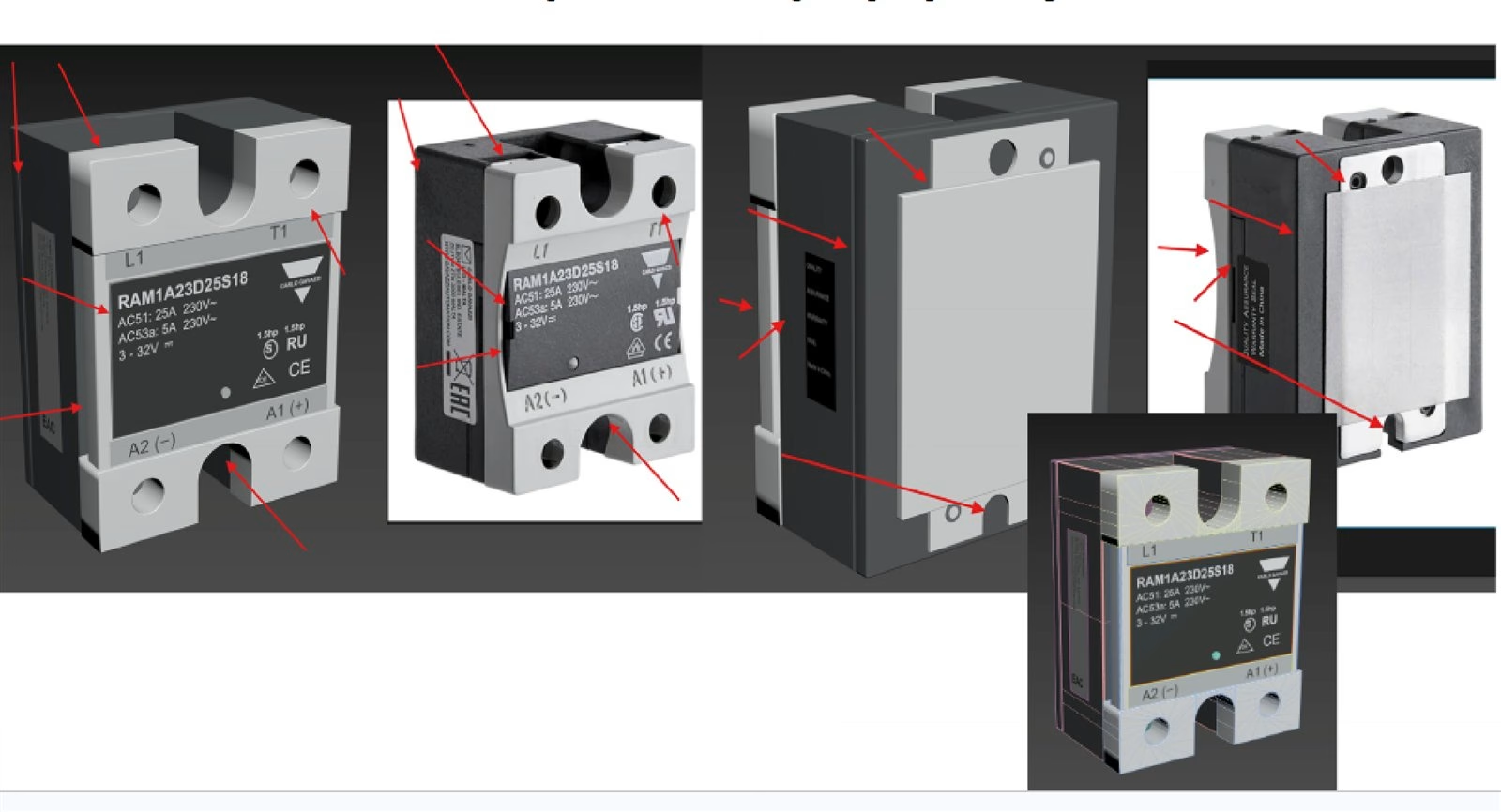
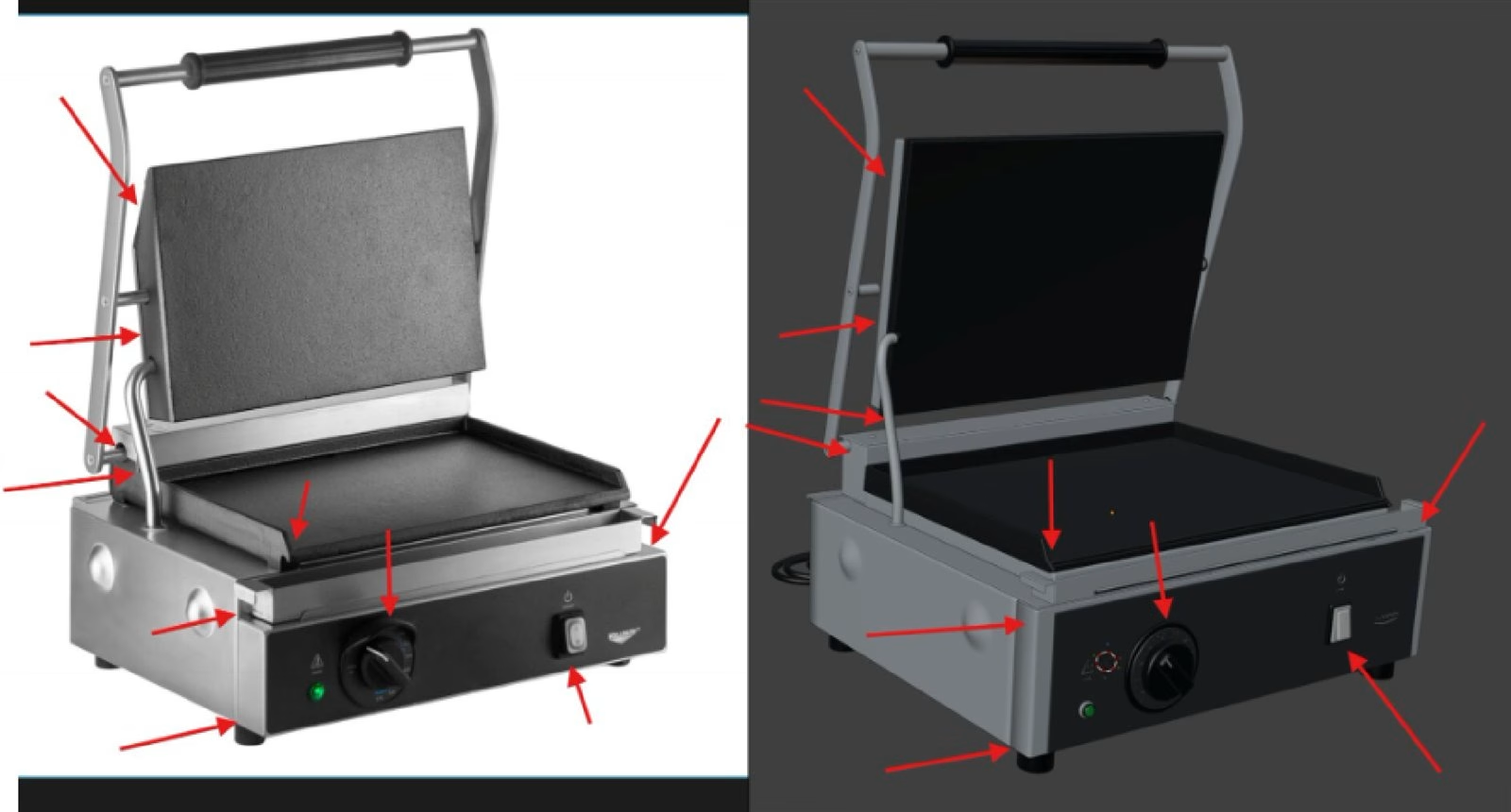
His review method is simple. Put the reference next to the result and draw a red arrow at every difference. On the relay, the arrows cover the whole thing: the terminal blocks are wrong, the label has moved, the screw holes are missing, the metal back plate has a different profile. On the grill it is the same picture: handle, hinge, feet, the control knob, all slightly off, all arrowed.
The hand dryer is the most telling. The AI was given a scan and asked to build a clean model over it. Instead it took the scan itself, the noisy, bumpy raw capture, and started editing that. The result still had the scan’s dents and ripples baked in. A person would have used the scan as a guide. The AI used it as the product.
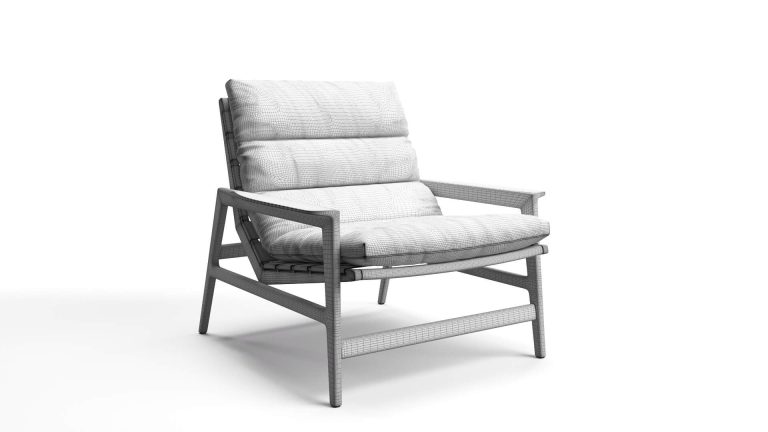
Oleksandr put one of the chairs next to a version built by a colleague. The AI’s model looked fine from across the room. Up close, the mesh was so dense that changing anything on it, a leg, a cushion, a client’s small request, would be slower than rebuilding it.
The armchair that could not be taken apart
There is a step in every furniture model that clients never see and every artist knows: taking the model apart. A chair is not one object. It is a frame, a seat cushion, a back cushion, legs, each of which needs its own material so the fabric looks like fabric and the wood looks like wood. It is one of the standard steps of product 3D modeling, and it shapes how every material will look later.
Maksym started with an armchair that another AI had generated from a single product photo. It looked convincing. Then he asked the assistant to split it into its parts.
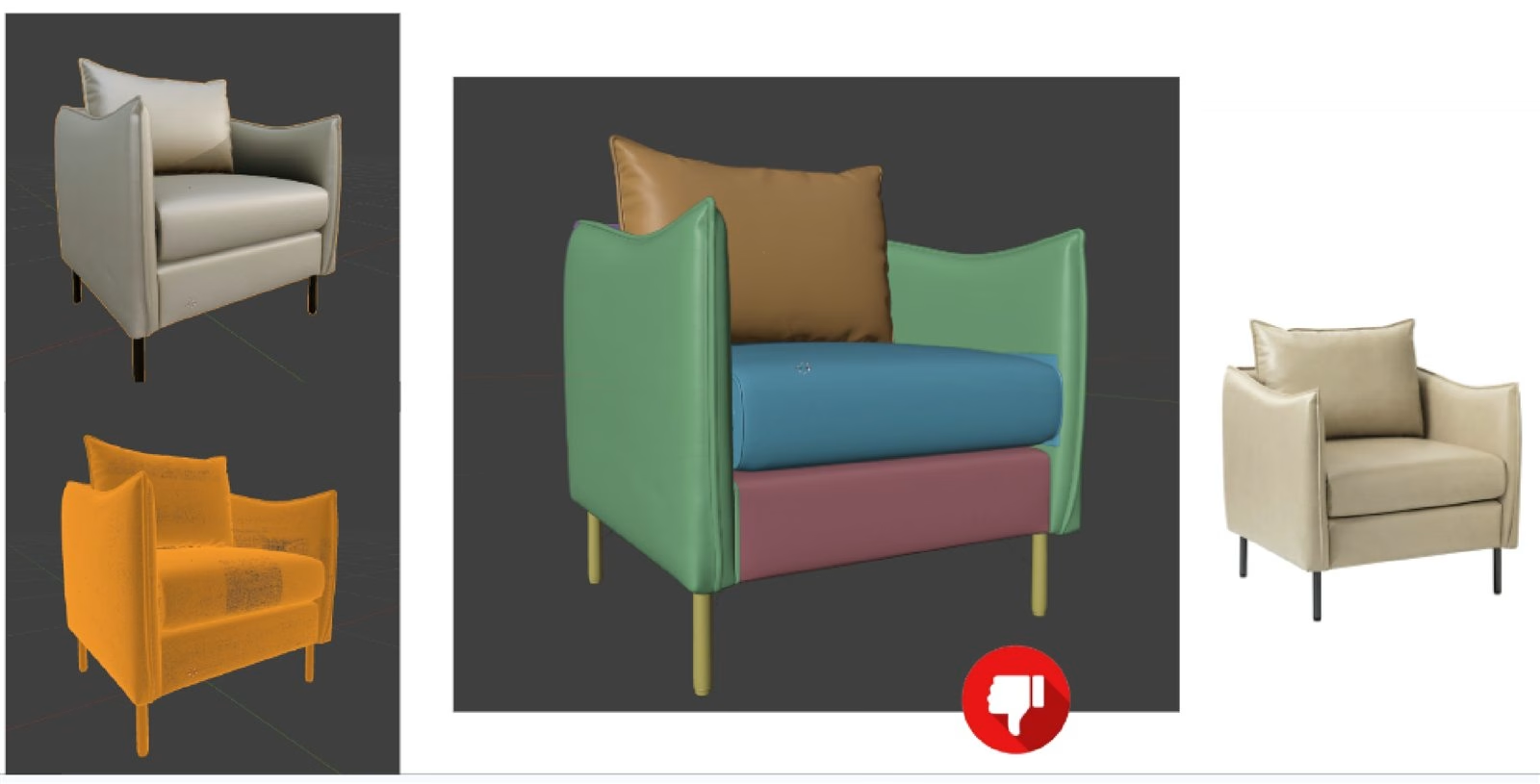
The pieces it made do not exist on the chair. The cushion boundary cuts through the frame. The backrest is sliced into shapes nobody designed. The legs are lumped in with the base. Painting such a model would be like painting a car where the door is welded halfway into the fender.
The same thing happened when he asked it to prepare complex pieces for texturing: a tufted lounger, a perforated lamp shade. The seams it chose would show in any photo. Simple pieces passed. Anything with real detail did not.
One small test summed it up. A caster wheel, built from the manufacturer’s engineering file, came out fine. The same wheel, built from the manufacturer’s drawing, did not. Give the AI finished geometry and it can tidy it. Ask it to read a sheet and build what the sheet says, and it loses the thread.
The right kind of chair, the wrong chair
Veronika’s brief was a yellow metal folding chair: slatted seat, slatted back, the kind you see stacked at a garden party. The listing gave the photos and the three dimensions.
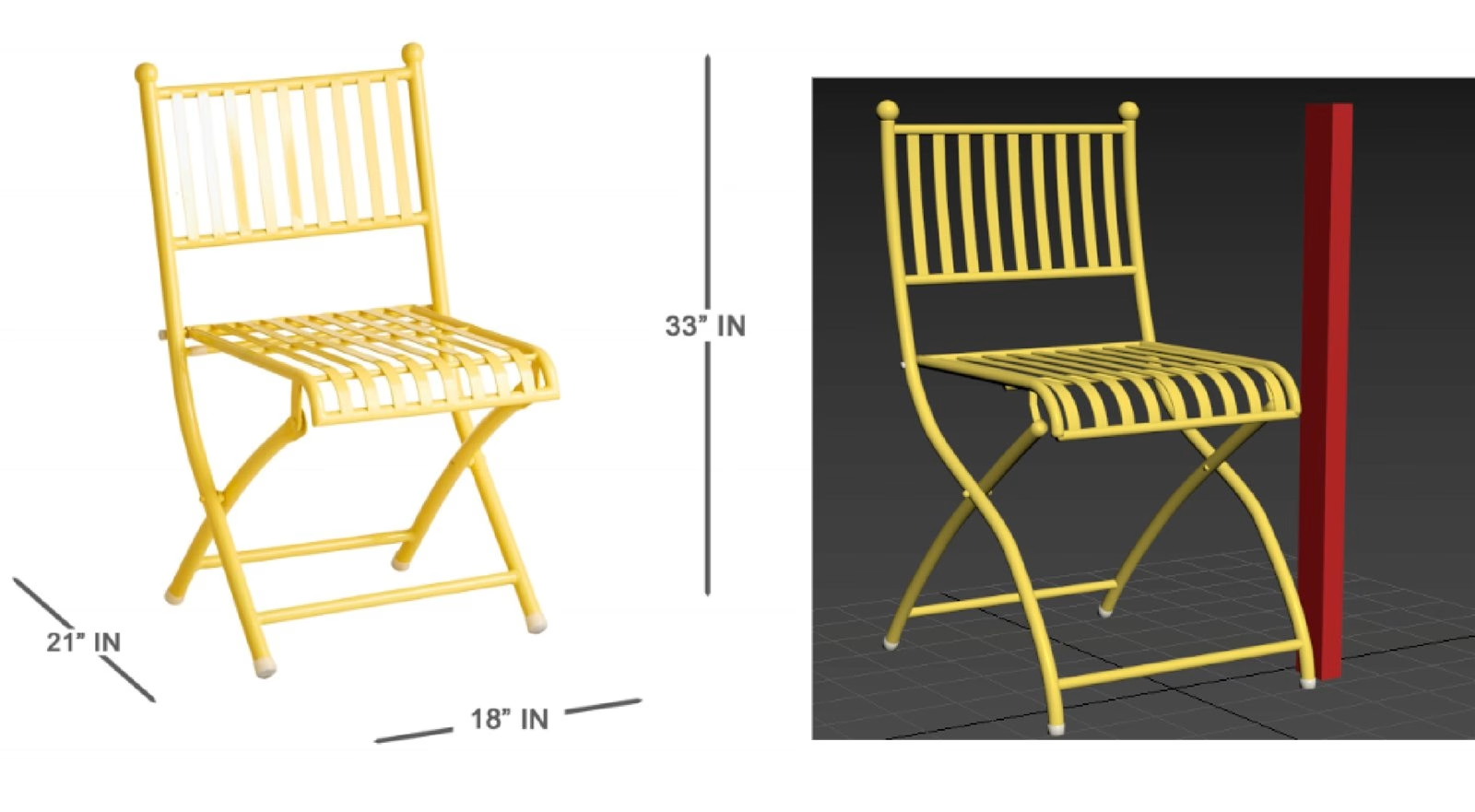
The AI returned a yellow metal folding chair. Right height, right color, right idea. Also not this chair. The slats were a different count and spacing. The folding mechanism was its own invention. The legs bent in places the real ones do not.
For a design mood board, that would be fine. For a product page, it is a different product. A shopper who buys from that picture gets something else in the box. Veronika did not try to fix it. There was nothing to fix, only to replace.
Where it did help
It would be easy to end there, and dishonest. The same mentors kept several results and would use them again.
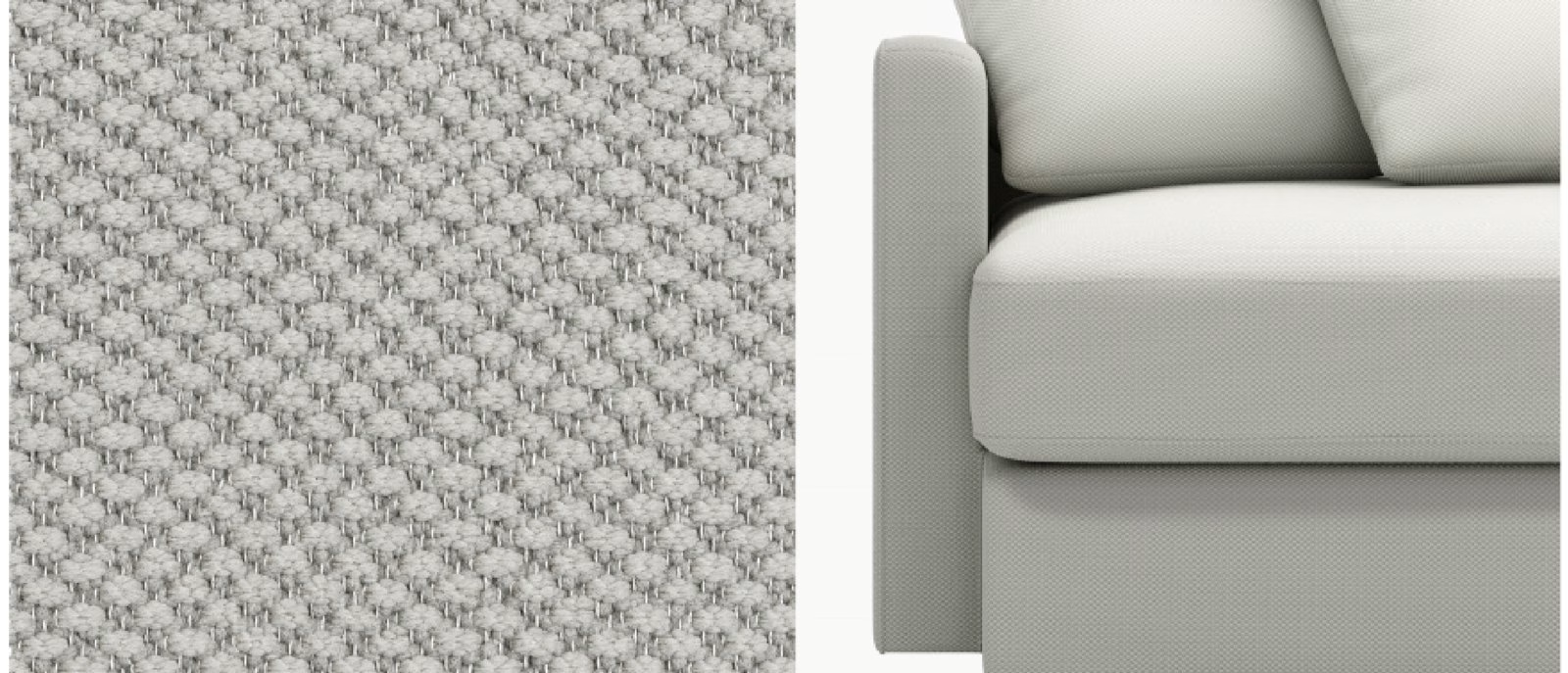
The AI is good with things that already exist. Hand it a clean engineering file and it will tidy the mesh in minutes. Give it a photo of a fabric swatch and it will produce a usable tile; one of those went to a client and came back approved without a single comment. Ask it for a small bracket, a washer, a knob, and it will oblige. Ask it to write a script that checks a model before export, and it will write a decent one.
The pattern across all our mentors is the same. When the geometry is given and the job is to clean, convert or decorate it, the AI saves time. When the job is to look at photos, a scan or a drawing and build the thing that is not there yet, it produces something that looks like the thing. For a product page, that is the one job that matters.
What this means if you sell furniture online
Every story above has the same shape. The first look was fine. The problem showed up later, at the stage where it costs the most: when the material went on, when the client asked for a change, when the model had to be taken apart for painting. And in every case, the only way to find the problem was for a person to check the model against the brief, piece by piece.
We will keep running these tests, and we will publish the next failures the same way. Until the results change, CGIFURNITURE models are built by people from your drawings, photos or scans, and checked against them before you see a render. You can see what that looks like in our case studies.
Start with one product
Send us a single item with whatever you have: a drawing, photos or a scan. We will send back a model that matches it, with the comparison to prove it.
Book a DemoFAQ
Which AI did you use?
A modeling assistant that works inside the same 3D software our artists use every day. It reads photos, scans and drawings and builds models on its own. We tested it in September 2026.
Were these real client jobs?
Yes. Where a live brief was used, the artist finished the model by hand before the client saw anything.
Isn’t this just a bad prompt?
Our mentors wrote the briefs the way they would for a new team member, and rewrote them when the first result failed. The stool got three rounds of corrections, including marked-up pictures.
So is AI useless for 3D?
No. It is useful for cleaning, converting and texturing models that already exist. It is not yet something we would trust to build a product from scratch for a listing.
Will you publish more?
Each mentor’s full story will come out as its own piece, with the images, the mistakes marked, and what happened to the model in the end.