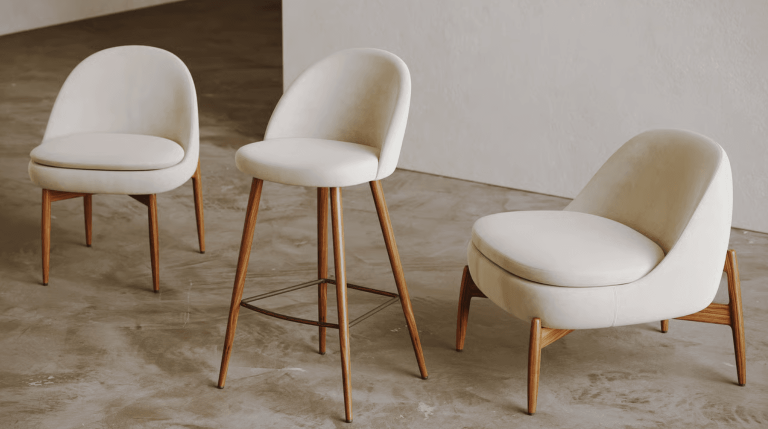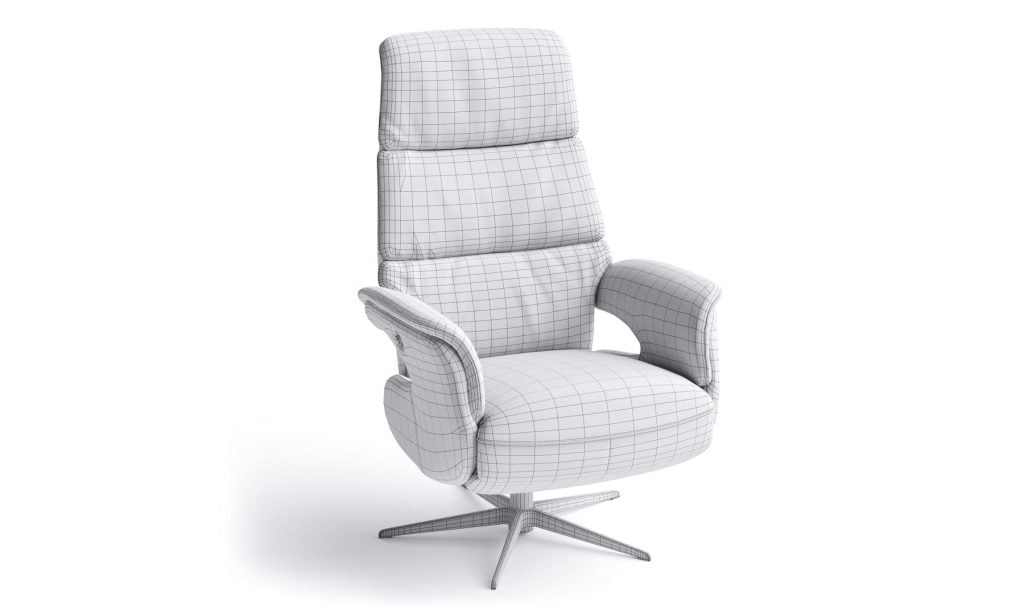
A search for 3D modeling services brings up specialist game, CAD and product studios. Although these can be very varied in what they specialize in, here we have outlined only the 3D modeling companies who model products and furniture for brands. Included are both a large scale 3D modeling studio and a modeling platform, along with advice on which sort of brand is most compatible with each.
As with any studio’s own ranking, CGIFurniture is at the top of the list. Further details for the remaining companies have all been taken from their websites (all verified in November 2026).
How We Compared the 3D Modeling Companies
Companies were analyzed using the following factors:
- What they model: furniture, home products, technical products or a bit of everything
- What they deliver: models for renders only, or light versions for AR and configurators as well
- What backs it up: named clients and public numbers
- How you work with them: a project with a studio or a subscription to a platform
After CGIFurniture, full service studios are shown before more specialized 3D modeling services and finally the 3D modeling platforms.
| # | Company | Type | Best for |
|---|---|---|---|
| 1 | CGIFurniture | Studio | Furniture, lighting, flooring, plumbing fixtures and other home products |
| 2 | House of Blue Beans | Studio | Large retail catalogs with thousands of products |
| 3 | Pikcells | Studio | Kitchen, bathroom and surface brands that need a visualizer |
| 4 | PIXREADY | Studio | Product models and architectural renders from one contractor |
| 5 | Maverick Frame Studio | Studio | Models that start an ad campaign |
| 6 | Dabarti | Studio | Technical products that need a launch film |
| 7 | NBY IT | Studio | Engineering CAD plus marketing models |
| 8 | Orbe3D | Studio | Small e-commerce catalogs that need web-ready models |
| 9 | 3D Cloud | Platform | Enterprise retailers that need room planners and configurators |
| 10 | Cylindo | Platform | Furniture brands that need product page software |
10 Best 3D Modeling Services in 2026
1. CGIFurniture
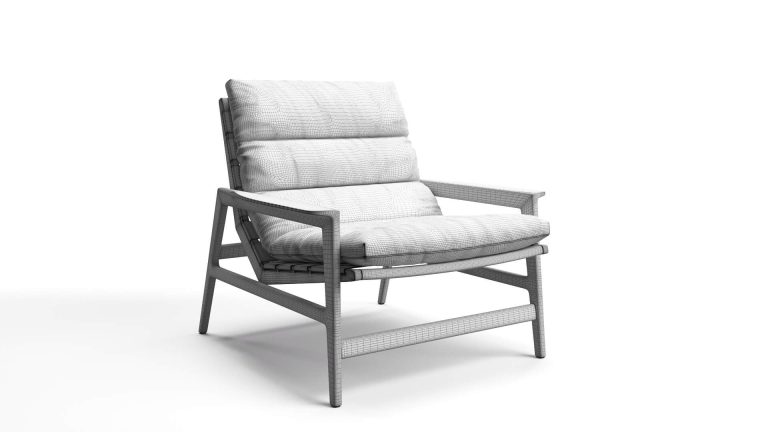
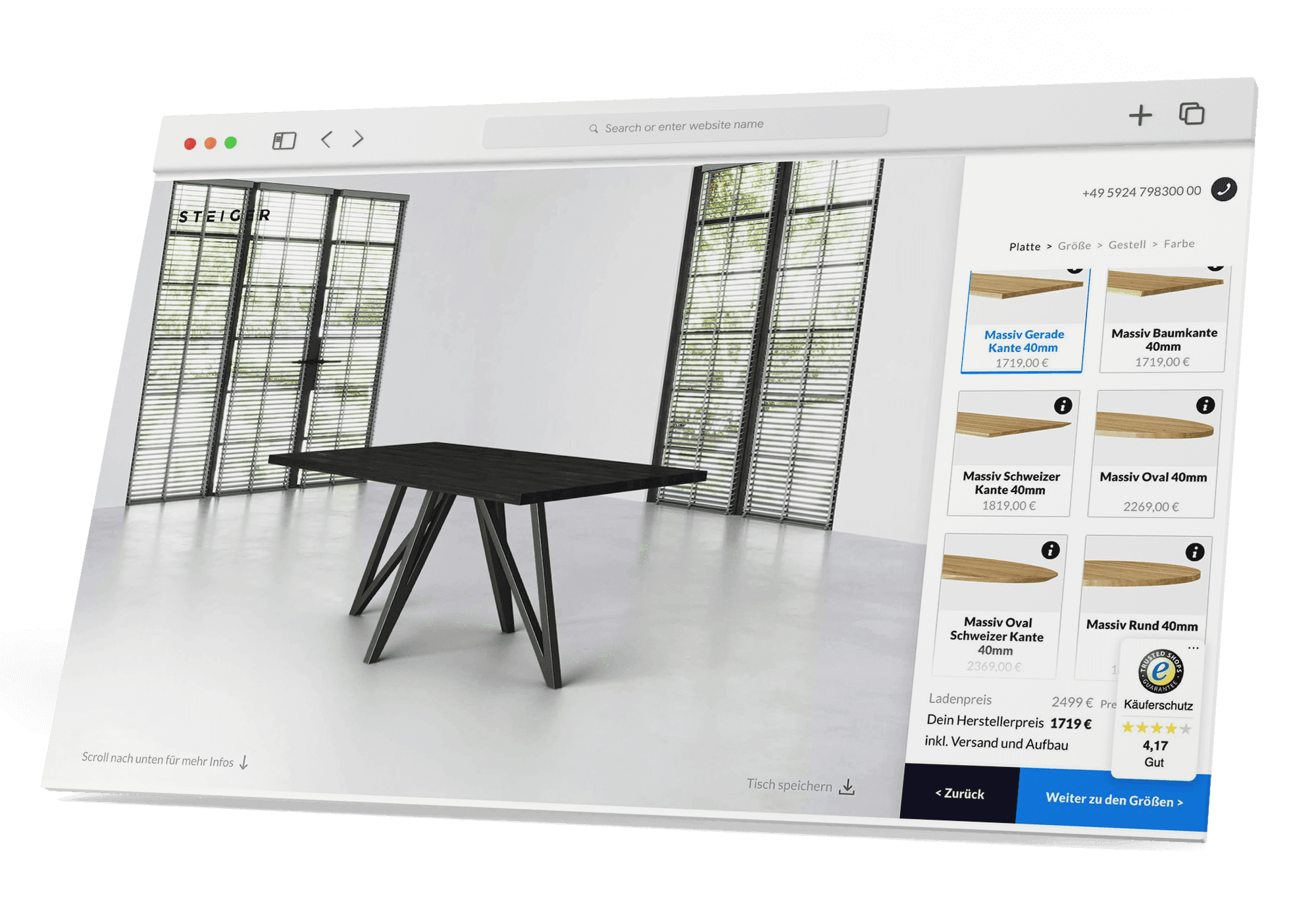
CGIFurniture has provided 3D product modeling services since 2011. It employs 627 in-house CG artists, 144 of whom are 3D modelers. There are no freelancers, and in 2025 over 38,000 models were produced. Models are produced using CAD data, drawings or photographs and are then verified for accuracy in terms of size. The same model is used for catalog renders, while a simplified GLB and USDZ version is created for AR, 3D viewers and configurators, which means nothing has to be remodeled. Amazon has certified CGIFurniture as a 3D content provider, so its files meet Amazon’s listing requirements. Some of CGIFurniture’s previous work includes oak table models for Steiger‘s online configurator, Sklum’s catalog modeled from photographs, Hilti’s 3D models for product training, and ERG International’s seating and tables. As well as 3D furniture modeling services, this 3D modeling studio also provides modeling for lighting, flooring and bathroom fixtures.
Choose it if what you sell is furniture, lighting, flooring, plumbing fixtures or anything else that goes into a home.
2. House of Blue Beans
Based in Bengaluru, India, House of Blue Beans has been involved in visualization since 2011. It states that it has produced in excess of 20,000 3D product models. Clients for this company include Lowe’s, Accenture, Titan and Cadbury. For Lowe’s alone, over 4,000 products were modeled in the bath, kitchen, hardware and patio ranges. AR and VR content is also offered.
Choose it if you have a big retail catalog and thousands of products need to come out looking the same.
3. Pikcells
Pikcells is based in Huddersfield, UK. With over 20 years of 3D experience, it employs 30+ staff comprising CGI artists, interior designers and software programmers. Alongside its 3D model design services, Pikcells scans physical objects and surfaces using photogrammetry. This is particularly helpful where a model has to reproduce a material accurately. Assets are then used for 360 spinners, AR and in-house visualizer and configurator tools. Duravit, Grohe, Wren Kitchens, Cosentino and Häfele are some of the clients named on Pikcells’ site.
Choose it if you’re a kitchen, bathroom or surfaces brand and you’d like a visualizer built on top of your models.
4. PIXREADY
Since 2018, PIXREADY has completed over 1,500 projects and employs over 50 artists. It has clients in the US, UK, Canada and Europe. As well as 3D modeling of products and furniture, this 3D modeling company works on jewelry and lighting visualizations, along with configurators and architectural visualizations. As a result, a single contractor is able to model a product and also visualize the space in which it will be shown.
Choose it if you’d rather get product models and architectural renders from the same contractor.
5. Maverick Frame Studio
Maverick Frame, set up in London in 2016, is a 3D modeling agency. It provides product modeling as part of a broader service which involves visualizations, animation, car and yacht CGI, and advertising work. It states that it has worked with over 350 brands, agencies and developers. Among the clients it names are Logitech, Lenovo and Marshall. The models produced can then go directly into advertising visuals or animations.
Choose it if the model is where your next ad campaign starts.
6. Dabarti
Dabarti is a product CGI company based in Białystok, Poland. Set up in 2010, it produces visualizations and video for products from CAD files and technical drawings. On the modeling side, its work covers CAD cleanup as well as setting up materials and lighting. Mechanical animation and fluid, fabric and particle simulation are also carried out by this team. Rendering is undertaken on an in-house farm. The company states that it has created in excess of 15,000 licensed assets. In addition, agencies can use Dabarti as a production partner, and some of this work is carried out under NDA.
Choose it if you’ve got a technical product and need a launch film that shows how it works.
7. NBY IT
Located in Dhaka, Bangladesh, NBY IT has been in operation since 2009. It claims in excess of 224,000 3D models and describes itself as a modeling partner for over 50 furniture brands. As well as modeling products and furniture, it also provides 3D CAD modeling services for engineering, for instance mechanical CAD, mold design, reverse engineering and design for 3D printing.
Choose it if your product needs proper engineering CAD on top of models for marketing.
8. Orbe3D
Orbe3D has production facilities in Dhaka, Bangladesh and a corporate office in Atlanta, Georgia. Its main area of focus is 3D modeling for ecommerce. Its glTF and USDZ models (produced using photographs, CAD data or drawings) are optimized for Shopify stores, digital catalogs and web configurators. In addition, agencies are able to hire Orbe3D on a white-label basis and sell its work on under their own brand.
Choose it if your e-commerce catalog is small and you need models you can put straight on the web.
9. 3D Cloud
3D Cloud is a US-based platform with offices in St. Petersburg, Florida; Miamisburg, Ohio; and London. Its modeling team has nearly ten years behind it and works for furniture and home improvement retailers. Models are generated in GLB, glTF and USDZ formats suitable for WebAR, configurators and room planning tools. The company says that, using shared material and texture libraries, it is able to handle catalogs containing between 500 and 500,000 SKUs. Retailers shown on 3D Cloud’s website include Herman Miller, John Lewis, Ashley, Macy’s and La-Z-Boy.
Choose it if you’re an enterprise retailer looking for models plus room planning and configurator software.
10. Cylindo
Cylindo is a visual commerce platform for furniture brands. It is part of Chaos, the company behind V-Ray and Corona. It has offices in Boston, London, Copenhagen and North Macedonia. Cylindo’s software provides 360 viewers, web AR and a real-time configurator for product pages. 3D master assets are produced by its in-house team as a service. Clients on its site include Joybird, Anthropologie and Room & Board.
Choose it if your furniture brand wants the product page software and the 3D files from one place.
How to Choose a 3D Modeling Service
Firstly, consider the format your 3D model will be used in, for example a product page, AR, a video game or 3D printing. Different formats will be needed for these. Detailed 3D models are required for close-up product renders and although lower poly versions are usually adequate for AR, it is good to know how a studio handles high-poly and low-poly models.
Secondly, ascertain what data you can provide. The most accurate is CAD. Next come measured drawings and finally photos, which are used when no other data is available. It is useful to discover which of these media the studio is able to work with.
Furthermore, it is a good idea to ask for 3D models of comparable goods. Generic video portfolios fail to illustrate how a 3D modeler will create 3D models of particular materials including textiles, metal and glass.
Finally, find out what formats your 3D models will be delivered in and whether or not a low poly version for AR is offered (and at what cost).
Signs of a Good 3D Modeling Service
- They can show you models of products in your category, such as sofas if you sell sofas
- They ask where the model will end up before they give you a price
- You get the source files as well as the renders
- A single model is used for the renders and exported to GLB or USDZ, with no second round of modeling
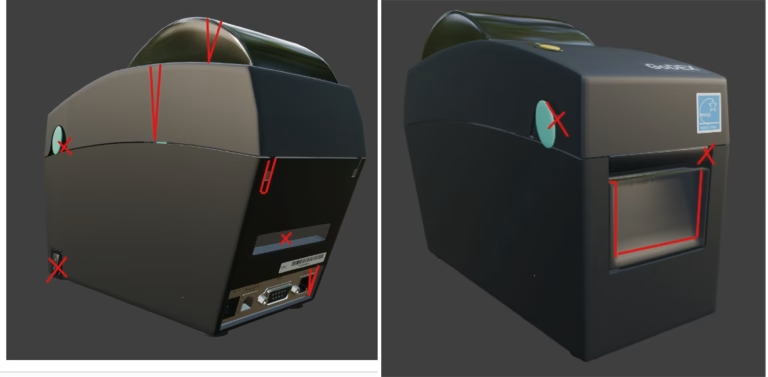
- You sign off on a gray model before any textures are added
Red Flags, or What Should Make You Pause
- They only send finished pictures and never a model you can rotate
- Nobody can tell you the delivery formats, or the only thing you’ll get is renders
- There’s a flat price per model, and nobody asks how complex it is or what it’s for
- The files stay with the studio, and getting them costs extra
- There’s no stage for approving the geometry, so the first thing you see is the final version
Studio, Freelancer or Outsourcing
Typically, if there is only one product to model and funds are restricted then it is appropriate to hire a 3D modeler who is self-employed. A 3D modeling freelancer can often rapidly construct 3D models for items such as seating and electronic goods. That said, the quality of the 3D models will rely on both the skill and availability of the person concerned.
To ensure a consistent style, however, it is generally better to appoint a 3D modeling company. Models of all products can then be produced to a unified quality and in significant quantities. Frequently, brands will outsource 3D modeling to the same company and eventually this 3D modeling outsourcing will become a routine element of their product launch procedure.
What to Send for a Product Model
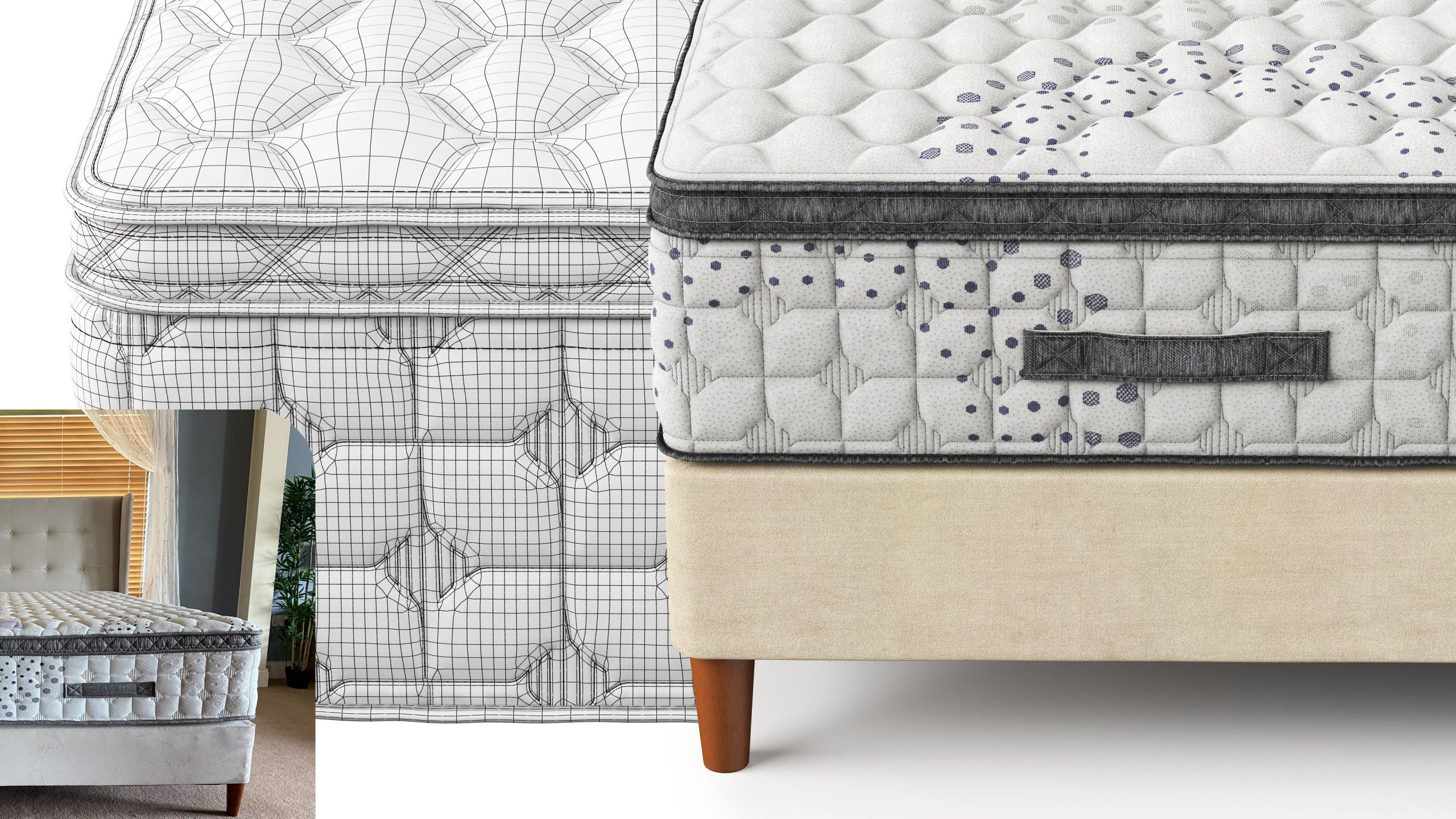
The more data you can provide to a studio, the fewer revisions will be necessary. Ideally, CAD or STEP data should be given together with measured drawings. Photos of all product angles are also beneficial. Details regarding the materials and finishes of the products should additionally be provided. Information as to where the 3D models will be used is important too. Material samples or color codes are particularly helpful in ensuring that the right textile, wood and metal materials are modeled. Please refer to our product 3D modeling guide for more detail on these points.
See a 3D model of your own product
Send one product with its drawings or photos. We will show how the model is built and where it can be used: catalog renders, AR and configurators.
Book a DemoFAQ
What does a 3D modeling service do?
Using CAD, measured drawings or photos, a studio will generate a digital 3D model of a product. This can then be used in, for example, visualizations, animations, AR and 3D web viewers and configurators. Typically, 3D modeling services will also apply materials and textures to the 3D models to make them more realistic.
Should I hire a 3D modeler or a 3D modeling company?
If there is only one product and budgets are tight then in most cases a self-employed 3D modeler is adequate. However, for consistency in style and size, it is generally preferable to appoint a studio. Here everyone adheres to the same methodology.
Which file formats should a 3D model come in?
Depending on the usage for which the 3D models are required, various file formats can be utilized. For visualizations, these include MAX, FBX and OBJ. GLB and USDZ files (USDZ being for Apple devices) are for web 3D viewers and AR. STEP and STL files are applicable for production and 3D printing. Hence, it is important to ascertain in advance which file formats are required.
Can a 3D model be made from photos?
Yes. Indeed, multi-angled photos can be given. Ideally, these should also include general product measurements to avoid having to guess these. For Sklum, only photos of products could be obtained and so CGIFurniture used these to create 3D models for the brand’s silo and interior images.
Do 3D modeling companies also make files for AR and configurators?
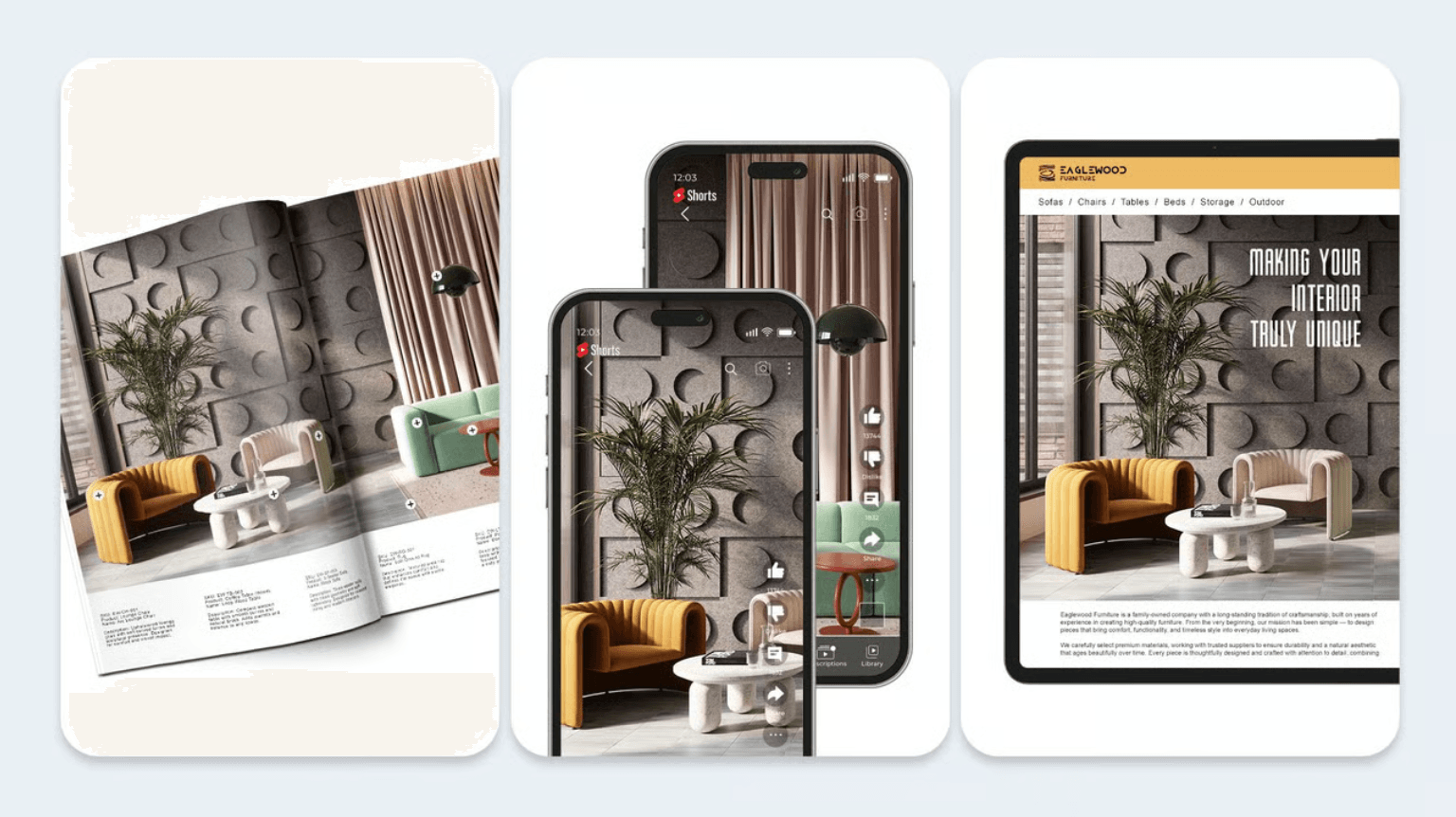
Yes. Most of the companies featured create a pared-down GLB and USDZ version of the rendered 3D model. Consequently, the product viewed in AR, web 3D viewers and configurators is the same as that shown in the brand’s catalogs.