A product launch is days away, and the marketing team is already behind. The reason is structural: photography needs a physical sample, and the sample isn’t ready until manufacturing signs off. By the time the studio session wraps, the catalog deadline has passed. Add a few colorways and the math gets worse, because every variant is another shoot. There’s a different way to run this, and it starts with treating your product content as one digital asset instead of hundreds of disconnected files. That asset becomes a single source of truth for product content: one master 3D model that every image, render, and animation is generated from.
The Real Problem: Content Is Chained to a Physical Sample
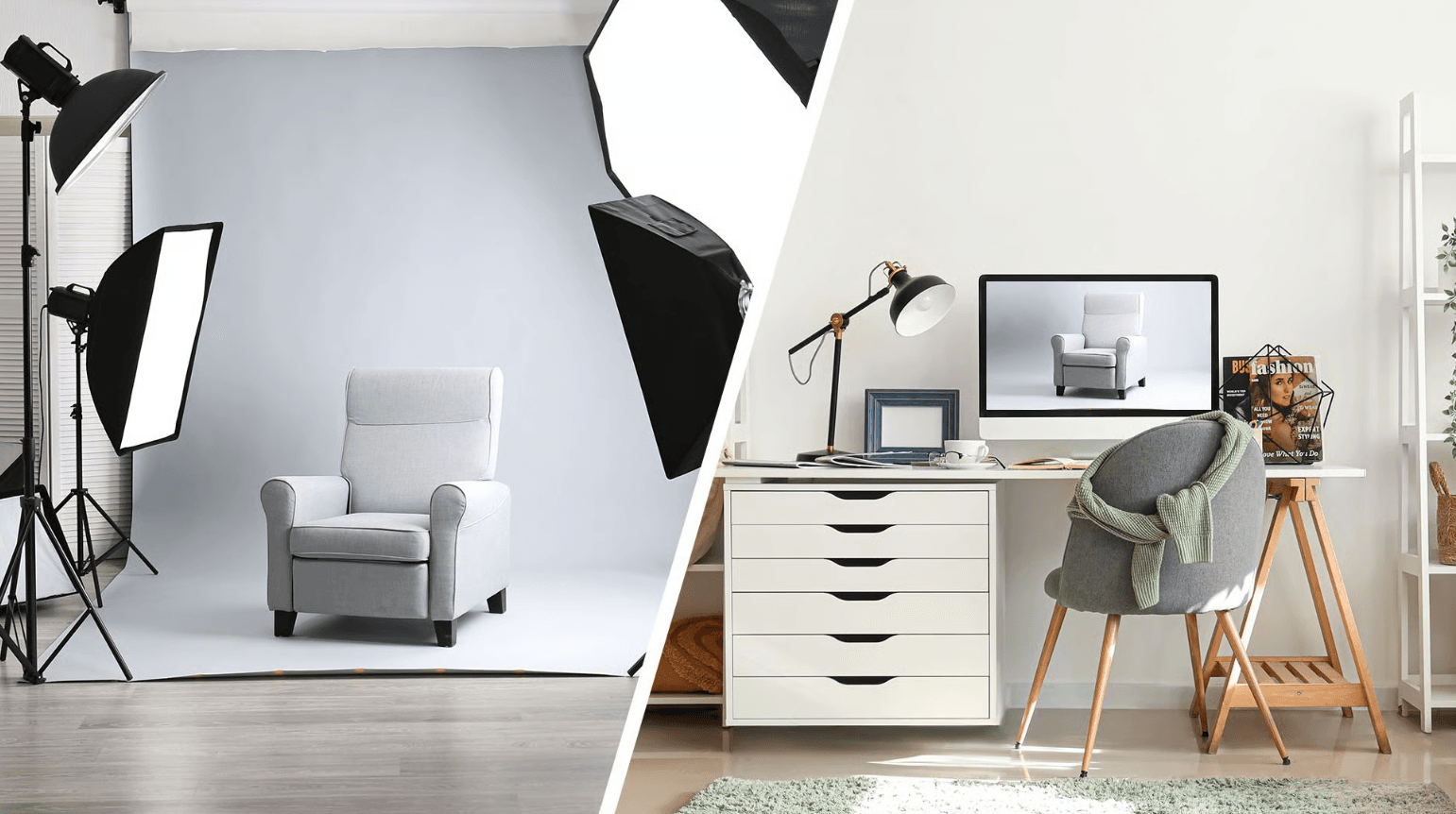
Traditional product imagery doesn’t scale with your catalog; it scales with your shoot days. No sample means no photos, which routinely pushes content behind the launch. Each new fabric, finish, or size needs its own session. A redesign means reshooting what you already had. Expanding into a new market means shipping samples across borders just to photograph them again. For a catalog with real variation, the cost and calendar grow far faster than the product line itself. Ordering 3D modeling services instead takes the physical sample out of that chain.
The Shift: One Digital Master Asset
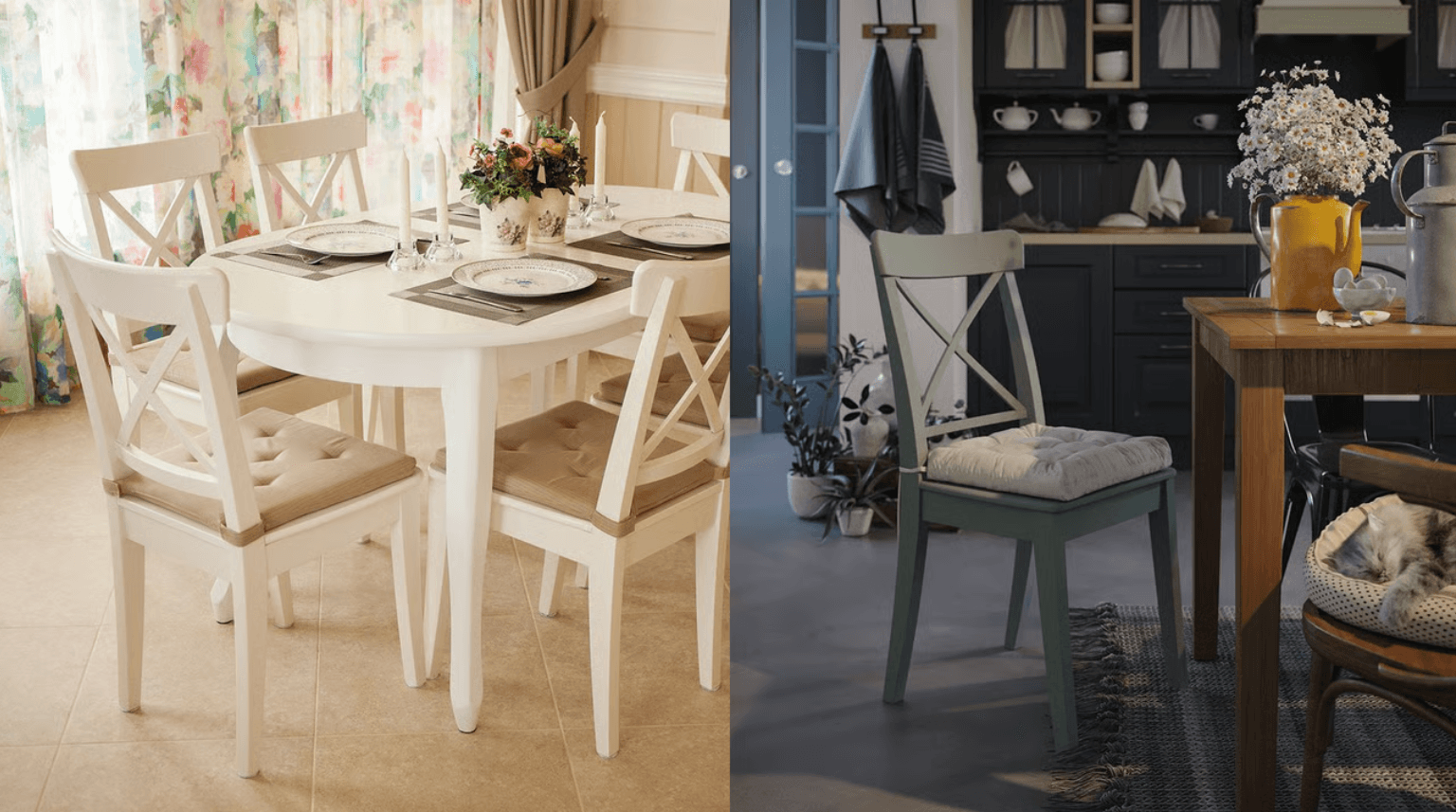
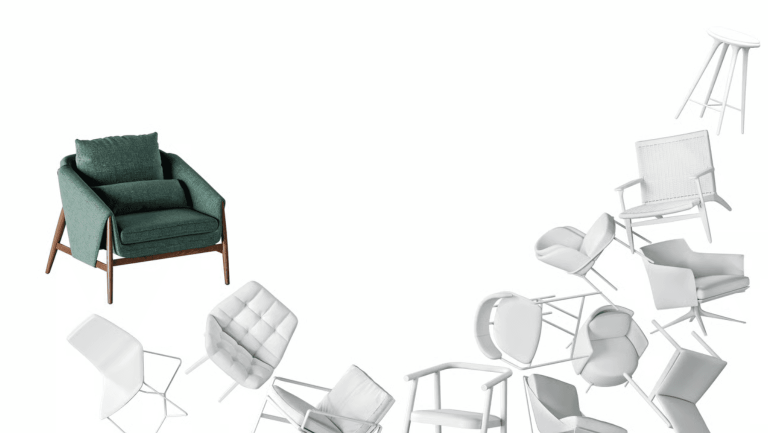
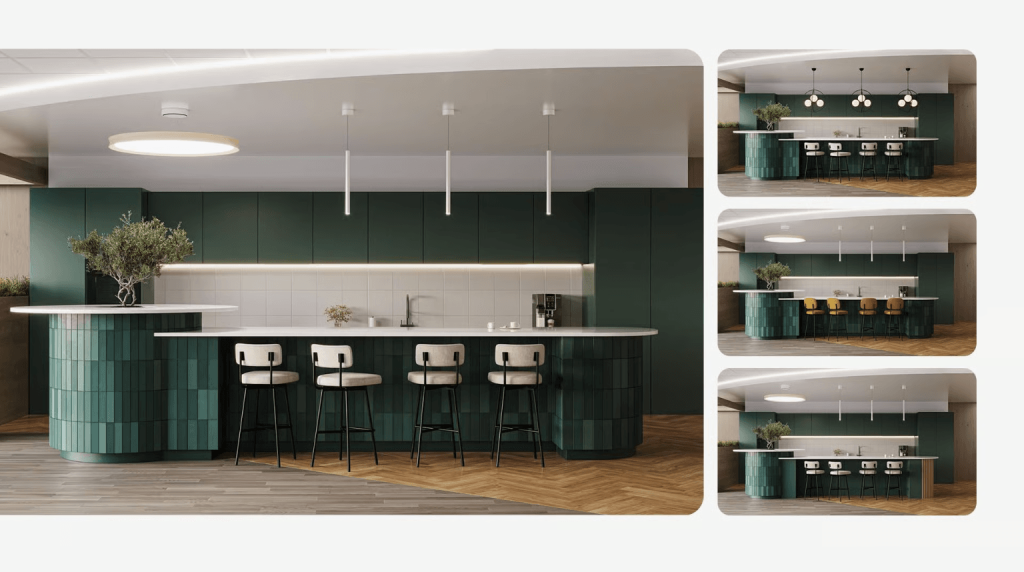
The fix is to build the product once, in 3D, and reuse it everywhere. This high-fidelity, reusable model is what some now call a product digital twin: a virtual replica of the physical item. One clarification worth making: this isn’t the industrial digital twin used to monitor factories or supply chains. Here, the twin is the source of truth for your visual content, not a live simulation. The practical payoff is simple. Geometry stays fixed; only the material or option changes. Swapping a sofa from grey to olive, or steel legs to walnut, is a software operation, not another shoot day.
The Pipeline: From a 3D Model With Metadata to Any Asset
A single source of truth only works if it’s structured. The workflow has three layers:
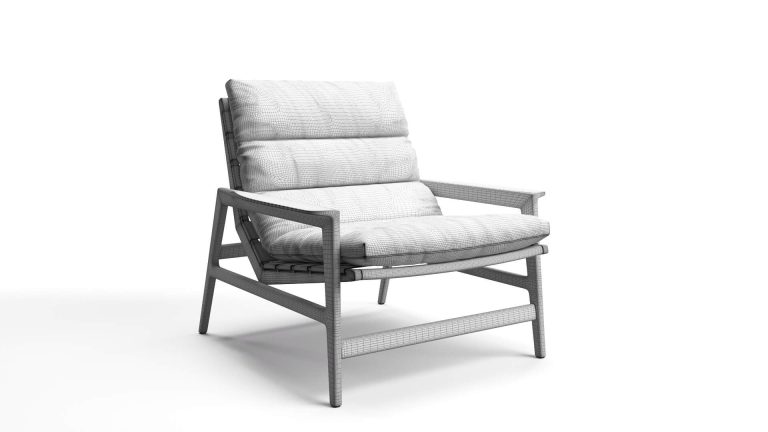
- Master model with metadata. Artists build one accurate model, then tag each part with its available materials, options, and dimensions, so the data lives with the geometry. How such a model is built is explained in our guide to 3D product modeling.
- A centralized asset library. The finished model is stored alongside its metadata, options, and related assets, version-controlled and searchable. Your team stops hunting for the “right” file.
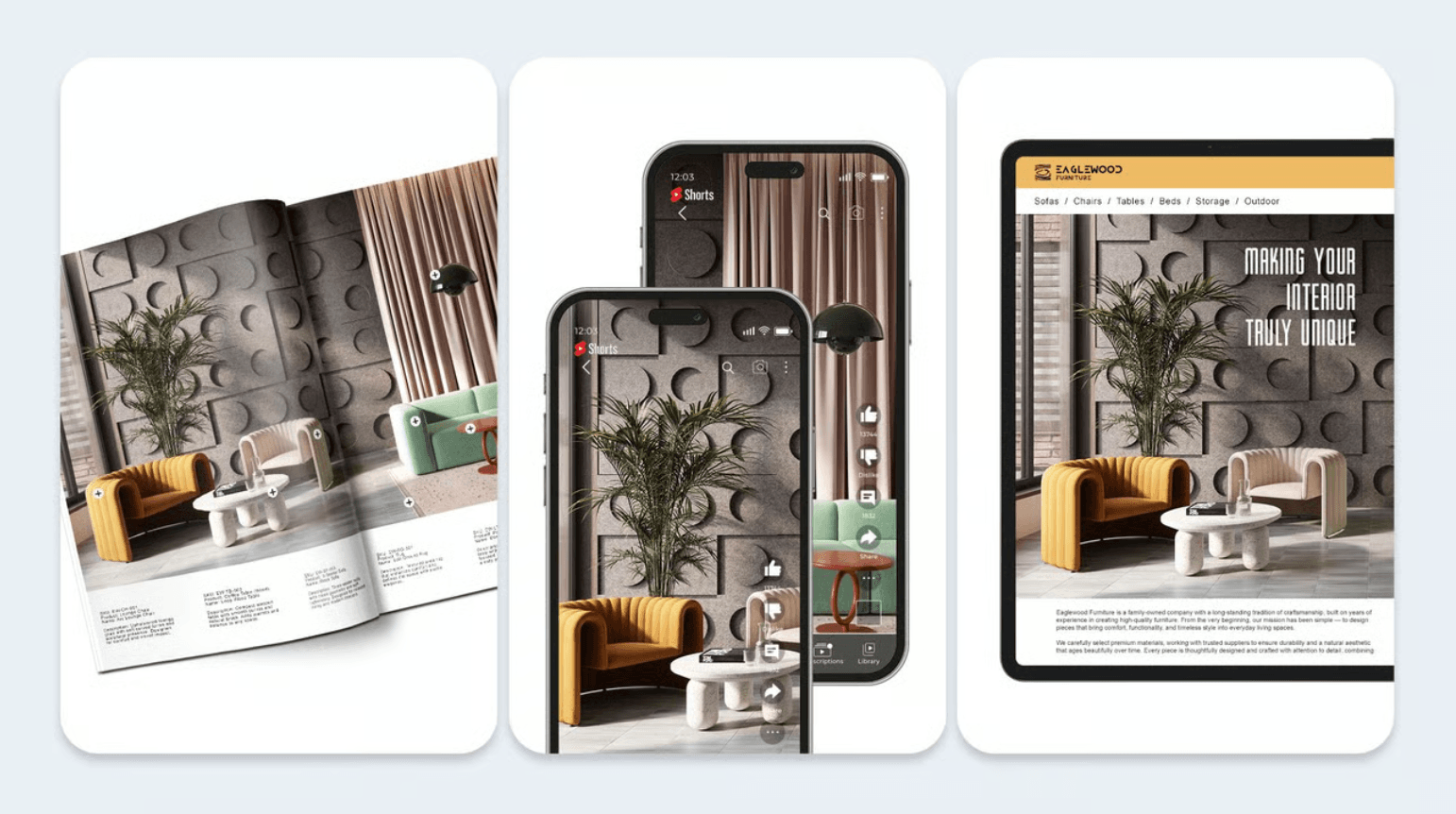
- Asset generation on demand. From that one source you produce the full content set: white-background silo images, lifestyle renders, 360° spins, animation, and AR-ready models, all consistent with each other. (Interactive product configurators are a natural next layer on the same foundation.) See how one 3D model for every marketing asset works across channels.
What It Changes
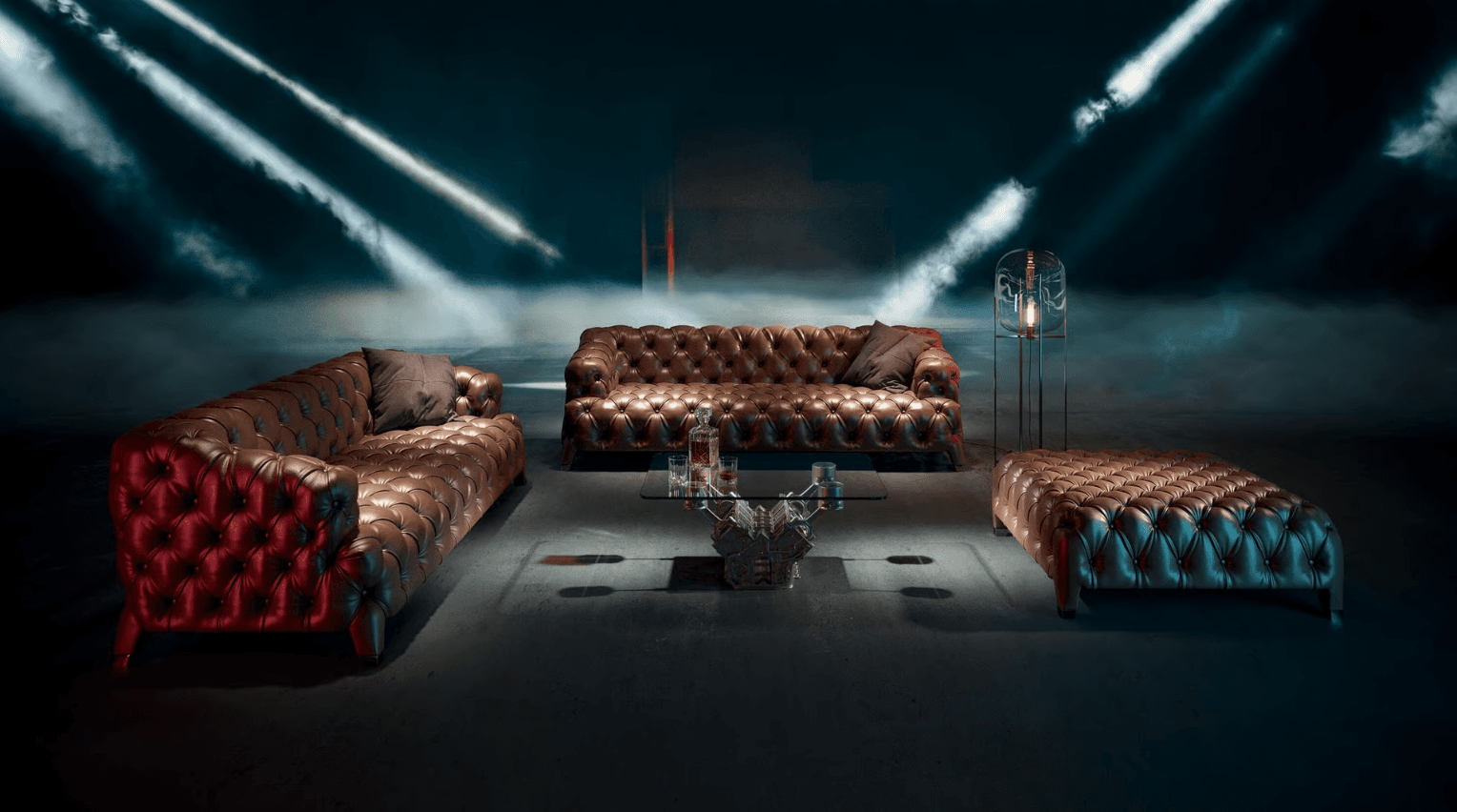
The economics shift the moment the model exists. Brands adopting this approach commonly report cutting content costs dramatically and compressing timelines from weeks to hours. Consistency stops being a manual chore: every channel, marketplace, and region draws from the same source, so lighting and styling match by default. You can produce launch imagery before the product physically exists, and localize for new markets without shipping a single sample. Quality is rarely the obstacle people expect: in blind comparisons, viewers routinely struggle to tell high-end CGI from studio photography, and at standard resolution the difference effectively disappears. Each of these gains comes from building the product digital twin once and reusing it.
Is This Right for You?

The model pays off fastest under specific conditions: a catalog of roughly 20+ SKUs, products that come in multiple colors or configurations, frequent design updates, or a need for pre-launch and marketplace content at volume. For a handful of simple SKUs with no variants, traditional photography may still be the practical call. If your catalog looks like the first case, the quickest way to judge the fit is to see it built on your own product.
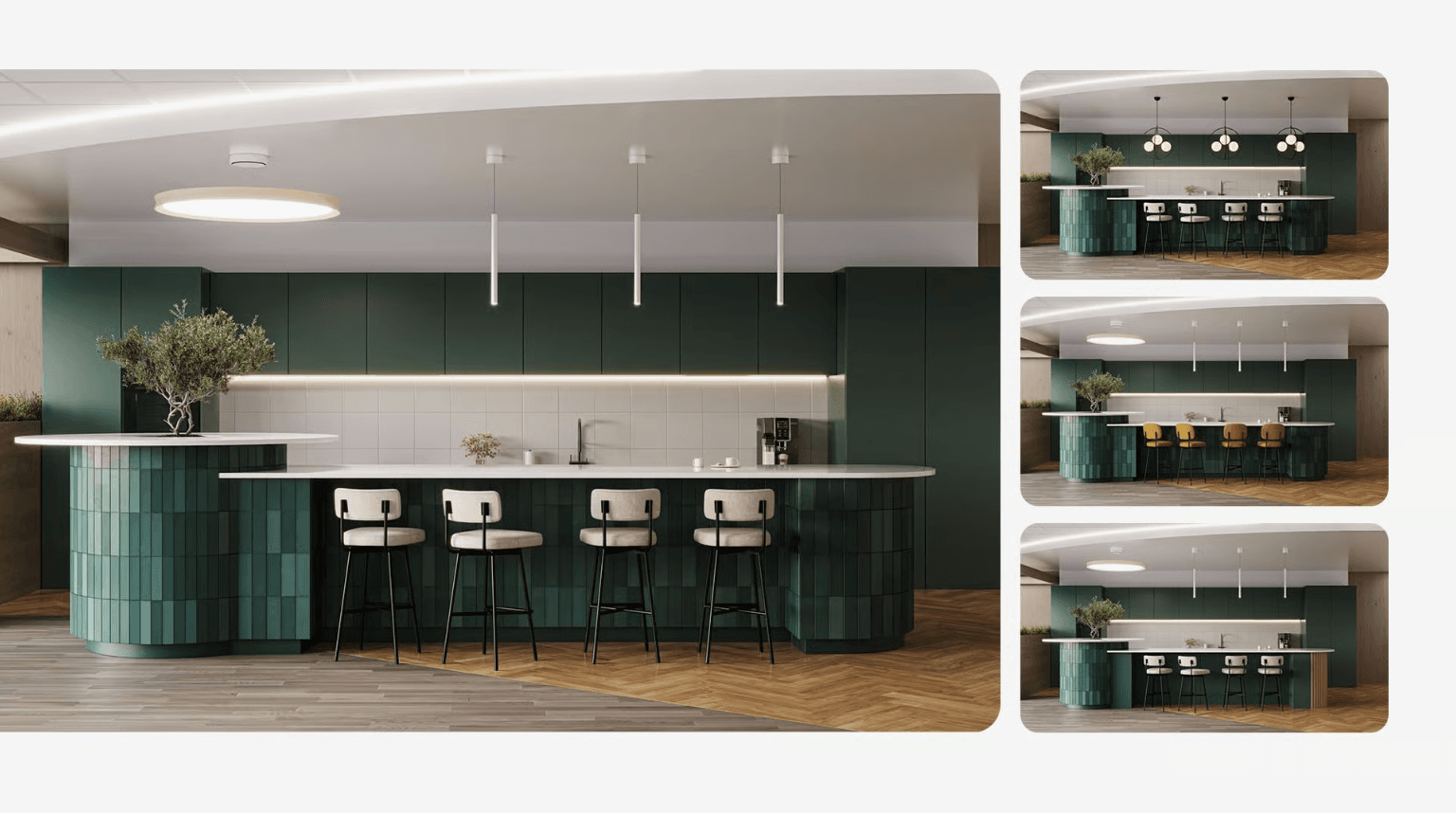
One master model for every channel
If your catalog has variants, frequent updates or marketplace volume, see the single-source workflow run on one of your own products.
Book a DemoFAQ
What is a single source of truth for product content?
It’s one master digital asset, typically a 3D model with attached metadata, that every piece of product content is generated from. Instead of scattered files per channel, all images, renders, and assets trace back to a single, version-controlled source, keeping every visual accurate and consistent.
What is a product digital twin?
A product digital twin is a high-fidelity, reusable 3D replica of a physical product. In a content context it acts as the source of truth for visuals (silo shots, lifestyle scenes, 360° views, AR), rather than the industrial monitoring tool the term usually describes.
Can CGI product images replace photography?
For most manufactured goods such as furniture, electronics, hardware, and footwear, yes. In blind comparisons, viewers routinely can’t reliably tell high-end CGI from studio photography. Photography still wins for artisan, food, or human-centric lifestyle shots where authenticity is the point.
How do you create product images for every color or variant?
From one master 3D model, each variant is a material or texture swap rather than a new shoot. The geometry stays fixed while finishes change, so a product available in five fabrics produces five accurate image sets from a single source.
How much can a 3D content pipeline save versus photography?
Brands commonly report up to 80–90% lower content costs once a reusable model exists, since variants and updates no longer require studio sessions, samples, or reshoots. Savings grow with catalog size and the number of variants.
When does CGI not make sense?
For very small catalogs (under ~10 SKUs) with no variants, infrequent updates, and products whose appeal is tactile or organic, the upfront cost of modeling may outweigh the benefit. Photography remains practical there.