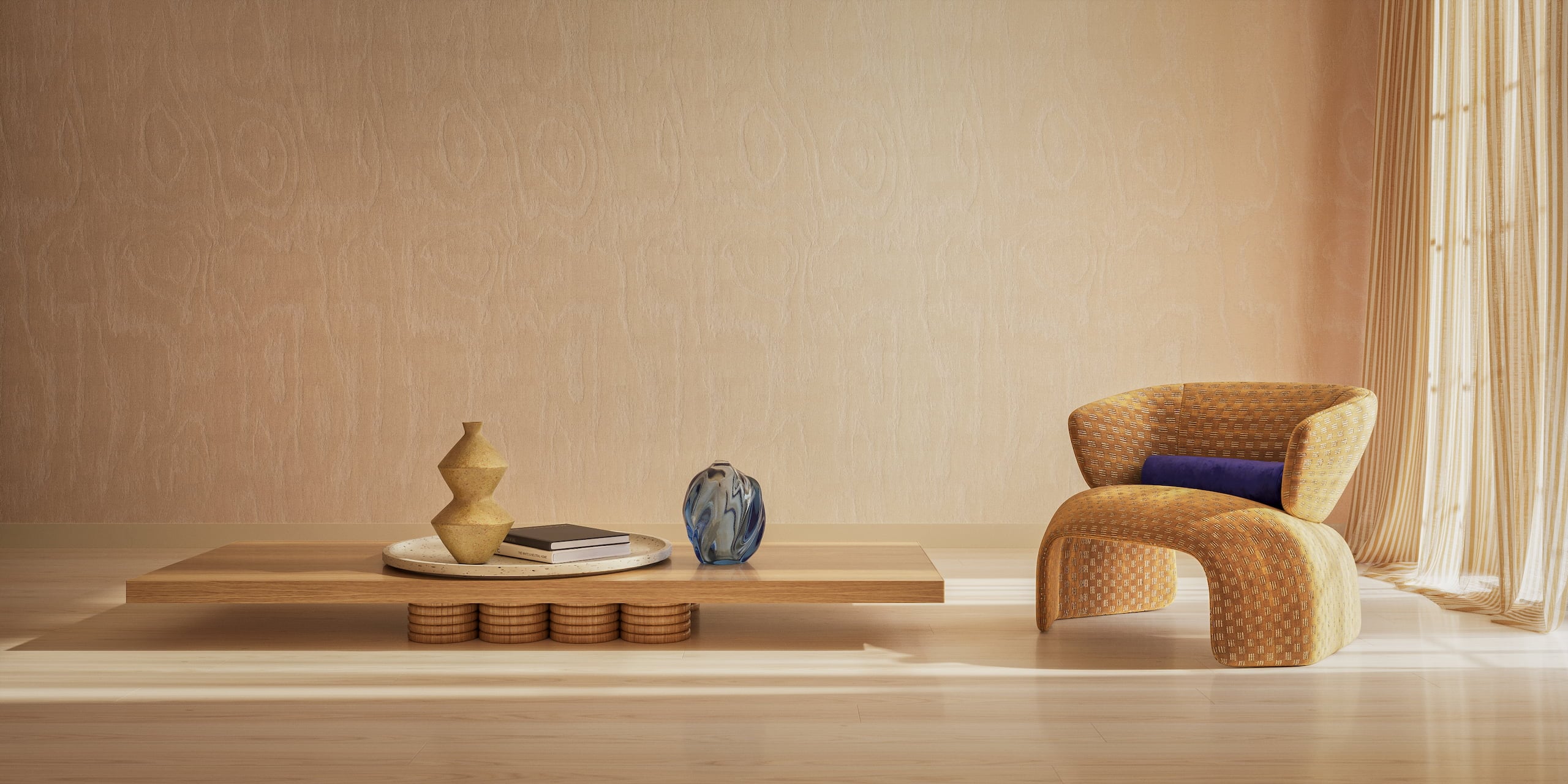
A 3D product model is a digital representation of a physical product, built in specialized software from CAD files, technical drawings, reference photography, or 3D scans. It captures the product’s geometry, proportions, surface structure, and material information. From that single asset, a team can produce rendered catalog imagery, deploy an AR experience, power a web configurator, build an animation, or generate every colorway variant in a single production run. If you need models built for your catalog, see our 3D product modeling services.
Modeling also sits inside a broader product development lifecycle. Before manufacturing begins, a virtual prototype built from design files lets product teams review form, validate design intent, and approve finish options without committing to physical samples. The same asset supports engineering review and stakeholder approval at the concept stage – shortening the time from the first idea to production sign-off. After launch, it feeds e-commerce PDPs, trade show materials, digital catalogs, and AR experiences without being rebuilt. Furniture makers use the same files for rapid prototyping in furniture production. Over time, that asset can grow into one of the digital twins in product development that teams share across departments.
Think of it this way: design and CAD files go in; the 3D product model that comes out serves every downstream need – design validation, rendering, AR, interactive content, sales enablement, manufacturing communication, and reusable digital asset production. That is the full scope of what 3D product modeling supports and why the original modeling investment compounds with every use. In practice, the model becomes a single source of truth for product content.
What Is 3D Product Modeling?
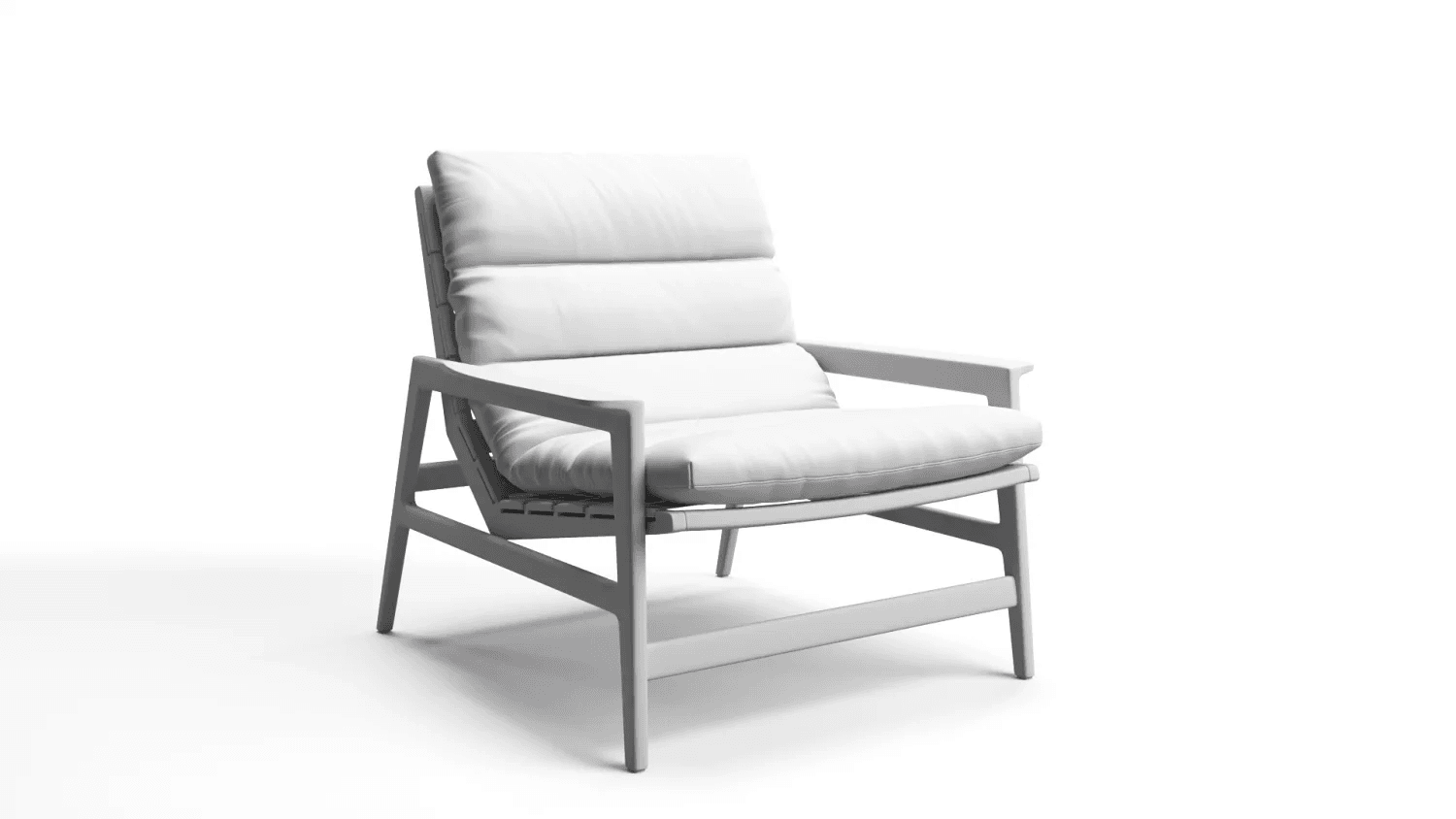
3D product modeling is the process of building a digital object that accurately represents a physical product – its shape, scale, construction logic, and surface characteristics. The result is a mesh-based geometry file with UV mapping applied so that materials can be assigned, textures rendered correctly, and the asset used across multiple output pipelines. When that replica is enriched with materials, options, and metadata, it becomes a product digital twin – one source every render, configurator, and AR experience is generated from.
It’s worth clarifying three concepts it often gets confused with.
Product design vs. 3D product modeling. The product design defines what should be made – the function, the form, and the intent. 3D product modeling converts that design intent into a visual-ready, reusable digital asset. Design answers what the product is; modeling produces the file that commercial pipelines can work with. Our article on 3D modeling in product design shows how the two work together during design reviews.
CAD vs. 3D product modeling. CAD defines exact dimensions, tolerances, and part relationships built for manufacturing. CAD files are precise but not render-ready – they’re typically too dense, have unsuitable mesh topology for CG rendering, and contain no UV maps or material assignments. 3D product modeling converts that engineering geometry into a clean polygon mesh, retaining the original dimensions while restructuring the surface for how rendering engines process it. The building blocks of that mesh are polygons in 3D modeling, and their layout decides how the surface shades.
3D modeling vs. 3D rendering. Modeling creates the digital object. Rendering generates an image from that object once lighting, materials, and a camera angle are applied. The two stages are sequential. No model, no render. Our guide to 3D product rendering covers the second stage in detail.
Finally, it’s not a direct substitute for product photography. Photography captures a physical object that already exists. Modeling creates a digital object that can produce imagery before manufacturing is complete – and continues producing it across every variant, update, and channel for the life of the product. That is the core advantage of digital modeling over a camera-based workflow.
Table 1: 3D Product Modeling vs. 3D Rendering vs. CAD vs. Product Photography
| Factor | 3D Product Modeling | 3D Rendering | CAD | Product Photography |
|---|---|---|---|---|
| What it is | Building a digital product object – geometry, proportions, surface structure | Generating a photorealistic image from a 3D model with materials and lighting applied | Engineering geometry defining exact dimensions and part relationships for manufacturing | Capturing a physical product with a camera in a controlled or natural setting |
| Main purpose | Creating a reusable digital asset for rendering, AR, configurators, animation, and sales enablement | Producing photorealistic imagery for e-commerce, marketing, and catalog content | Precise design documentation and manufacturing specification | Documenting the physical product as-is with real-world material and context |
| Typical output | OBJ, FBX, native 3D scene files, GLB/USDZ | JPG, PNG, EXR image files | STEP, IGES, SolidWorks, Fusion 360 files | JPG, TIFF, RAW image files |
| Key strengths | One asset → many outputs; no physical sample required | Photorealistic imagery from digital files alone | Exact dimensions; engineering-grade accuracy; part assembly logic | Real-world authenticity; natural imperfection; human context |
| Limitations | Requires skilled modeling; quality depends on input references | Quality depends entirely on the underlying model | Not render-ready without conversion and topology cleanup | A physical sample must exist; a separate session is needed per variant |
| When brands use it | Before any rendering, AR, animation, or configurator work begins | E-commerce imagery, campaign creative, catalog content | Engineering review, manufacturing prep, technical documentation | Brand campaigns and lifestyle shoots requiring real people or live-action texture |
Why Businesses Use 3D Product Modeling
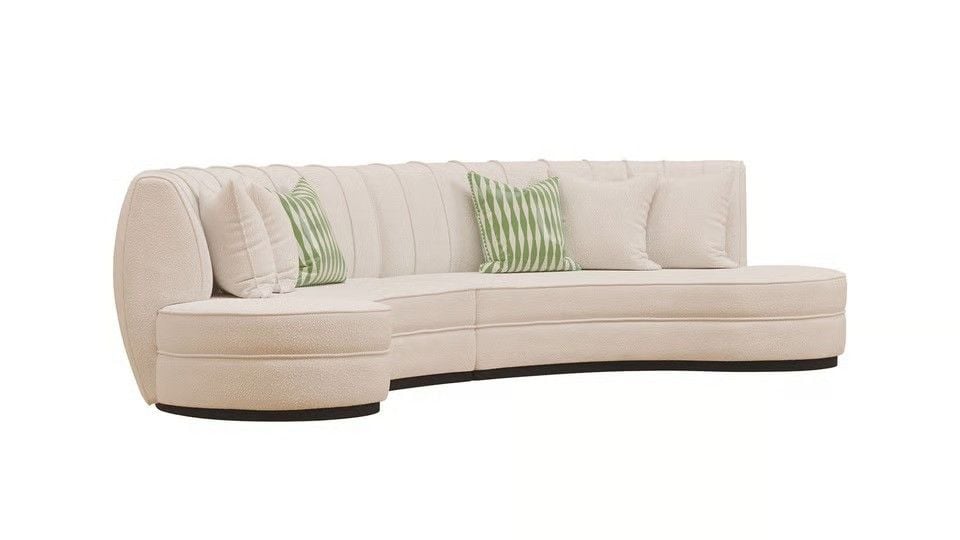
The commercial argument starts with reuse. One quality model produces white-background silo renders, lifestyle scenes, 360 spins, AR files, configurator assets, and animations. Material and colorway variants are re-renders from the same geometry, not new builds. Every output after the first reduces the effective cost per asset – and a model built today continues paying back across every campaign, seasonal update, and channel format it feeds. This is what we mean by one 3D model for every marketing asset.
Speed to market is the other major driver. Pre-launch content – paid ad creative, trade show visuals, pre-order pages – can be produced while manufacturing is still running. Design changes and stakeholder approvals happen in the file, not on a physical prototype. That parallel workflow compresses what would otherwise be sequential months of waiting for samples before the marketing work can start. This head start is a big part of the case for 3D modeling for furniture business.
Visual consistency across channels is a compounding return. When every image in a catalog comes from the same model, the product appears identical across the product detail page, marketplace listing, print catalog, and paid ad. That consistency is a trust signal at scale, which photography workflows struggle to maintain with large SKU counts. It is one of the reasons 3D modeling for ecommerce scales better than repeated photo shoots.
Where One Model Goes: Online Stores, Showrooms and Sales Training
Reuse is easier to plan when you know where the model will end up. Most furniture and product brands put the same asset to work in three places.
Online Sales
Online, the model answers the questions a shopper would settle in a showroom: how big the piece is, what the fabric looks like up close, and how it works.
- Scale renders that show true dimensions next to familiar objects.
- Lifestyle renders that place the product in a real-looking room.
- Close-ups of fabric, stitching, wood grain and finishes.
- Feature images that call out storage, modular parts or adjustable mechanisms.
- AR files that let buyers place the product in their own home. See how brands use augmented reality in the furniture industry.
Showrooms and Print
A showroom cannot hold every model, size and finish. The same model fills the gap: an in-store digital catalog the consultant can search by SKU, a variant switcher for upholstery and wood tones, a modular configurator for sofas and storage systems, and a printed catalog for customers who want to compare the full range away from screens. See how this worked for catalog imagery in our projects for Sklum and Oxford Garden. Producing every finish at once relies on batch rendering from one model.
Sales Training
Sales teams learn a product faster from visuals than from spec sheets. One model produces launch decks, one-page product sheets with every finish, feature sequences that show how a mechanism works, cutaways of what sits inside the frame, and side-by-side comparisons that explain why one tier costs more. Hilti used 3D visuals this way to build product knowledge training. Those feature sequences are a form of product animation.
Main Types of 3D Product Modeling
The modeling method is chosen based on product type, required detail level, and what the final asset needs to do. Each approach produces a different geometry type, which connects directly to the output it supports.
Primitive Modeling
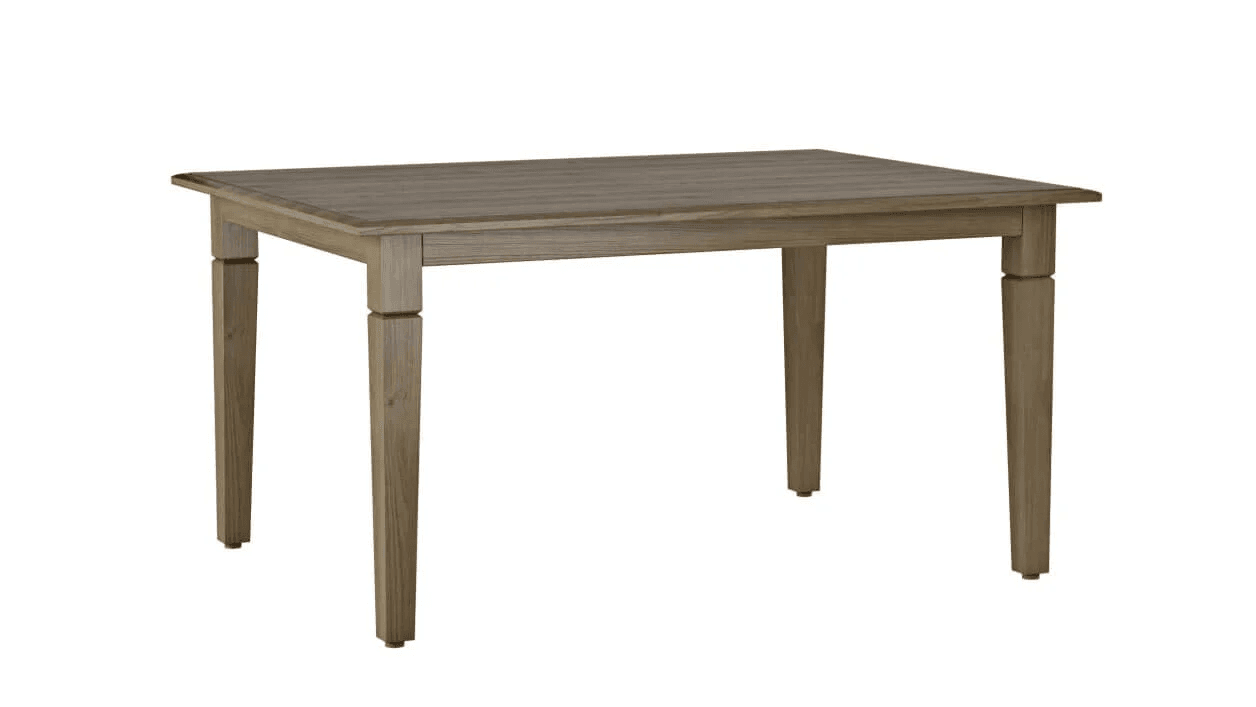
Products are assembled from basic 3D shapes – cubes, cylinders, and spheres – combined to form the final object. This method is fast and suitable for simple products that do not require fine geometric detail. In commercial pipelines it’s a starting point for early-stage blocking, not typically a final deliverable, as it allows designers to quickly visualize the overall shape and proportions before moving on to more detailed modeling techniques.
Polygonal Modeling – High-Poly
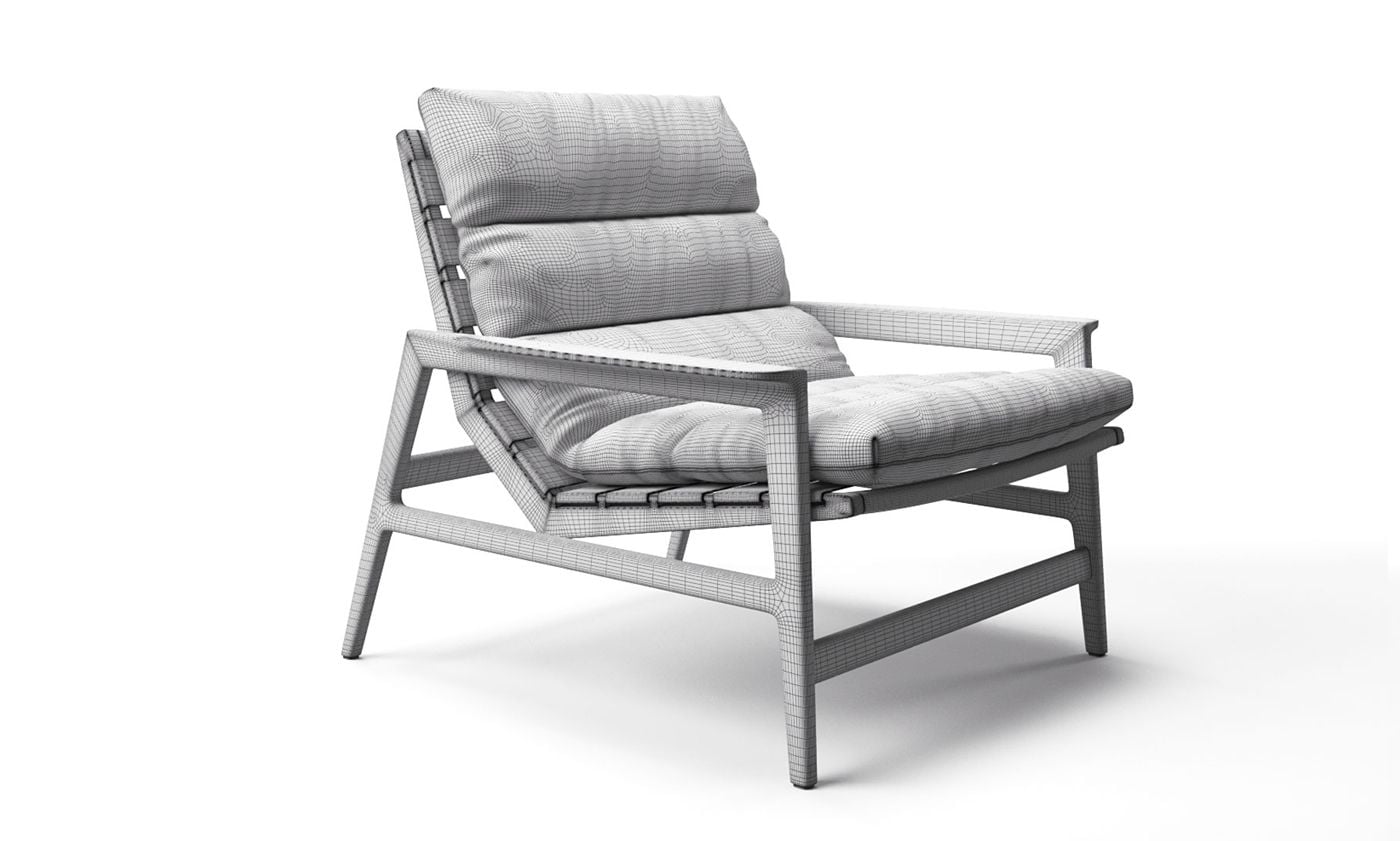
The primary method for photorealistic product visualization. A dense polygon mesh supports subdivision, displacement mapping, and fine surface detail. This is the geometry behind close-up PDP shots, catalog hero images, and advertising creative. Geometry quality at this stage determines how convincing the final render looks – every chamfered edge, seam, and material transition that reads at close range lives in the polygon count. Our comparison of high poly vs low poly models explains when each one fits.
Polygonal Modeling – Low-Poly
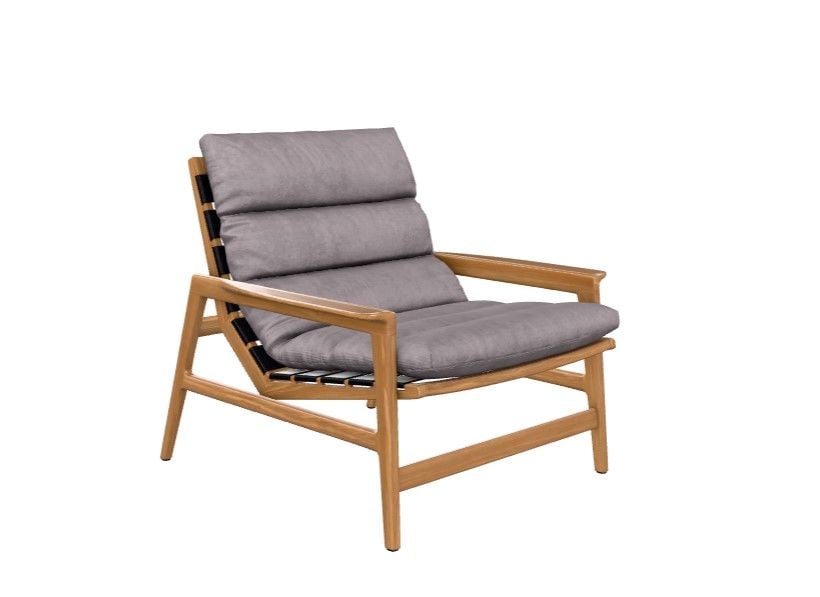
The same polygon method was built for real-time performance rather than detail. A minimal polygon count loads fast in browsers, runs smoothly on mobile, and is the standard format for augmented reality (AR) placement apps, 360 – interactive viewers, and web configurators. Surface detail is handled by texture maps, not geometry. The difference is important: a high-poly render model can’t be used in an AR app unless it is first changed into a low-poly version–these are different outputs made from the same original asset.
Wireframe Modeling
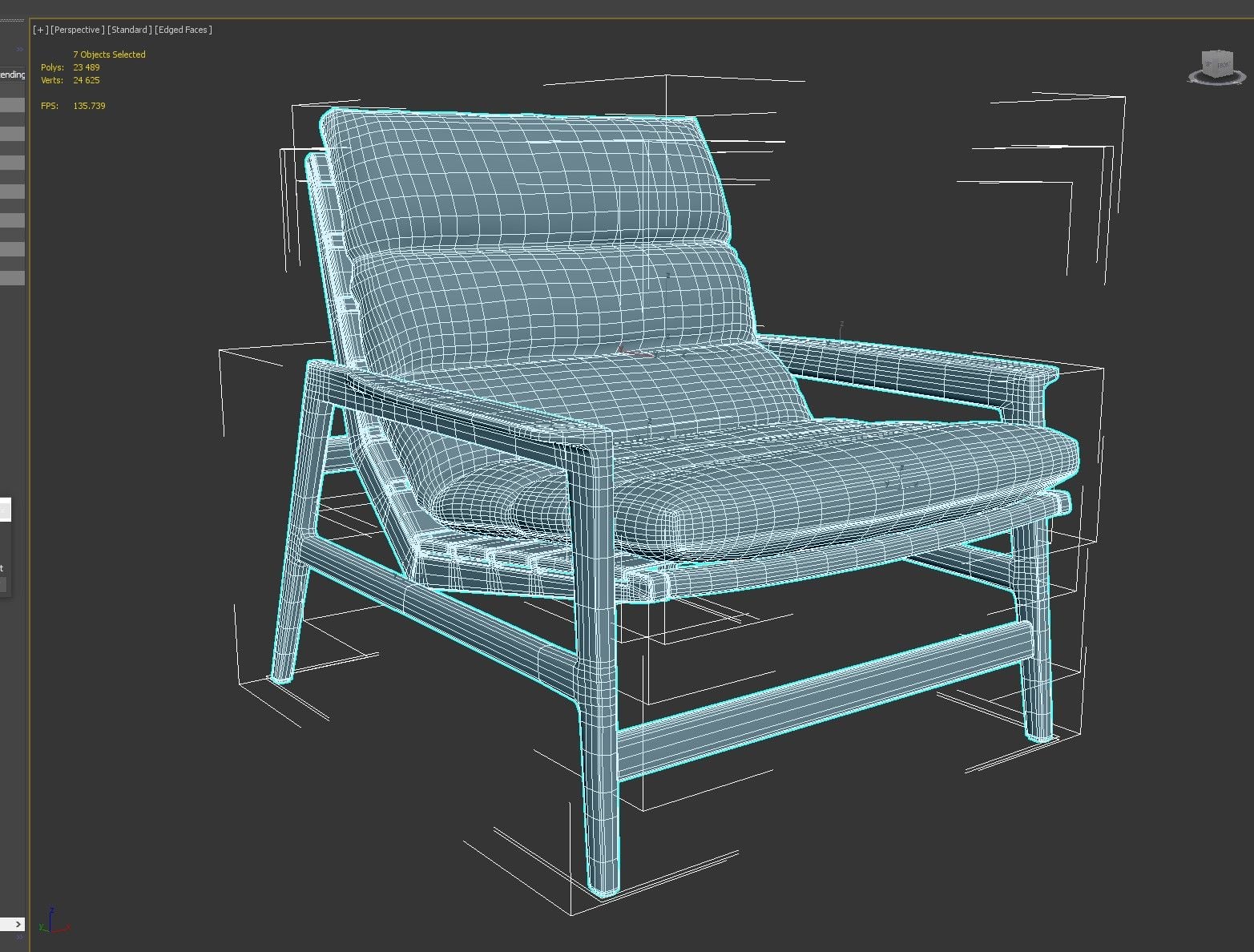
A skeletal representation of edges and vertices – the structural geometry without filled surfaces. Not a finished commercial deliverable. Its role is in concept development, assembly review, and technical communication: showing how a product’s geometry is organized, how parts relate, or what the construction logic looks like before surface detail is added.
Sculpting
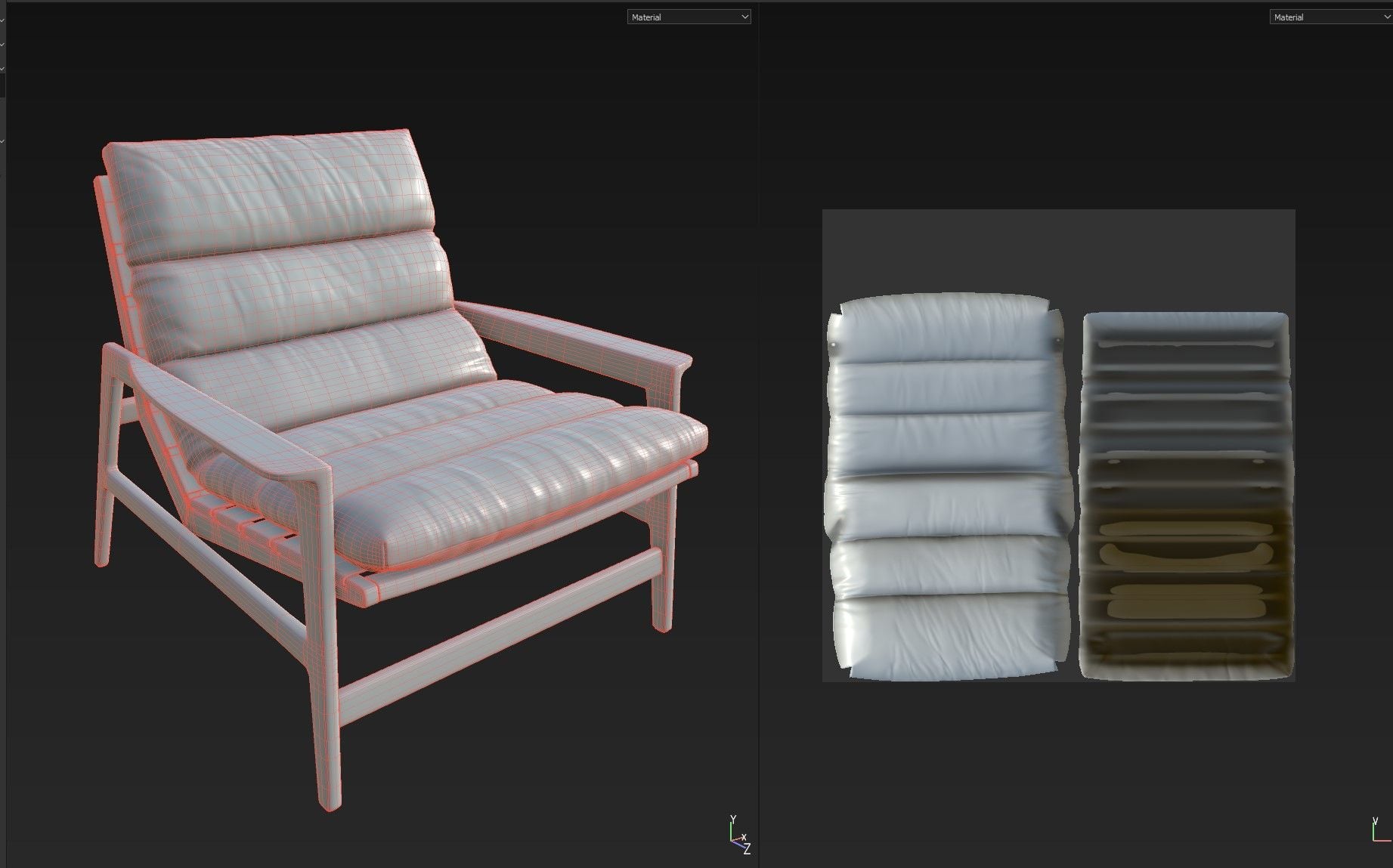
Working in ZBrush, artists shape a high-resolution digital surface like clay. The right tool is essential when the material’s feel drives the visual aspects, such as upholstered furniture with natural fabric drapes, cushions that deform realistically, and organic decorative objects. Sculpted models carry extremely high polygon counts and require retopology before serving a rendering or real-time pipeline – sculpting is the detail stage; retopology is what follows it. The full 3D sculpting workflow runs in five steps.
Retopology
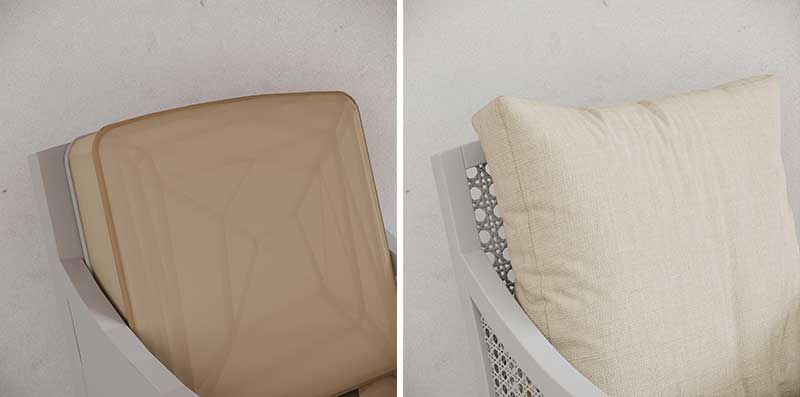
Retopology is not a modeling method in itself; rather, it is a process applied to existing geometry when the polygon structure is unsuitable for the intended output. Dense CAD imports, sculpted meshes, and raw scan data all typically need retopology. The artist rebuilds the mesh with clean topology: logical edge loops, appropriate density, and UV-friendly structure. Form is preserved; geometry is rebuilt for the delivery environment.
Reverse Engineering and Scan-Based Modeling

When no CAD file exists and the product must be reconstructed from the physical object, 3D scanning provides a starting point. A scan captures the surface as a point cloud or raw mesh – accurate in shape, but unusable for rendering without cleanup. The raw data is processed, holes are filled, and the geometry is retopologized into a production-ready model. This approach is practical for legacy products, complex organic shapes, and heritage items where engineering documentation is unavailable. Without a scan or CAD file, artists can still create a 3D model from photos.
Table 2: Modeling Methods – Geometry Type, Best Output, and Commercial Use
| Method | Geometry Type | Best Output | Strengths | Limitations | Commercial Use |
|---|---|---|---|---|---|
| Primitive modeling | Basic shapes (cubes, cylinders, spheres) | Early-stage mockups, simple catalog renders | Fast; minimal overhead | No surface detail | Simple products, concept blocking |
| Polygonal – high-poly | Dense mesh with subdivision support | Photoreal rendering → PDP, catalog, advertising | Maximum detail; supports displacement | Heavy; unsuitable for real-time without optimization | E-commerce hero images, campaign creative |
| Polygonal – low-poly | Minimal mesh for real-time performance | Real-time delivery → AR, 3D viewer, configurator | Fast loading; runs on mobile and web | Limited detail for close-up rendering | AR apps, web configurators, and 360 viewers |
| Wireframe | Edge-and-vertex skeletal structure | Structural / conceptual communication | Shows construction logic clearly | Not a finished commercial deliverable | Design review, assembly review, geometry planning |
| CAD / NURBS / solid | Mathematically precise surfaces and solid bodies | Technical visualization, manufacturing communication | Exact dimensions; engineering-grade accuracy | Needs conversion before rendering | Appliances, hardware, lighting, radiators, mechanisms |
| Sculpting | Very high-res organic mesh | Organic / soft-form rendering → upholstered furniture, decor | Free-form surface control; natural, tactile result | Extremely dense; requires retopology | Sofas, cushions, decorative objects |
| Retopology | Rebuilt clean mesh from dense source | Production-ready asset from CAD, sculpt, or scan | Reduces poly count while preserving form | Extra production stage adds time | AR, configurators, animation |
| Scan-based / reverse engineering | Point cloud or raw scan mesh | Model reconstruction without CAD | Captures physical reality directly | Raw data needs cleanup and retopology | Legacy products, organic shapes, heritage items |
3D Modeling by Product Type
Decorative and Organic Items
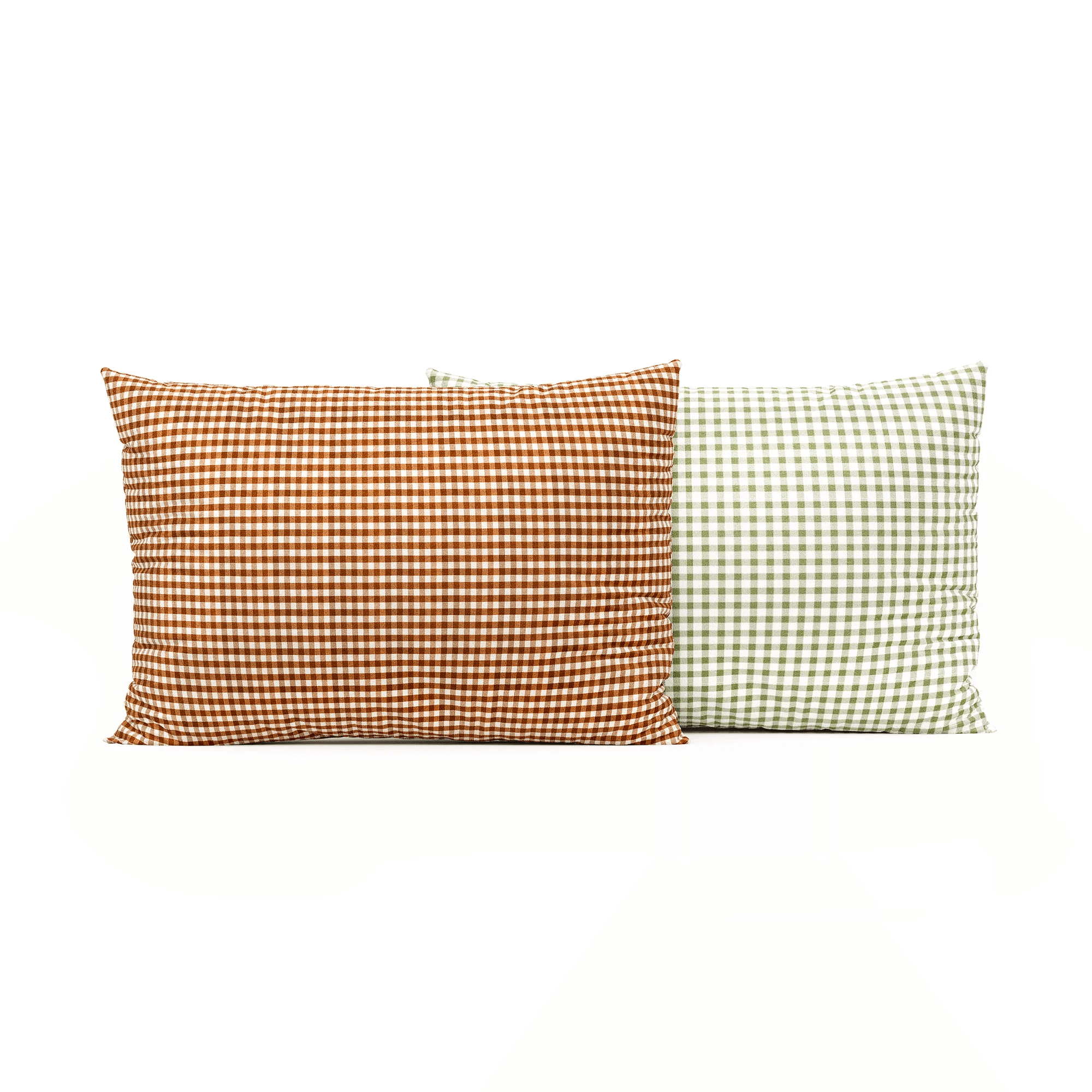
Examples: vases, bowls, organic shapes.
- Complex curves. Smooth, flowing shapes get a lot of attention. They’re modeled with care, so you don’t see weird shadows or lose that elegant outline, no matter where you look from.
- Glass and ceramics. These materials need special tweaking. You want just the right amount of reflection, a bit of translucency, and the sense of thickness. That’s what makes them look real and high-end.
- Imperfections for realism. Perfect isn’t the goal. Little flaws, uneven surfaces, tiny dents–these details make objects feel like someone actually made them by hand, not just churned out by a machine.
Technical / Industrial Items
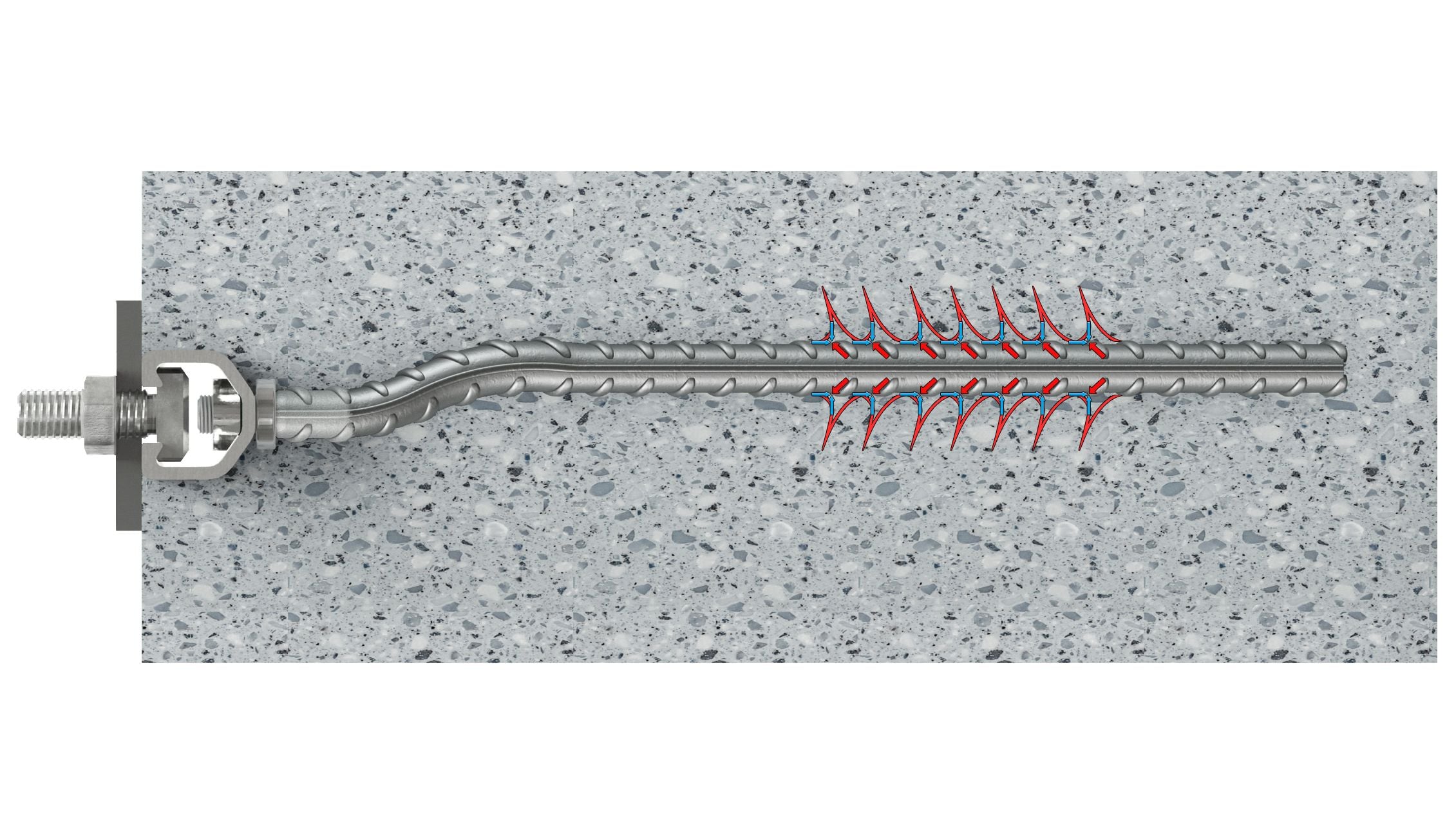
Examples: fasteners, connectors, fittings.
- Engineering geometry means you stick to technical shapes and exact measurements, so every part fits together the way it should.
- High precision matters here. You keep everything within tight tolerances and nail the exact dimensions. That’s what makes technical visuals and manufacturing projects actually work.
- The small stuff counts, too – screws, joints, connectors, little grooves. You model these carefully because they’re the details that make everything function and feel real.
Outdoor Furniture
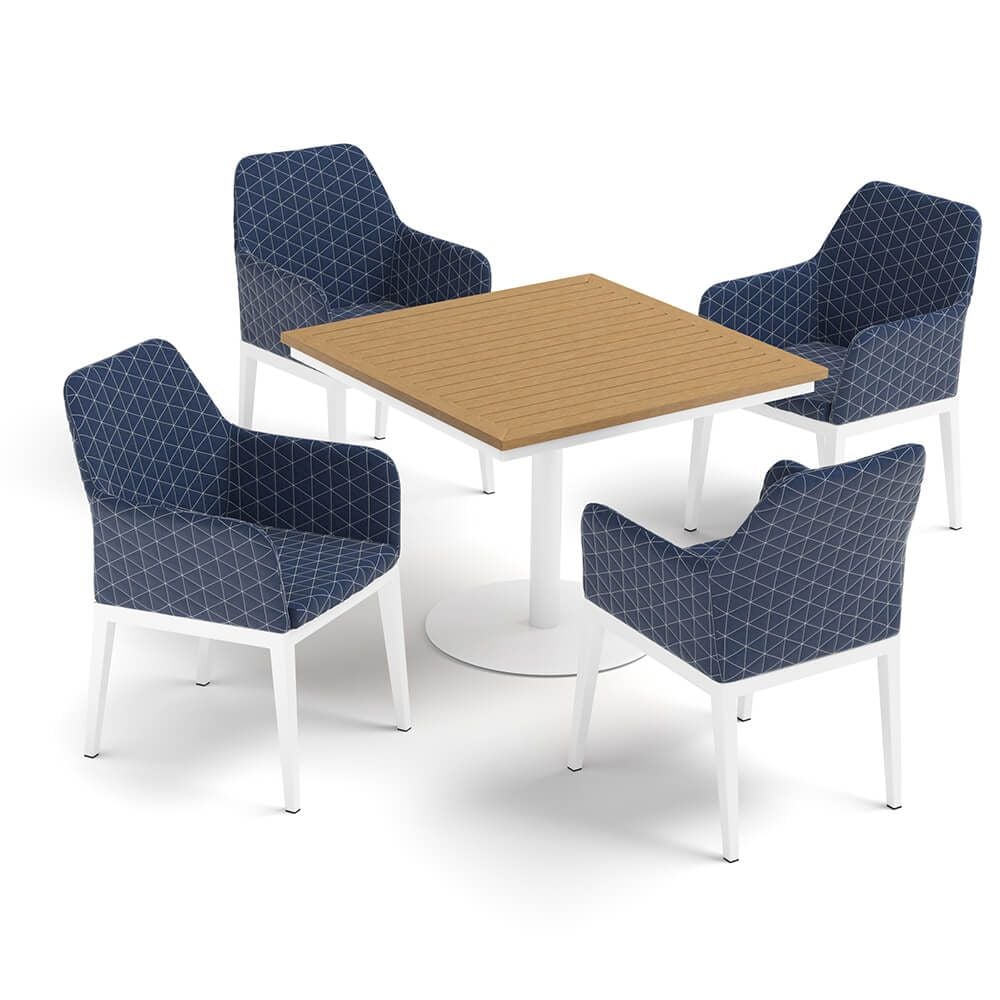
Examples: wicker items, metal frames, stone tops.
- Natural material variation. Surfaces show little shifts in color, texture, and roughness, just like real materials do when they’ve been out in the elements for a while.
- Non-perfect shapes. You’ll notice some warping, uneven edges, and those small, organic quirks that keep things from looking too fake.
- Weathering effects. Marks from sun, moisture, dirt, and everyday wear make these models feel like they actually belong outside, not just in some digital showroom.
Appliances

Examples: kettles, microwaves, ovens. Our guide to home appliance 3D modeling covers these products in depth.
- Plastic and metal show exactly where they meet. Get the seams right, nail the reflections, and don’t forget about the feel of each texture.
- LED indicators make them shine like the real thing. The light should glow naturally, spill onto nearby surfaces, and look transparent where it should.
- Glossy surfaces and tight tolerances smooth finishes, sharp reflections, crisp edges. These little details really sell the idea of top-notch manufacturing.
Levels of 3D Product Modeling Complexity
Below is a clear breakdown of the four main levels of furniture 3D modeling, based on CGIFurniture’s internal standards. Understanding these categories will help you identify the right model type for your product and plan your CGI budget more accurately. Our article on types of 3D models explains each level with more examples.
1. Simple Models
What they are: Simple models feature minimal geometry and very few details. They are built from basic shapes such as cubes, spheres, cylinders, and work perfectly for straightforward furniture items such as basic chairs, tables, benches, or simple shelving.
Characteristics:
- No seams, stitches, or fittings
- No complex texturing
- Often created from ready-made geometry and standard texture maps Ready-made assets usually come from websites to download 3D models.
- Fastest and easiest to produce
- Typical production time: ~1 working day
- Price range: $60 at volume ($130 for a one-off order)
- When to choose this level: For minimalist products with clean geometry and no ornamental elements. Ideal for quick prototyping or basic catalog imagery.
2. Medium Complexity Models
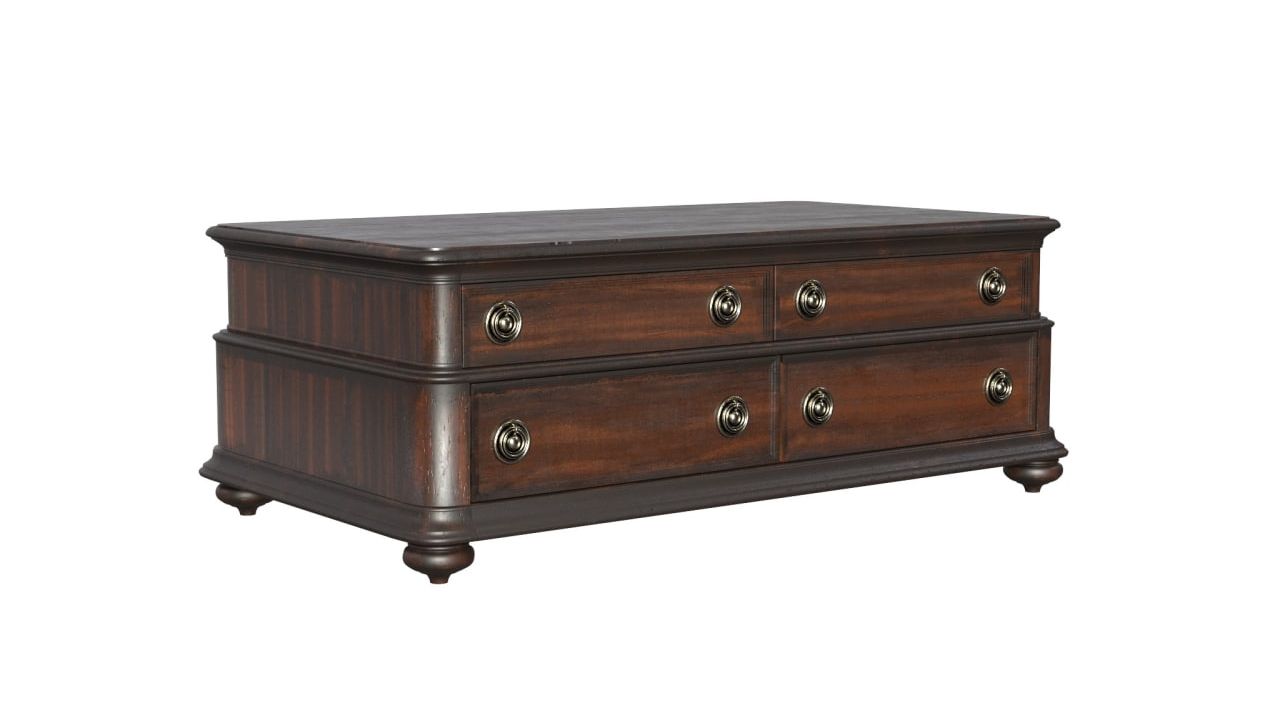
What they are: Medium-level models include furniture with slightly more nuanced geometry – still fairly simple, but featuring more components and visible details.
Examples: Sideboards, bedside tables, TV consoles, chests of drawers, and similar cabinet pieces.
Characteristics:
- Moderate amount of decorative elements
- Simple fittings
- Common and uncomplicated textures
- Suitable for minimalistic or modern designs
- Typical production time: ~1 working day
- Price range: $120 at volume ($330 for a one-off order)
- When to choose this level: For furniture with clean lines but a bit more structural complexity. Perfect for most catalog-ready models.
3. Complex Models
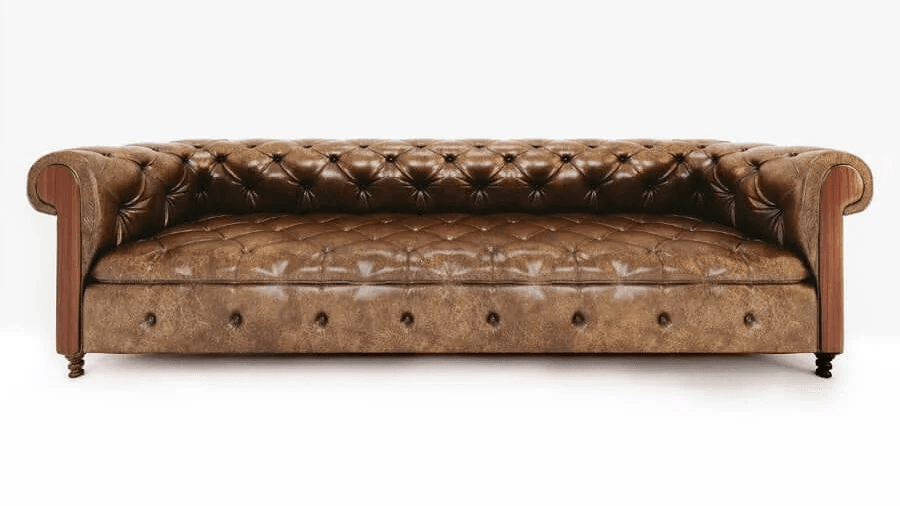
What they are: This tier covers furniture that requires intricate geometry, rich textures, and precise detailing.
Examples: Chesterfield sofas, upholstered armchairs, refined cabinetry, or furniture made of premium materials.
Characteristics:
- Detailed stitching, quilting, and fittings
- Challenging textures (leather, silk, unique woods, stone patterns)
- May require retopology in 3ds Max to optimize geometry for smooth performance
- Suitable for real-time rendering, AR/VR, configurators, and 360° viewers (if requested)
- Typical production time: ~2 working days
- Price range: $300 at volume ($780 for a one-off order) When to choose this level: When the product has elaborate detailing or when the 3D model needs to be optimized for interactive digital experiences.
4. Highly Complex Models
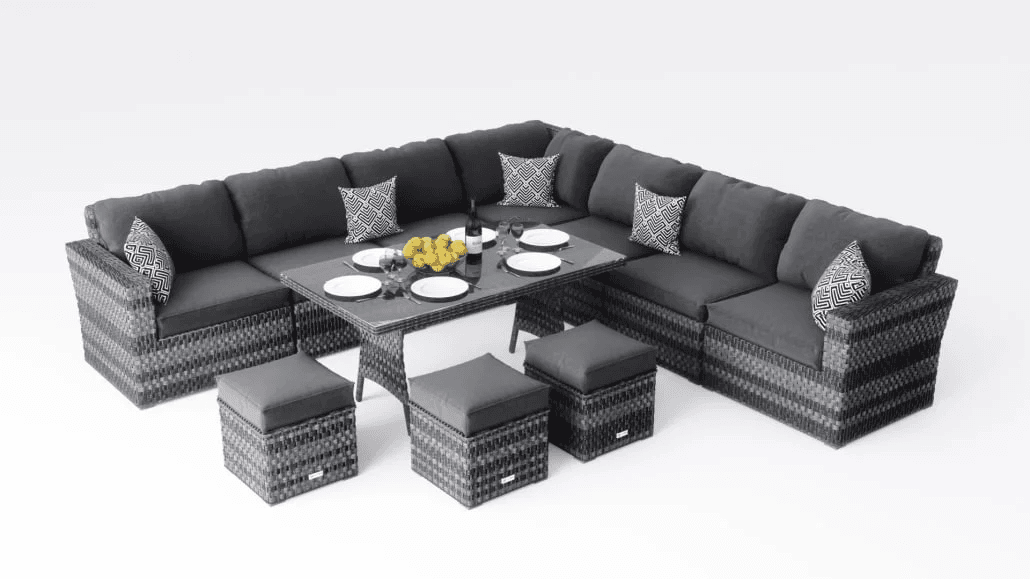
What they are: The top tier is used for furniture sets, multi-element compositions, or designs with extreme levels of sophistication.
Examples: Intricate furniture collections, items with carving, weaving, ornate materials, or many small components.
Characteristics:
- Large number of individual parts
- Extensive custom texturing and material creation
- Often requires retopology
- Each element is built with a fully customized approach
- Most time-consuming and detail-heavy modeling process
- Typical production time: ~2 working days (sometimes more, depending on set size)
- Price range: $500 at volume ($970 for a one-off order)
- When to choose this level: For luxury furniture brands, high-end marketing, or any product where visual realism and material accuracy are critical.
Factors Affecting Complexity
- Availability of CAD files or dimensions – the more accurate the references, the faster the workflow.
- Reference gaps – missing angles or low-quality photos increase complexity.
- Rigging requirements – hinges, openings, sliding parts, mechanisms.
- Material complexity – intricate textures, fabrics, patterns.
Reference Requirements
To create an accurate model, ideal references include:
- 360° video walkarounds
- Exact dimensions (height, width, depth)
- Close-ups of materials and details
- Finish options (colorways, hardware variations)
- Technical drawings or CAD if available
Accurate data reduces revisions and ensures scale precision. Follow these tips on reference photos for 3D modeling before a shoot.
Output
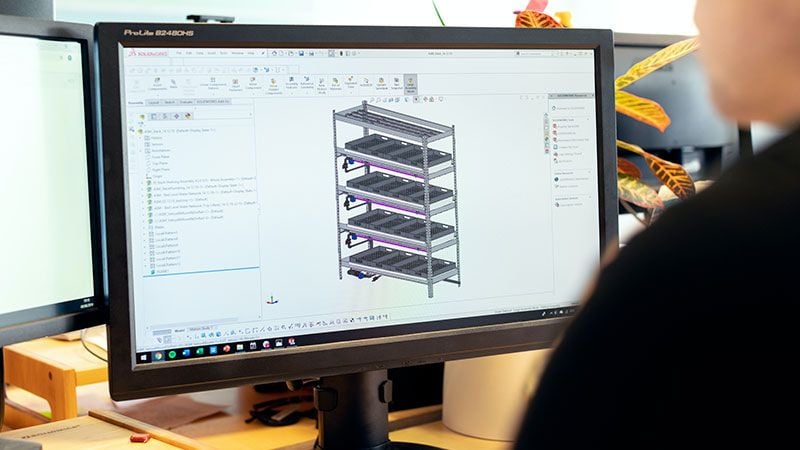
CGIFurniture provides models suitable for all pipelines:
High-poly (V-Ray / Corona)
High-poly models are used for photorealistic rendering in engines like V-Ray and Corona. They allow for maximum detail, including fine geometry, displacement, and subtle surface imperfections that are essential for close-up product visuals.
Mid-poly (Unreal / Unity)
Mid-poly models are balanced for real-time use in platforms such as Unreal Engine and Unity. They retain enough detail for configurators and animations while staying optimized for smooth performance.
Low-poly (AR / GLB / USDZ)
Low-poly models are designed for AR experiences and formats like GLB or USDZ. They are optimized for mobile and web environments, ensuring quick loading times and fluid interaction without sacrificing clarity. Here is how GLB models for ecommerce are prepared and used.
UV Mapping
UV mapping is required when realistic materials are involved. Proper unwrapping ensures textures are applied correctly and is essential for any PBR-based texturing workflow.
STEM-ready geometry
STEM-ready geometry refers to models that are precise enough for manufacturing and technical visualization. These models feature clean topology, accurate dimensions, and consistent structure suitable for engineering-related use cases.
Before You Order a 3D Model
Four decisions made up front save the most revisions later. They also apply when you outsource 3D modeling to an external studio.
- Intended use. A model for close-up catalog renders, a model for AR and a model for a configurator are built differently. List every output you plan, including next year’s, so the geometry is planned for all of them.
- References. Dimensions, close-ups of materials and hardware, finish options, and CAD files or technical drawings if they exist (see Reference Requirements above).
- Budget and timeline. Cost follows the complexity level, the number of finishes and the number of views you need rendered. Urgent deadlines usually cost extra because they need overtime. See typical 3D furniture modeling cost by complexity tier.
- File formats and ownership. Ask for the native scene file plus the exchange formats you need: OBJ or FBX for other studios, GLB or USDZ for web and AR. Keeping the source file is what lets you add a colorway or an AR version later without rebuilding the model. Our overview of 3D file formats compares the common types.
How a 3D Model Is Made
Let’s look at the 3D modeling workflow based on CGIFurniture’s pipeline. For the longer version, see the 3D modeling process in ten stages.
Step 1: Studying the Assignment
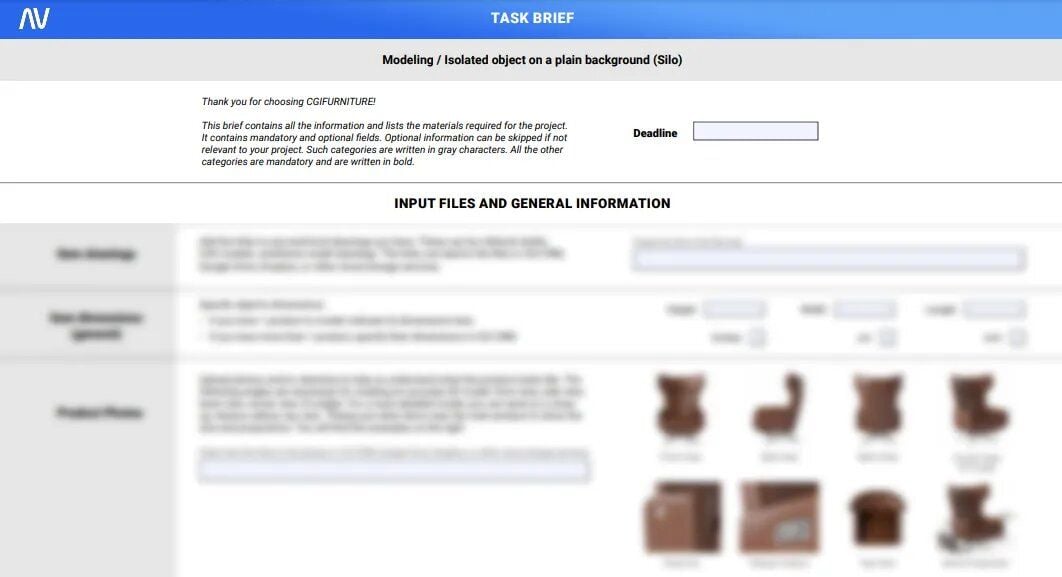
This stage involves analyzing all available references, such as photographs, CAD files, videos, or scans, to fully understand the object. Any missing or unclear references are identified early on to avoid issues later in the process. At the same time, the team defines the model’s complexity and final output requirements, while also reviewing materials and color options to ensure everything aligns with the project goals.
Step 2: Building Geometry
At this step, artists create the base shapes using either a high-poly or low-poly approach, depending on the project’s goals. They carefully ensure correct proportions based on the provided dimensions, then produce a gray (clay) model for early review and validation. Once the core form is approved, secondary and tertiary details are added to refine the model and prepare it for the next stages.
Step 3: Applying Textures and Materials
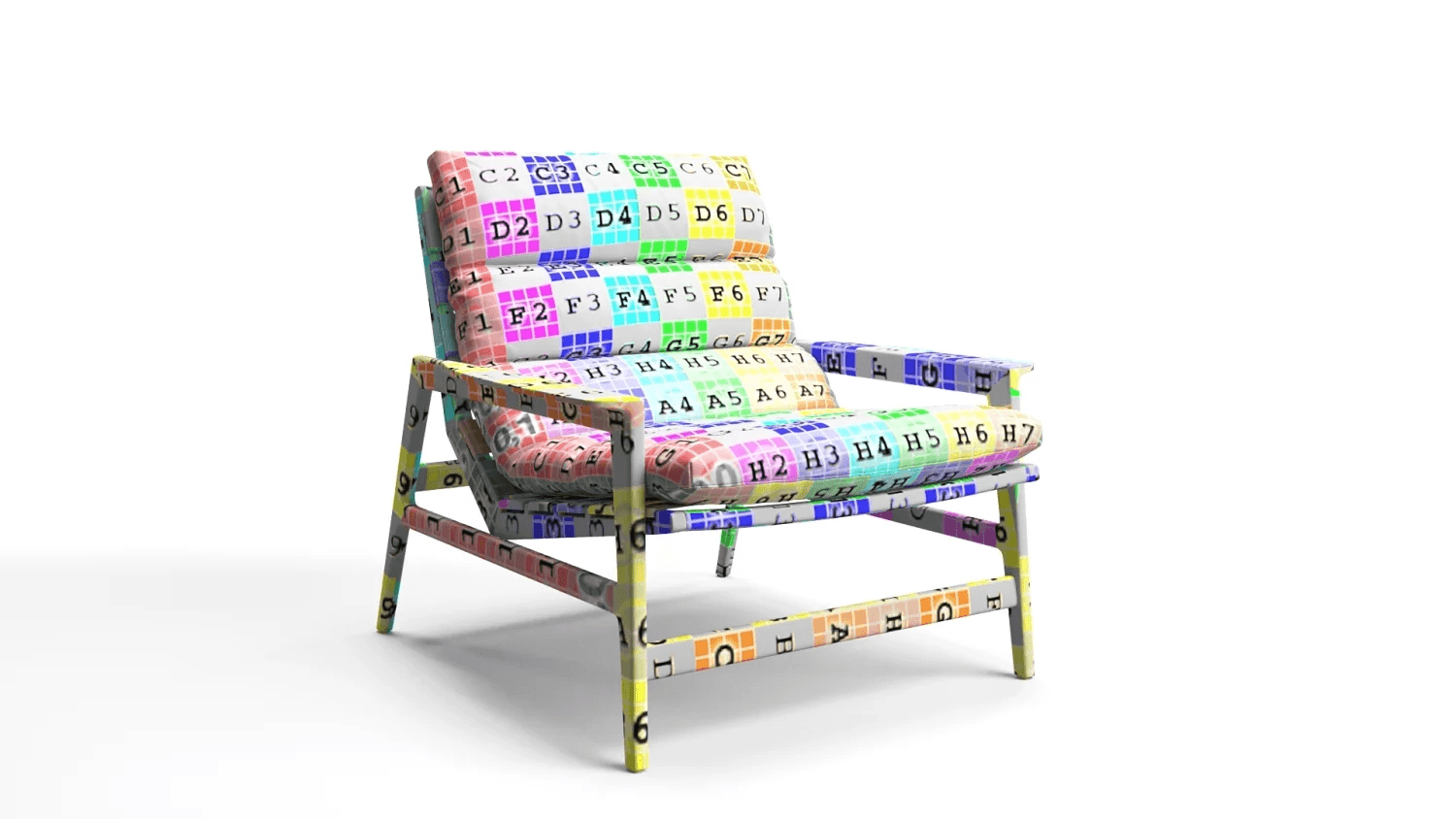
At this stage, artists apply materials using a PBR workflow, working with albedo, roughness, normal, and displacement maps to achieve realistic results. Fabrics, metals, wood, and plastics are carefully matched to references, and texture samples are reviewed and adjusted until they accurately reflect the intended look and finish.
Step 4: Rendering the 3D Model on White Background
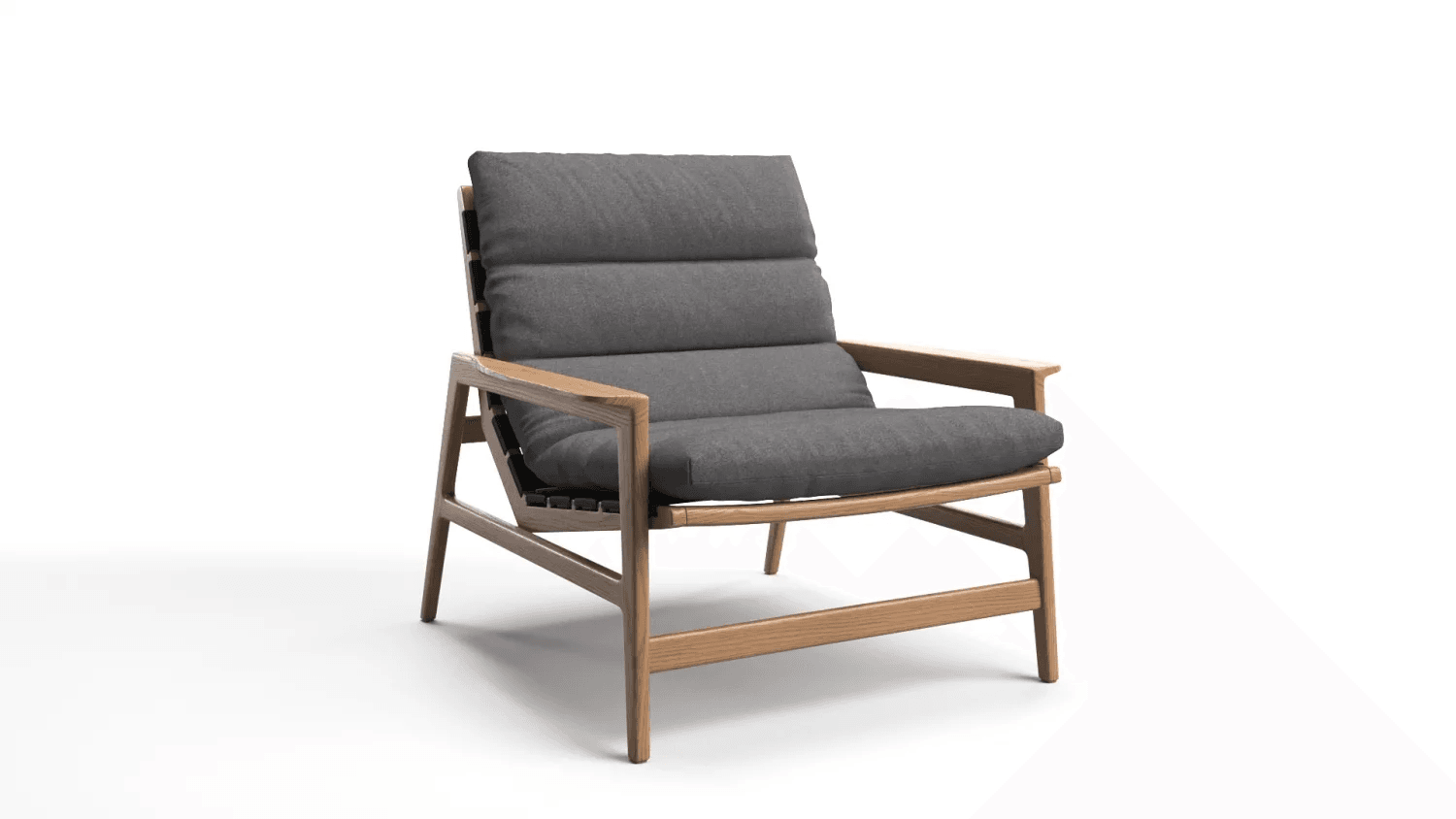
Next, test renders are created to verify the geometry and overall build of the model. Lighting is adjusted specifically to reveal any imperfections or inconsistencies, while scale and proportions are carefully reviewed using Silo 3D visualization to ensure everything looks accurate and realistic.
Step 5: Post-production
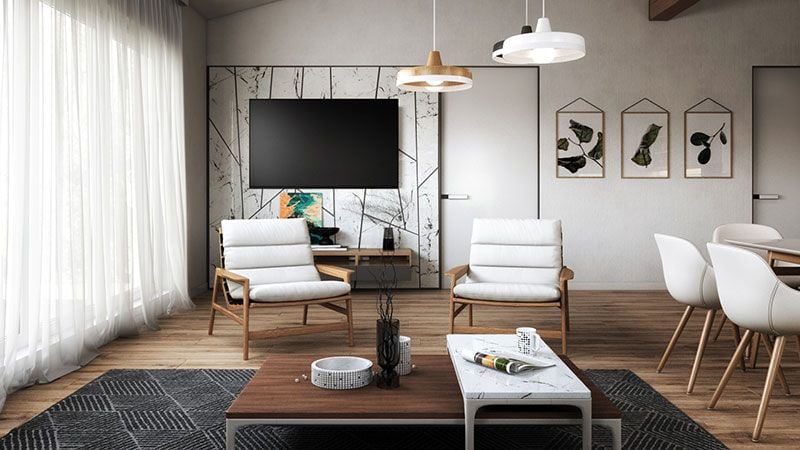
At this stage, any remaining artifacts are fixed and colors are corrected to achieve a clean, realistic look. The model then goes through a final scale verification to ensure accuracy, after which all assets are prepared and exported as the final deliverables.
3D Modeling Software
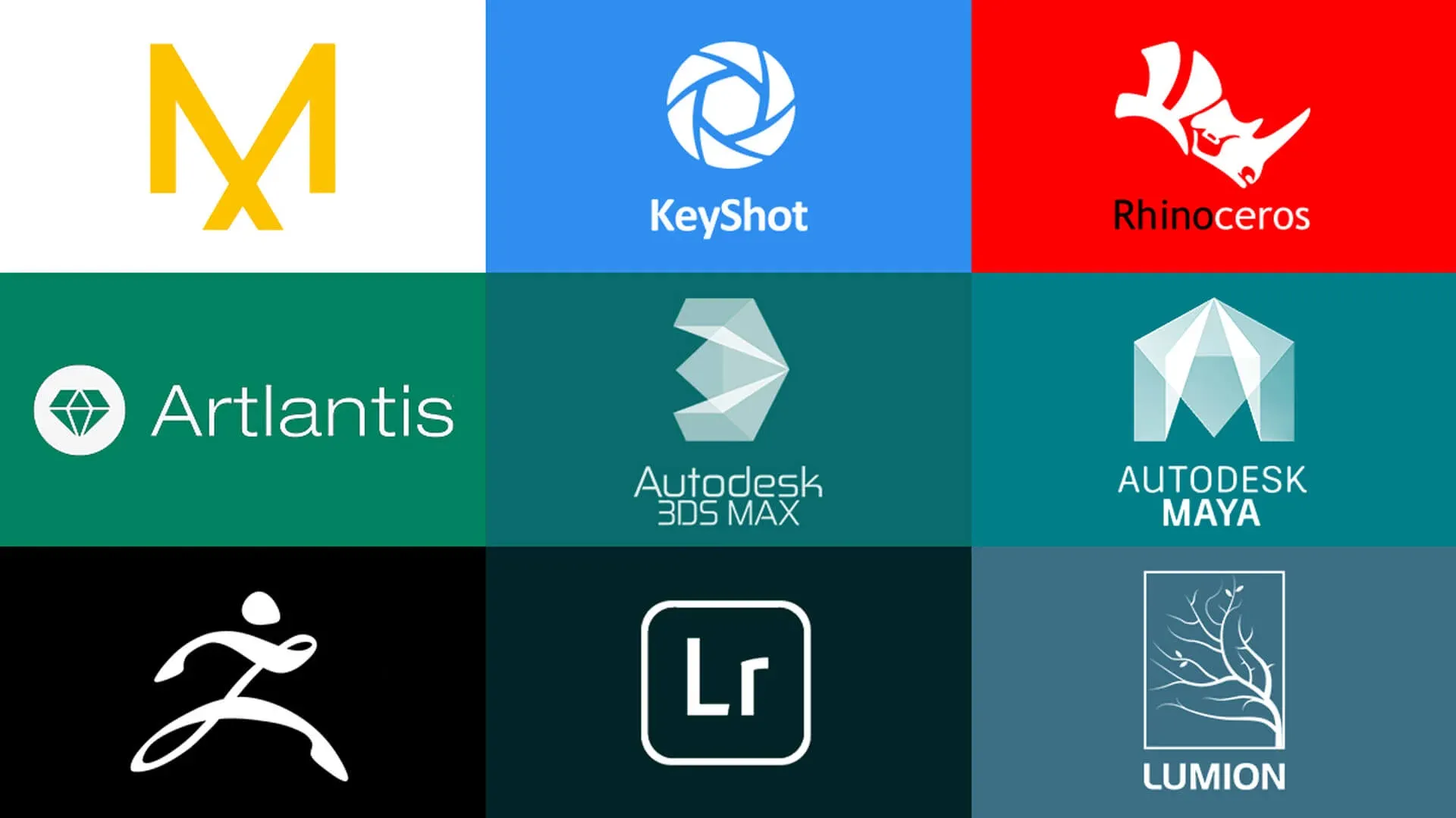
Different tools are used for different tasks and object types. For furniture specifically, compare the leading 3D modeling software for furniture.
A. Hard-Surface / Product Modeling
3ds Max
Industry standard for product visualization.
Blender
Versatile: modeling + retopology + unwrapping.
Fusion 360
Great for mechanical and engineered shapes.
SolidWorks / Rhino
Used for CAD and highly accurate industrial forms.
B. Organic and Fabric Modeling
ZBrush
Best for sculpting and complex decorative shapes.
Marvelous Designer
Realistic cloth and upholstery simulation.
Houdini
Procedural modeling; ideal for complex forms and fabric logic.
C. Models for Production / 3D Printing
• SolidWorks • Onshape • Inventor • CATIA Used when exact dimensions and NURBS geometry are required.
D. Real-Time, AR, Low-Poly Pipelines
• Blender • 3ds Max retopology tools • Instant Meshes • Simplygon Real-time models require polygon optimization, clean UVs, and lightweight topology.
Social Media Playbook for Your Brand
Templates and examples for reels, carousels, and 3D motion, tailored to your brand
Download Social Media GuideWhy software choice matters
- Different tools for different geometry Hard-surface modeling and organic modeling follow completely different workflows. Software choice determines how accurately you can build sharp edges, chamfers, and mechanical parts versus soft forms, fabrics, and natural deformations.
- CAD models require visualization adaptation Engineering CAD files are precise but heavy and unsuitable for rendering out of the box. The right software allows proper retopology, cleanup, and optimization so CAD geometry can be used for CGI without shading or performance issues.
- Topology affects lighting and realism Clean, well-structured topology is essential for correct lighting, reflections, and shadows. Poor geometry leads to visual artifacts, even with high-quality textures and render engines.
- Output type defines the pipeline Models created for static renders, animations, AR, or real-time configurators all have different technical requirements. Choosing the right software ensures the model balances detail, performance, and compatibility for its final use.
Conclusion
When brands invest in professional 3D modeling services, they speed things up, cut production costs, and stay flexible. You can swap out designs, materials, or colors without going through the hassle of reshooting photos or making new prototypes every time. Plus, when the models look real and the details are spot on, customers get a much clearer idea of what they’re buying. That kind of transparency goes a long way toward building trust before anyone even clicks “buy.”
With e-commerce and digital marketing on the rise, 3D product models aren’t just one-off visuals anymore. They turn into valuable digital assets that stick around for the long haul. If you nail the details, keep the models clean, and know what you want out of them, these assets carry your product from the first concept sketch all the way through engineering, sales, marketing, and whatever comes next.