The terms AR and VR get thrown around interchangeably in marketing meetings, which is a problem because they do fundamentally different things. Augmented reality adds digital elements to the real world you’re already looking at. Virtual reality replaces the real world entirely with a simulated one. That distinction sounds simple, but it shapes everything — the hardware required, how users interact with the content, what it costs, and which business problems each technology actually solves.
The landscape has also shifted significantly since these technologies first entered mainstream awareness. Apple launched the Vision Pro in 2024, introducing “spatial computing” as a category that deliberately blurs the AR/VR line. Meta’s Quest 4, released in October 2025, became the fastest-selling VR headset in history. Ray-Ban Meta smart glasses have sold over 2 million units by making AR casual enough to wear on the street. The old framing of “AR vs VR” is still useful for understanding the core differences, but the market is clearly moving toward mixed reality — devices that do both.
This article from our 3D modeling studio breaks down the five major differences between augmented reality and virtual reality, updated with where both technologies actually stand in 2026.
1. Environment Perception
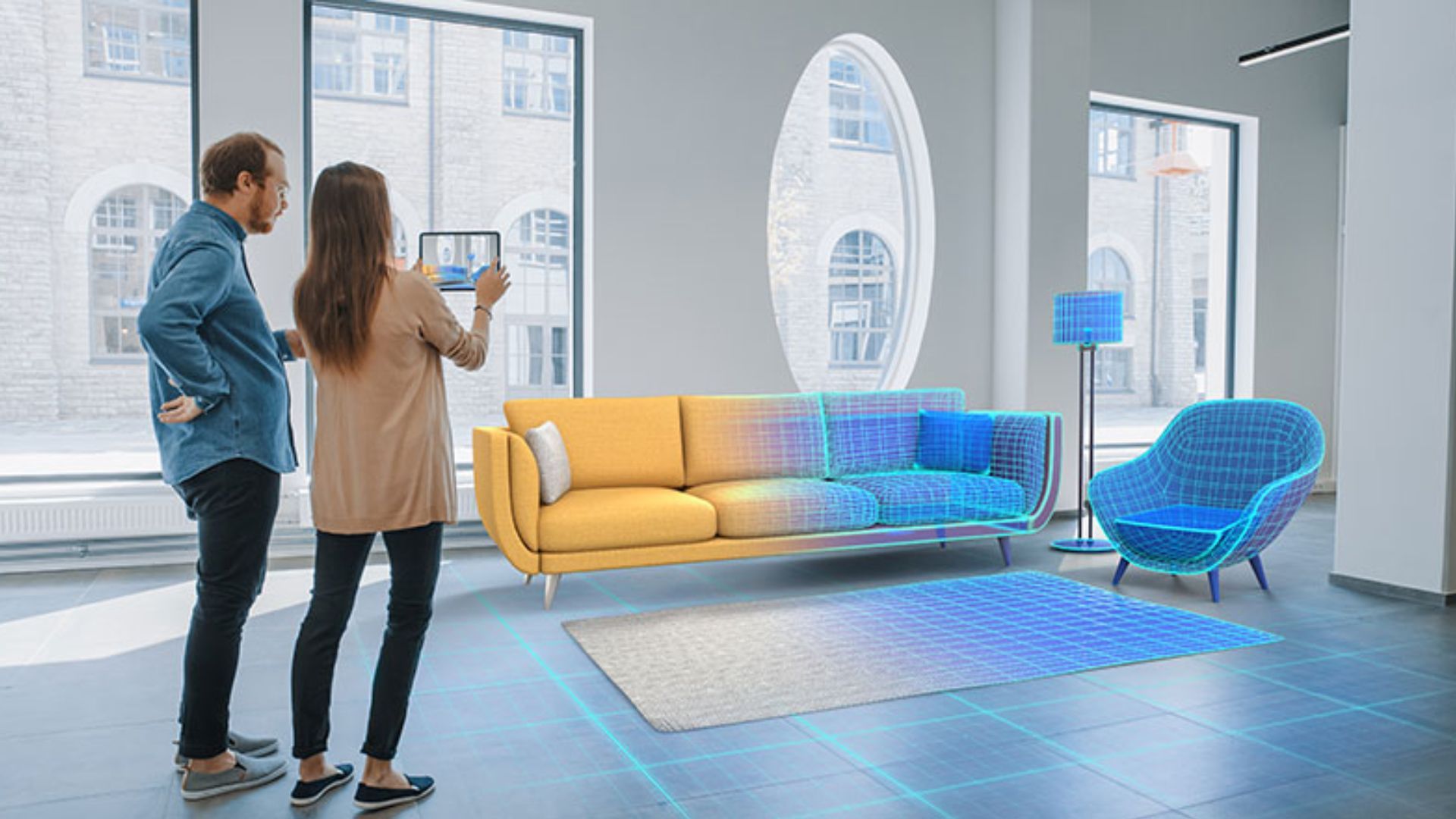
The most fundamental difference is what happens to the world around you.
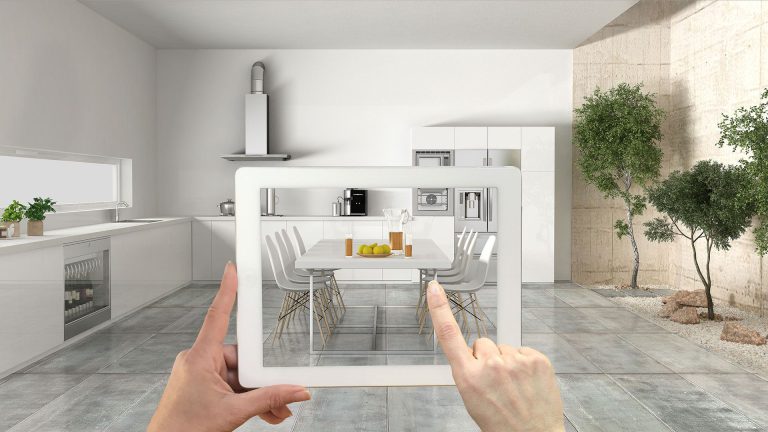
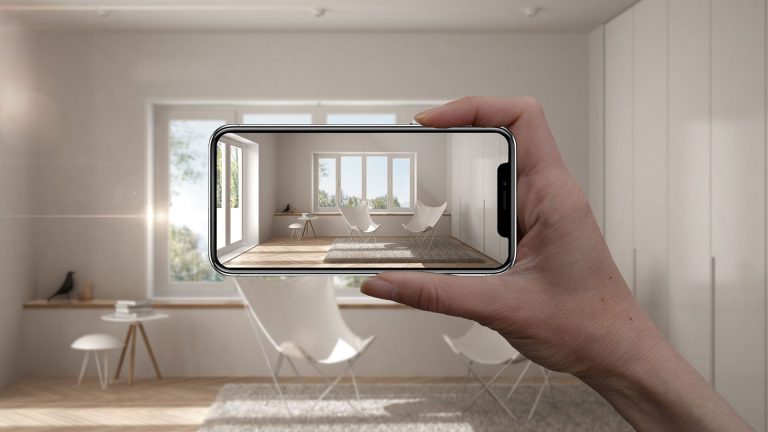
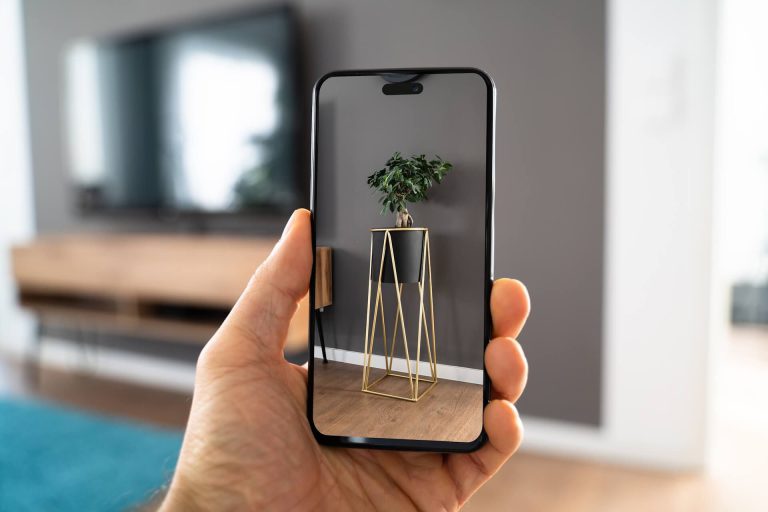
AR keeps the real world intact and layers digital content on top of it. Point your phone at your living room and a 3D model of a sofa appears on your floor, scaled correctly, sitting in the actual space. The room is still your room. The sofa is the only thing that isn’t physically there. This is how apps like IKEA Place work, how Amazon’s “View in Your Room” feature operates, and how furniture brands using AR 3D models let customers preview products before purchasing.
VR does the opposite. Put on a headset and the real world disappears. You’re standing in a virtual showroom, a simulated apartment, a 3D-rendered kitchen — whatever environment the experience was designed around. Nothing you see is physically real, which is both the strength (total creative control over what the user experiences) and the limitation (total isolation from their actual surroundings).
The practical implication for furniture and ecommerce is significant. AR answers the question “will this product work in my space?” VR answers the question “what would it feel like to be in a space designed around these products?” Both are valuable, but they serve different stages of the buying decision.
2. User Interaction: Everyday Devices vs. Specialized Hardware
How users access each technology determines how many of them actually will.
AR’s biggest advantage is reach. Most AR experiences run on smartphones and tablets — devices people already own and carry everywhere. No special equipment needed. A customer browsing a furniture website can tap a button, point their phone camera at a room, and see a 3D product render placed in their actual space. Web-based augmented reality has made this even more frictionless by eliminating the app download requirement entirely — the AR experience runs directly in the browser.
VR requires dedicated hardware. Meta’s Quest 4 starts at $399 and Apple’s Vision Pro 2 launched in January 2026 at $2,499. Both require wearing a headset that blocks out the real world. The interaction models are different too. Meta uses handheld controllers and hand tracking. Apple’s Vision Pro relies on eye tracking, hand gestures, and voice commands — no controllers needed by default (though Apple added optional ones with the Vision Pro 2 to address gaming and precision input).
What this means in practice: AR reaches anyone with a recent smartphone. VR reaches people who’ve invested in a headset. For furniture brands, AR is the mass-market play. VR is the premium experience play — virtual showrooms, immersive room planners, high-end configurators for customers who already have the hardware.
3. Level of Immersion: Partial vs. Total
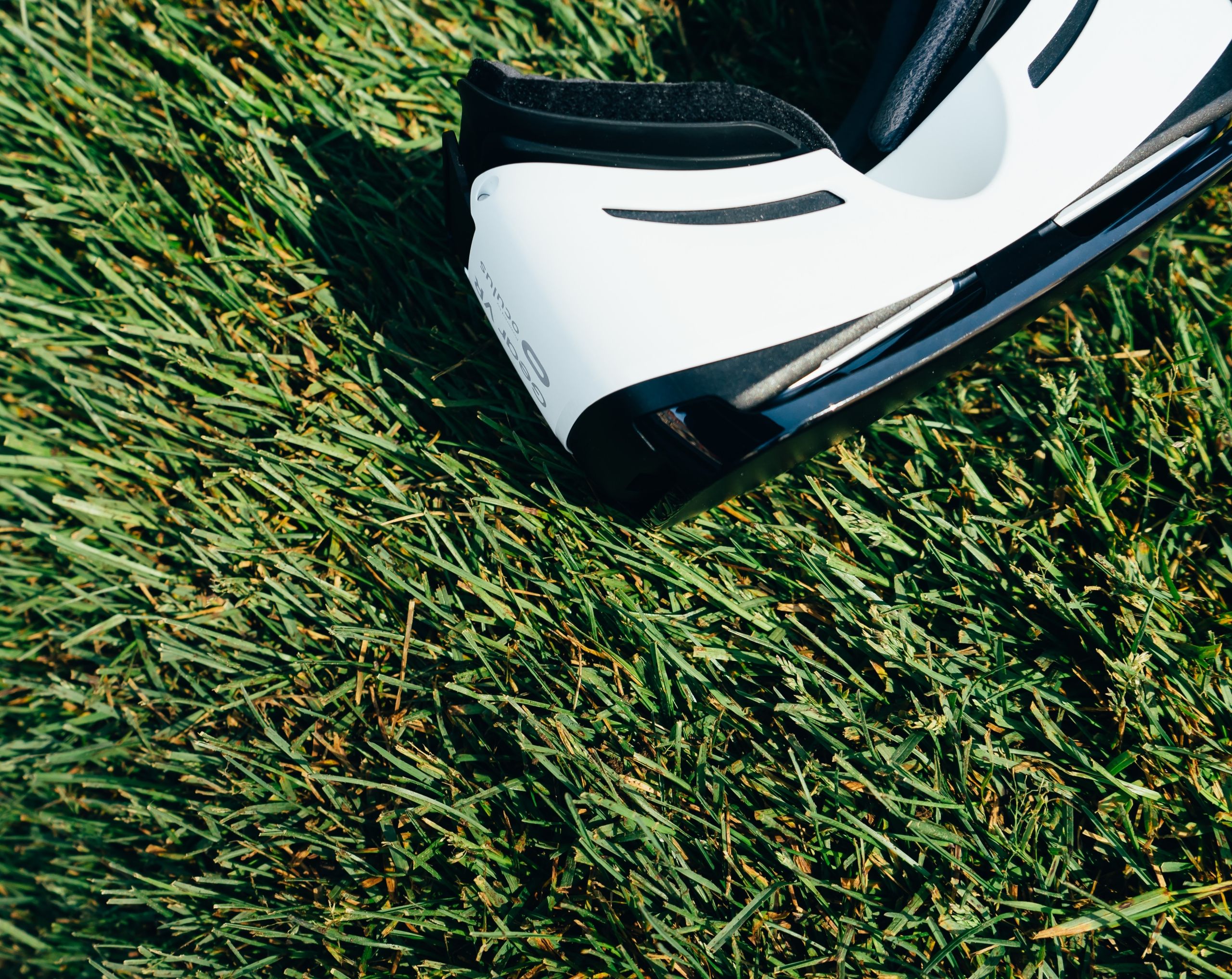
Immersion is the spectrum where AR and VR sit at opposite ends.
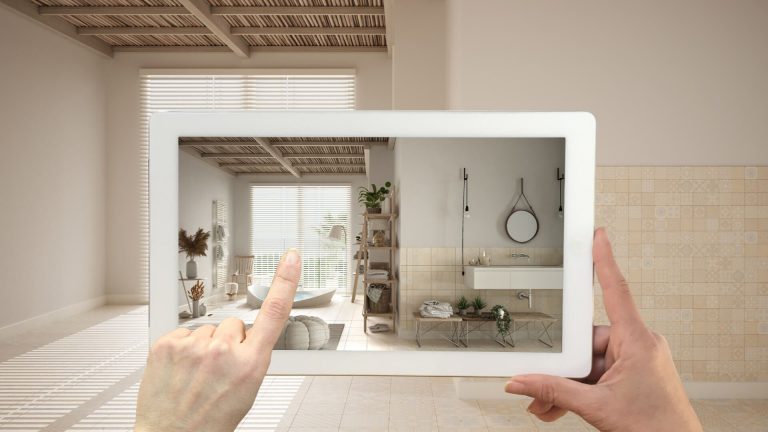
AR provides partial immersion. You see digital objects in your real environment, but you’re fully aware of your physical surroundings at all times. You can talk to someone in the room, check your watch, step around the coffee table. The digital content enhances reality without replacing your awareness of it. That makes AR practical for everyday tasks — checking how a bookshelf fits against a wall, previewing a paint color, visualizing a furniture layout.
VR provides total immersion. The headset fills your entire field of vision with a simulated environment. Spatial audio adjusts as you turn your head. Motion tracking translates your physical movements into the virtual space. The result is a genuine sense of “being there” — which is why VR works so well for gaming, training simulations, architectural walkthroughs, and V-Commerce shopping experiences where a brand wants the customer to feel physically present in a designed space.
The immersion question is becoming more nuanced though. Mixed reality headsets like the Quest 4 and Vision Pro can switch between full VR and AR-style passthrough, blending real and virtual elements in the same session. A customer could start in a full VR showroom, then switch to passthrough mode and place a product in their actual room — all without removing the headset. That convergence is where the industry is heading.
4. Applications: Where Each Technology Fits

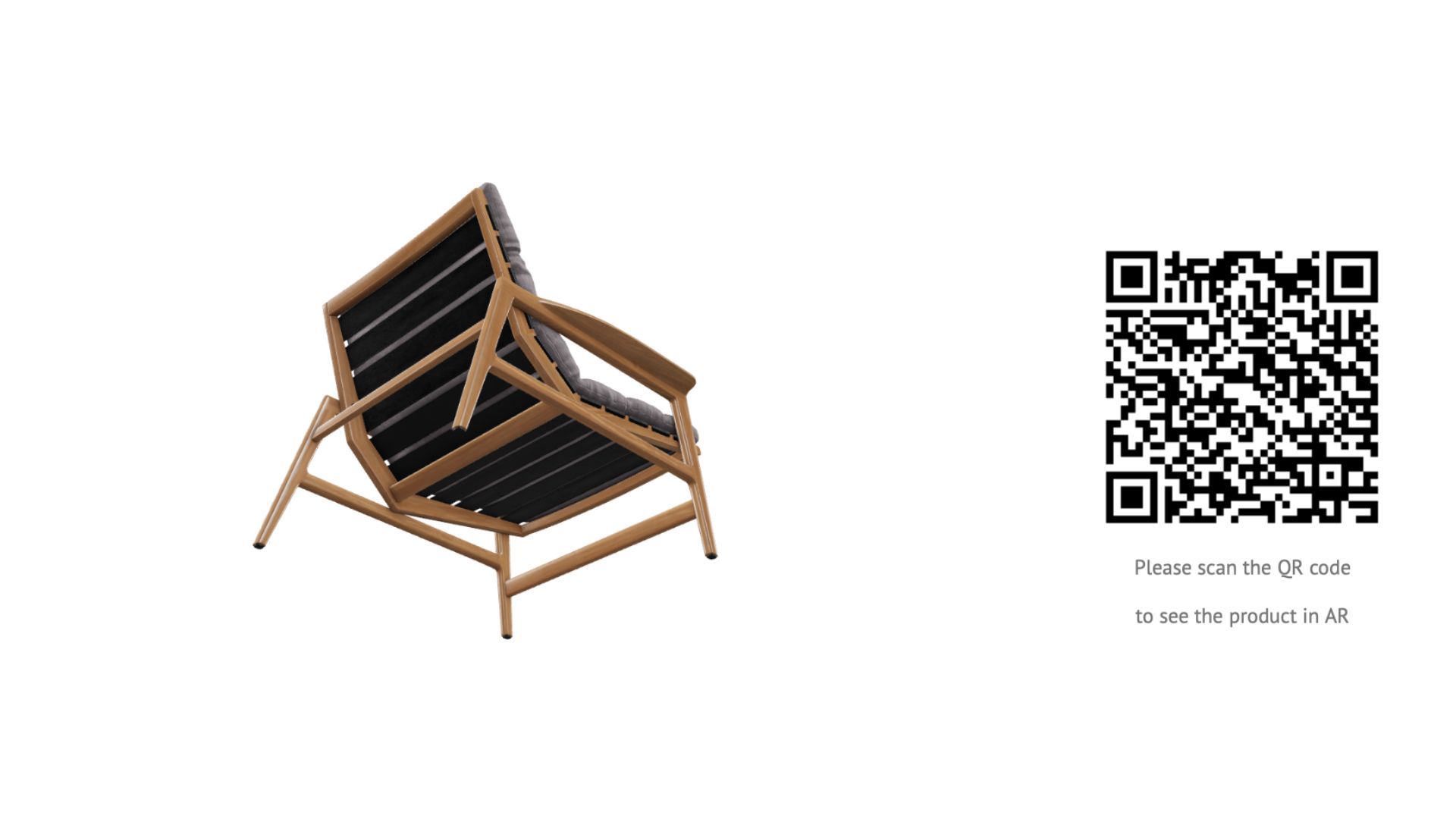
Scan QR code to see this product in augmented reality
AR and VR overlap in some use cases but diverge sharply in others. Understanding which technology solves which problem is what matters for business decisions.
AR in ecommerce and marketing has moved well past the novelty stage. Product visualization is now standard infrastructure on major retail platforms. Furniture is where it makes the most obvious difference, because the things that make people hesitate before buying online — will it fit, will the proportions look right, does the finish match my floor — are exactly the things a 3D model placed in the actual room can answer. 3D visualization services produce the AR-ready models behind these experiences, and the data consistently shows that customers who preview a product in their space before ordering return it less often.
AR also shows up in places beyond product preview. Interactive packaging that unlocks tutorials or care instructions when you scan a label. Virtual try-on for glasses and watches. Gamified campaigns that turn browsing into something closer to playing. What connects all of these is reach — AR doesn’t ask the customer to go somewhere special or buy new hardware. It meets them on the phone they already have, in the room they’re already standing in.
VR operates on completely different terms. Instead of adding a product to your environment, it builds a new environment around you. Furniture brands can create full virtual showrooms where a customer walks through styled rooms and interacts with individual pieces. Architectural firms use it to put clients inside a building that hasn’t been built yet. Medical and military training programs use total immersion to simulate high-stakes scenarios without the actual stakes. Therapeutic applications treat phobias and PTSD by placing patients in controlled versions of environments they can’t safely access in real life.
For furniture specifically, VR is best suited for high-touch sales processes. A virtual showroom where a customer can walk through three different bedroom layouts, sit on a sofa, and change the wall color around them is a compelling pre-purchase experience. VR shopping isn’t mass-market yet — it requires the customer to own a headset — but for brands targeting premium segments or operating in commercial/hospitality sales, it’s already a viable tool.
5. Accessibility and Hardware Requirements
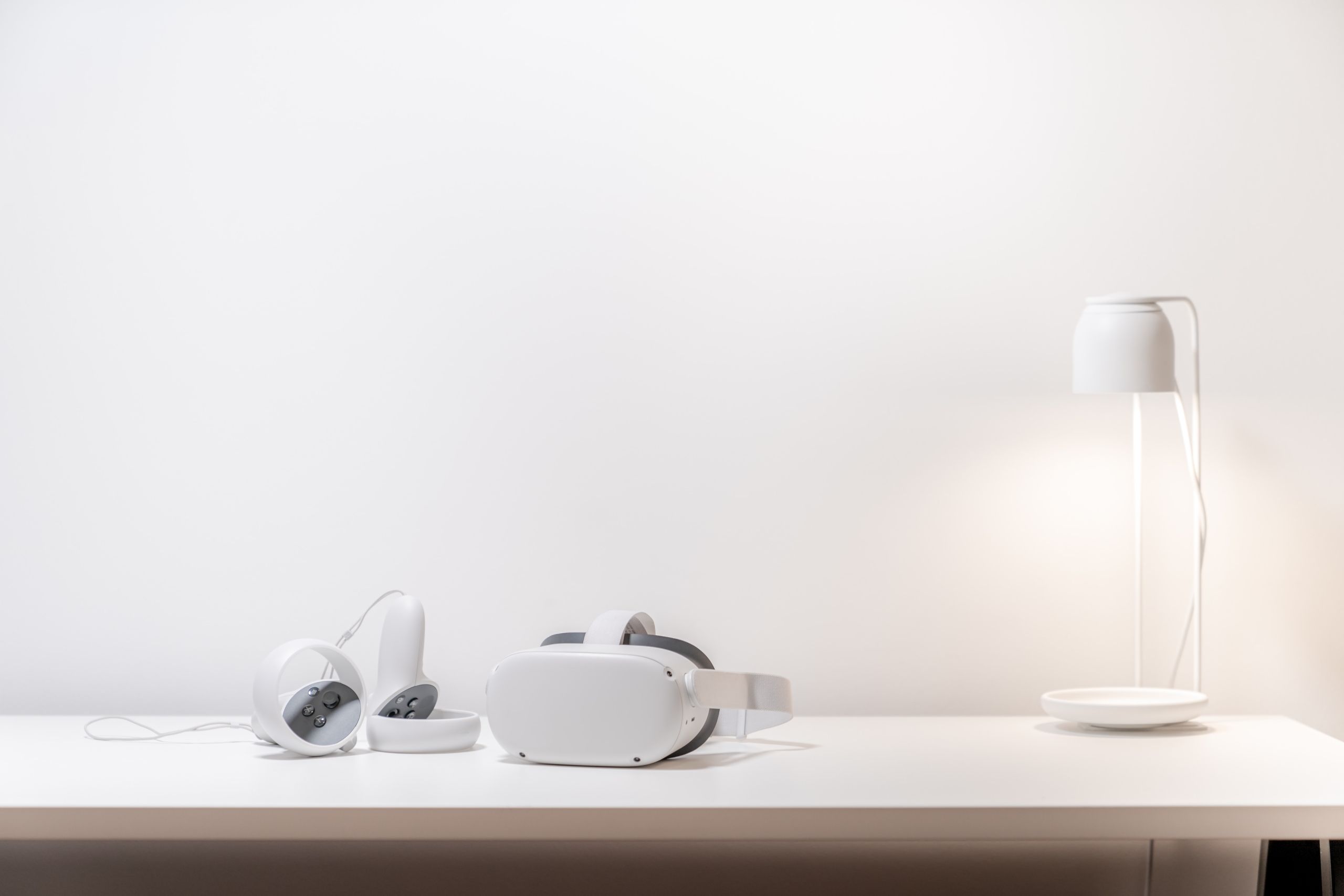
This is where the rubber meets the road for most businesses deciding between AR and VR investment.
AR is accessible now. Around 3.5 billion smartphones in the world support some form of AR. The development cost for a web-based AR experience is a fraction of what a full VR application requires. For furniture brands, the primary investment is in the 3D models themselves — and those models serve double duty across product pages, AR, animation, and configurators.
VR has a smaller but rapidly growing audience. Global AR/VR headset shipments reached 9.6 million units in 2024, with Meta dominating at roughly 75% market share for the full year. The Quest 4’s $399 price point has made VR significantly more accessible than it was even two years ago. Apple’s Vision Pro occupies the premium end at $2,499, targeting enterprise users, creative professionals, and early adopters rather than mass consumers.
The cost question for businesses isn’t just hardware — it’s content production. VR experiences require fully built 3D environments, interaction design, performance optimization, and testing across devices. AR experiences can be as simple as placing a single 3D model in the user’s camera view. For most furniture brands, AR offers the better return on investment right now because the audience is larger, the production costs are lower, and the use case (product preview in the customer’s own space) directly addresses a measurable business problem: purchase hesitation and returns.
That said, the convergence trend matters. As mixed reality headsets become more affordable and the install base grows, the distinction between “AR content” and “VR content” is likely to blur. The 3D models a furniture brand builds today for AR product preview are the same models that will power tomorrow’s virtual showroom experiences. Investing in high-quality 3D assets now builds a foundation that works across both technologies.

Explore our 3D texture and material creation services to enhance your visual marketing.
See moreAugmented reality and virtual reality solve different problems, require different hardware, and reach different audiences. AR enhances the real world and runs on devices people already own. VR replaces the real world and requires dedicated headsets. For furniture brands, AR is the more immediately practical investment — it reaches more customers, costs less to implement, and directly reduces the purchase uncertainty that drives returns. VR offers a richer, more immersive experience for brands ready to invest in it.
The smartest approach is to build the 3D assets that serve both. Explore our AR 3D Modeling Services to start with models that work across AR, VR, and every visual format in between.