Furniture manufacturers tend to be good at making products and not as confident about marketing them. That’s just how the industry tends to work. Design, sourcing, and production require deep, specialized knowledge. Marketing usually gets less attention — either handled in-house without a formal structure or outsourced to an agency without much strategic direction behind the brief.
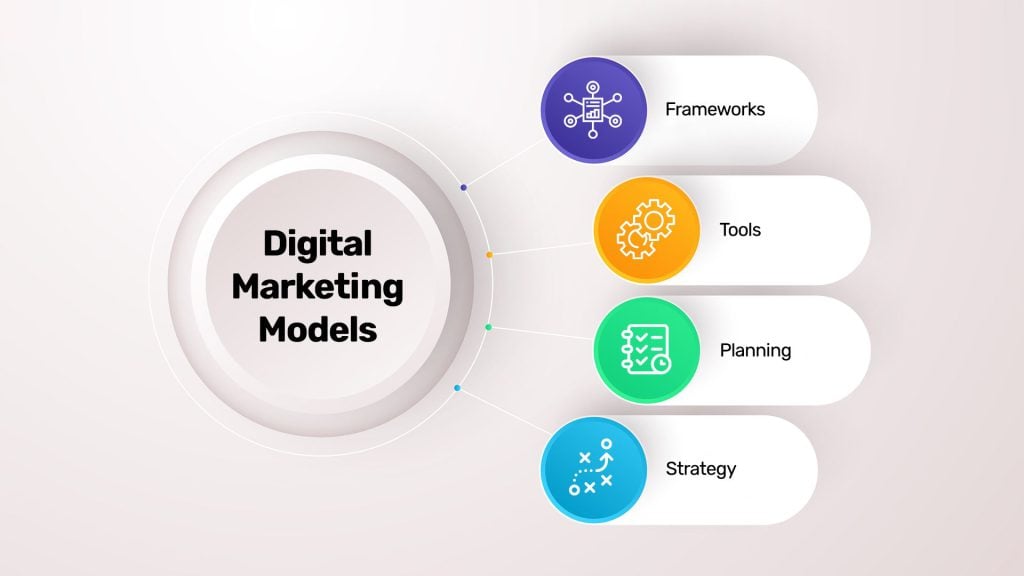
Digital marketing models are what fill that gap. At their core, they’re frameworks that help a business answer a sequence of connected questions: how do we reach the right customers, how do we turn their interest into a sale, and how do we keep them coming back after that first purchase? Some are broad strategic tools. Others focus on specific stages of the customer journey. None of them are magic, but the right one gives a furniture brand a way to stop guessing and start building marketing efforts on something more solid than instinct. Our 3D rendering company works with furniture businesses at the visual production end of this process, and the brands that come to us with a clear marketing framework in place consistently get more out of the assets we create for them.
This article walks through the major frameworks, the tools that support them, and how to build a strategy that connects the two — with a specific focus on what works for furniture manufacturers.
1. Digital Marketing Frameworks
These frameworks aren’t interchangeable. Each one is built for a different kind of question, so it’s worth understanding the differences before committing to one.
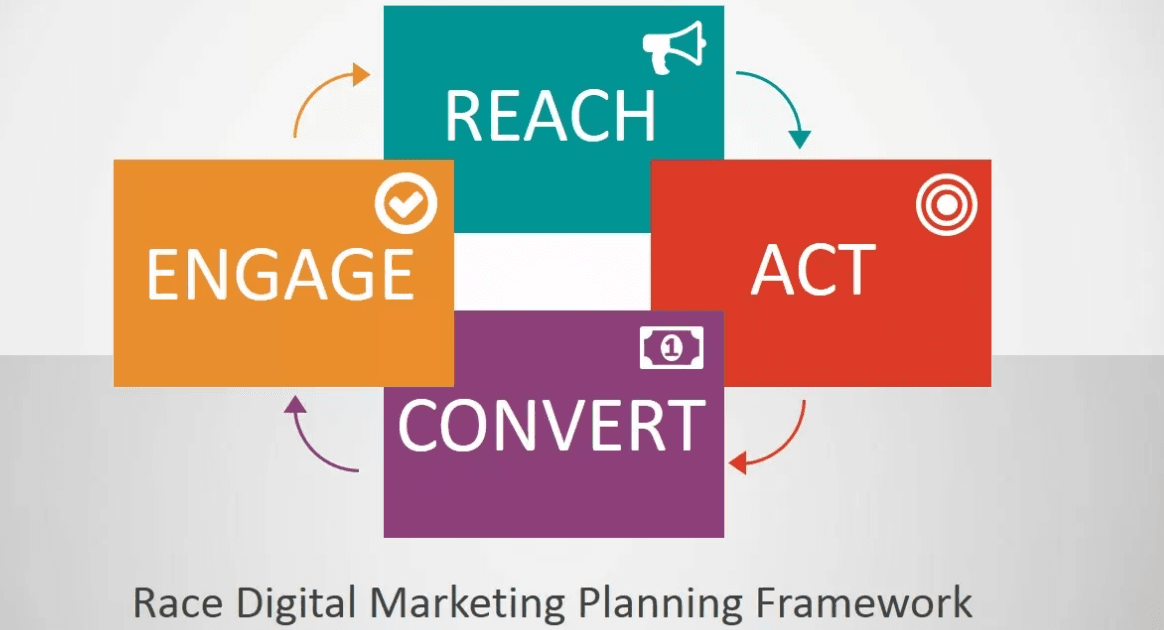
- RACE (Reach, Act, Convert, Engage) maps directly to how a customer moves from first discovering your brand to becoming a repeat buyer, which makes it a natural starting point for furniture brands selling online. How do people find you? That’s Reach — SEO, social media, paid ads. What happens once they land on your site? That’s Act: are they browsing product pages, clicking through to details, or leaving after three seconds? Convert is the purchase itself, and everything that influences it (product page quality, checkout experience, calls to action). Engage is what happens after the sale — follow-up emails, loyalty programs, review requests. The framework works because it forces you to think about the full path, not just the top of the funnel.
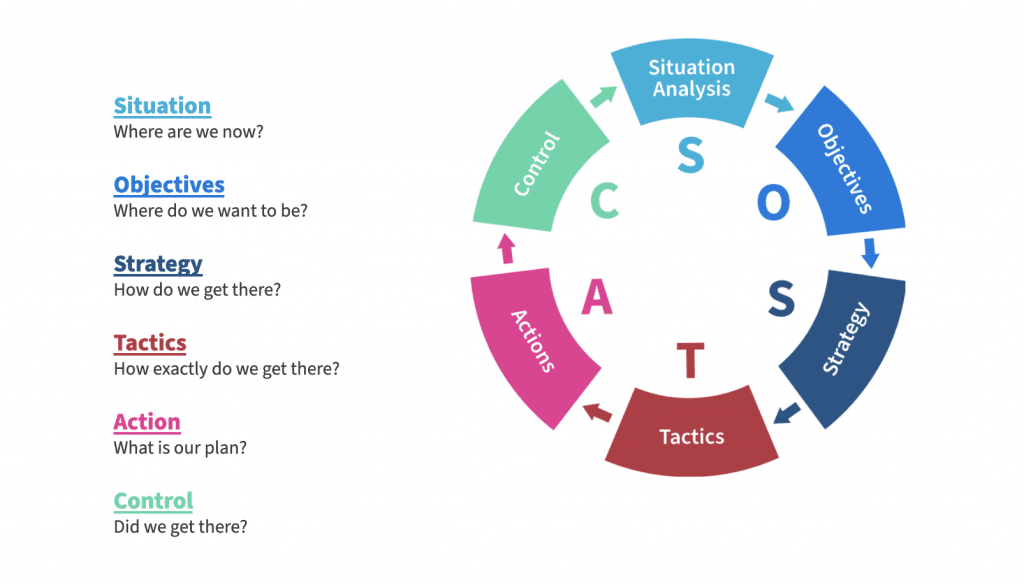
- SOSTAC® (Situation, Objectives, Strategy, Tactics, Action, Control) takes a wider view. Where RACE follows the customer, SOSTAC follows the business. It starts with an honest look at where things actually stand: market analysis, competitive position, what’s working and what isn’t. From there it moves through goal-setting, strategic direction, tactical choices, execution, and measurement. Each stage feeds the next. For a furniture manufacturer building a digital marketing plan from scratch, SOSTAC is probably the most thorough option available. The trade-off is time. Smaller teams often find it more practical to start with RACE and adopt SOSTAC-level planning later as the business grows.
- McKinsey’s Consumer Decision Journey addresses something the other frameworks tend to simplify: how people actually shop. The classic marketing funnel assumes a neat progression from awareness to consideration to purchase. Real behavior is messier. Someone sees a dining table on Instagram, forgets about it, searches Google three weeks later, browses a competitor instead, then clicks a retargeting ad a month after that and finally orders. For furniture, where purchases are expensive and infrequent, these loops and detours are the norm rather than the exception. McKinsey’s model is built around that reality.
- The 7Ps of Marketing take the classic four (Product, Price, Place, Promotion) and add three that matter more than they get credit for: People, Process, and Physical Evidence. For furniture brands, the additions matter. “People” covers the customer service experience — how responsive your team is, how well they handle questions about custom orders or delivery. “Process” is the operational side: how smooth is the path from order to delivery? “Physical Evidence” includes everything tangible the customer encounters — packaging, showroom experience, the quality of product imagery on your site. That last point is where 3D rendering directly connects to marketing strategy: photorealistic visuals are a form of physical evidence that shapes how customers perceive your brand.
- Porter’s Five Forces isn’t a marketing model in the traditional sense — it’s a competitive analysis tool. But understanding where your brand sits relative to competitors, supplier power, buyer power, substitutes, and new market entrants shapes every marketing decision you make. A furniture brand competing primarily on price needs a different digital strategy than one competing on design exclusivity. Porter’s framework helps clarify which game you’re playing before you spend money playing it.
2. Essential Digital Marketing Tools

Frameworks give you direction. Tools give you execution. Knowing which tools serve which part of your strategy is where the practical value sits.
- Search visibility is the foundation for most furniture brands selling online, and Google Analytics plus Google Search Console are the minimum. They show you what’s happening on your site and how people find it. SEMrush and Ahrefs go a step further by letting you see what your competitors are doing: which keywords they rank for, where their backlinks come from, what content performs best in your category. This kind of data answers questions that matter more than they seem to. Are your customers typing “mid-century modern dining table” or “walnut dining table seats 6” into Google? The difference between those two searches shapes everything from your product page copy to your ad targeting.
- For social media, Hootsuite and Buffer handle the operational side — scheduling posts across platforms, tracking basic engagement metrics, keeping a consistent posting rhythm without requiring someone to be online at all hours. Canva has become the default design tool for social content — not because it produces the best work, but because it lets a marketing team create presentable posts without a dedicated designer. For furniture brands, the more important question is what you’re posting. CGI-based product visuals and short animations consistently outperform phone photos taken in a showroom. That gap in content quality is what makes a library of 3D renders worth building — every new campaign pulls from the same asset pool instead of starting from scratch.
- Email is a different category. The three platforms that come up most often are Mailchimp, HubSpot, and Klaviyo. Mailchimp is the most accessible and works well for smaller lists. HubSpot is more powerful, especially if you need CRM integration across sales and marketing. Klaviyo has become the default for e-commerce brands because of its segmentation and automation tools. Which platform you choose matters less than what you do with it. A triggered email that fires because someone viewed the same sofa three times without buying will outperform a generic monthly newsletter almost every time.
- Paid advertising is where Google Ads and Meta Ads Manager sit. Both give you granular control over targeting, budget, and performance measurement. What works especially well for furniture brands is retargeting: serving ads specifically to people who’ve already browsed your product pages but left without purchasing. These are warm leads, and the cost to convert them is typically much lower than reaching a cold audience.
- Conversion rate optimization tools like Hotjar give you heatmaps and session recordings that show how people actually behave on your site. Where do they click? Where do they hesitate? Where do they leave? This data is often more actionable than traffic numbers because it tells you what to fix on the pages you already have.
3. Planning a Digital Marketing Strategy

Having frameworks and tools is one thing. Assembling them into a working strategy is where most of the actual thinking happens.
- Goals come first, and the SMART format (Specific, Measurable, Achievable, Relevant, Time-bound) is worth using even if it feels formulaic. “Grow online sales” is not a goal. “Increase website-attributed revenue by 15% in Q3 through improved product page conversion rates” is. The specificity forces you to think about what you’re actually going to do and how you’ll know if it worked.
- Audience research is the next layer. For furniture brands, this goes beyond demographics. A 35-year-old homeowner in suburban Dallas and a 35-year-old homeowner in a Brooklyn apartment might have identical demographic profiles but completely different furniture needs based on living space, lifestyle, and budget. Behavioral data — what people search for, what they click on, how long they spend on specific product pages — is usually more useful than demographic buckets.
- Channel selection follows from audience research. If your customers discover furniture on Instagram and Pinterest, that’s where your content budget should concentrate. If they research via Google, your SEO and paid search investments need to reflect that. The point isn’t to be everywhere. It’s to be strong where your specific customers actually spend time. Our Furniture Marketing Guide covers this in more detail, including how to evaluate which channels deserve the most investment.
- Budget allocation is where strategy meets reality. A useful rule: invest more heavily in the channels and content types that have demonstrated performance, and allocate a smaller portion to testing new approaches. For visual content specifically, 3D rendering offers an advantage — one investment in a 3D model produces assets for every channel (website, social, email, ads, AR), which means the per-channel cost of content drops significantly.
- KPIs and tracking close the loop. Define what success looks like for each channel, measure it consistently, and adjust. Traffic, engagement rate, conversion rate, average order value, return rate, customer acquisition cost — these are the numbers that tell you whether your strategy is working or just busy.
4. Integrating Frameworks, Tools, and Strategy
A framework without tools is a plan on paper. Tools without a framework are activity without direction. The value comes from connecting them.
Here’s what that looks like in practice for a furniture brand. Say you’re using RACE for a furniture e-commerce site. At the Reach stage, SEMrush helps you find the keywords worth targeting, and Google Ads puts your products in front of people searching for them. Once those visitors arrive on your site, you’re in Act territory. This is where Hotjar recordings show you how people actually move through your product pages — where they click, where they hesitate, where they leave. It’s also where the quality of your visuals matters most. High-quality 3D renders and lifestyle images are what keep someone browsing instead of bouncing.
Convert is the transaction itself. Checkout flow optimization, abandoned cart recovery through Klaviyo or HubSpot, removing any friction between “add to cart” and “order confirmed.” After the sale, Engage kicks in: post-purchase emails requesting reviews, suggesting pieces that complement what they bought, giving them a reason to come back. The framework connects all of these into a single system instead of letting each one operate in isolation. Without RACE (or SOSTAC, or whichever model you choose), the tools operate in isolation. With it, every tool serves a specific purpose in a larger system.
5. Challenges and Future Trends

Two things are reshaping digital marketing for furniture brands right now, and they pull in opposite directions.
On one side, AI and automation are making campaigns more efficient. Automated bidding on ad platforms, AI-generated product descriptions, machine learning–powered recommendation engines — these tools let smaller teams do more with less. In furniture marketing specifically, AI is changing the visual production side. A 3D artist who used to spend half a day setting up scene lighting and generating style variations for a single product can now use AI-assisted tools to handle the repetitive parts of that process in a fraction of the time. That shift matters most for mid-size brands. The kind of high-volume visual content that was only practical for companies with large production budgets is becoming accessible at a lower price point.
Privacy regulations pull in the other direction. GDPR, CCPA, and privacy laws now active in over 20 US states have already restricted how businesses collect and use customer data, and more legislation is coming. The third-party tracking that powered a decade of targeted digital marketing is being constrained year by year. Personalization still works, but the data has to come from different places now. First-party sources — account sign-ups, preference settings, on-site browsing behavior — are replacing the third-party cookies and cross-site tracking that marketers used to rely on.
How do you navigate both trends at once? By owning your assets instead of renting them. A furniture brand with a strong library of 3D product models doesn’t depend on any single platform’s algorithm to produce visual content. A well-maintained customer database built on first-party data doesn’t break when a browser update kills another tracking method. These are investments in infrastructure that hold their value regardless of what changes next.

Get a structured overview of CGI workflows — from modeling to rendering and animation.
View the GuideDigital marketing models give furniture businesses a way to organize their marketing efforts around proven structures rather than ad hoc decisions. The frameworks provide direction, the tools provide execution capability, and the strategy connects them into something that produces measurable results.
Explore our 3D modeling services and our 3D rendering guide to see how visual production fits into a broader digital marketing strategy for furniture brands.