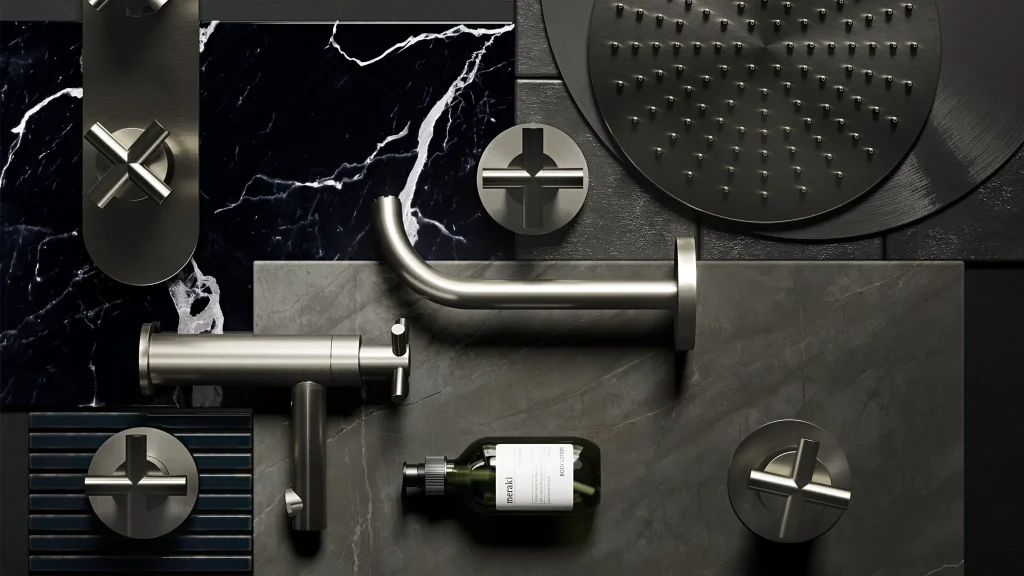
Flat lay photography is a way of shooting products from directly above, with everything arranged on one flat surface. The camera looks straight down, so nothing hides behind anything else and every item in the frame reads at a glance. That is why flat lays show up everywhere from Instagram feeds and Pinterest boards to catalogs, email headers and product pages.
For a product brand, a flat lay does a specific job: it shows the product together with its world. A faucet next to the tile and towel it belongs with, a flooring plank next to the cabinet door and fabric it will live with, a toy set laid out the way a child would play with it. Below are ten flat lay ideas that work for products, the setup basics if you shoot them on camera, and when it makes more sense to produce the same image in CGI with our flat lay 3D rendering services.
What Flat Lay Product Photography Is For
A flat lay is not a replacement for a white background packshot or a lifestyle scene. It sits between them. A packshot shows the product alone, a lifestyle image shows it in a room, and a flat lay shows it in a composed set: the product, the materials it is made of, and the things it is used with.
That makes the format good at three things. It explains a product range in one picture, because variants and finishes can sit side by side at the same scale. It sets a mood without building a whole room. And it leaves clean space for a headline or a price, which is why flat lays are so common in ads, banners and email. If you are deciding which image types a product page needs, our guide to types of product images covers where flat lays fit next to the other views.
How Beauflor Uses Flat Lays on Social Media
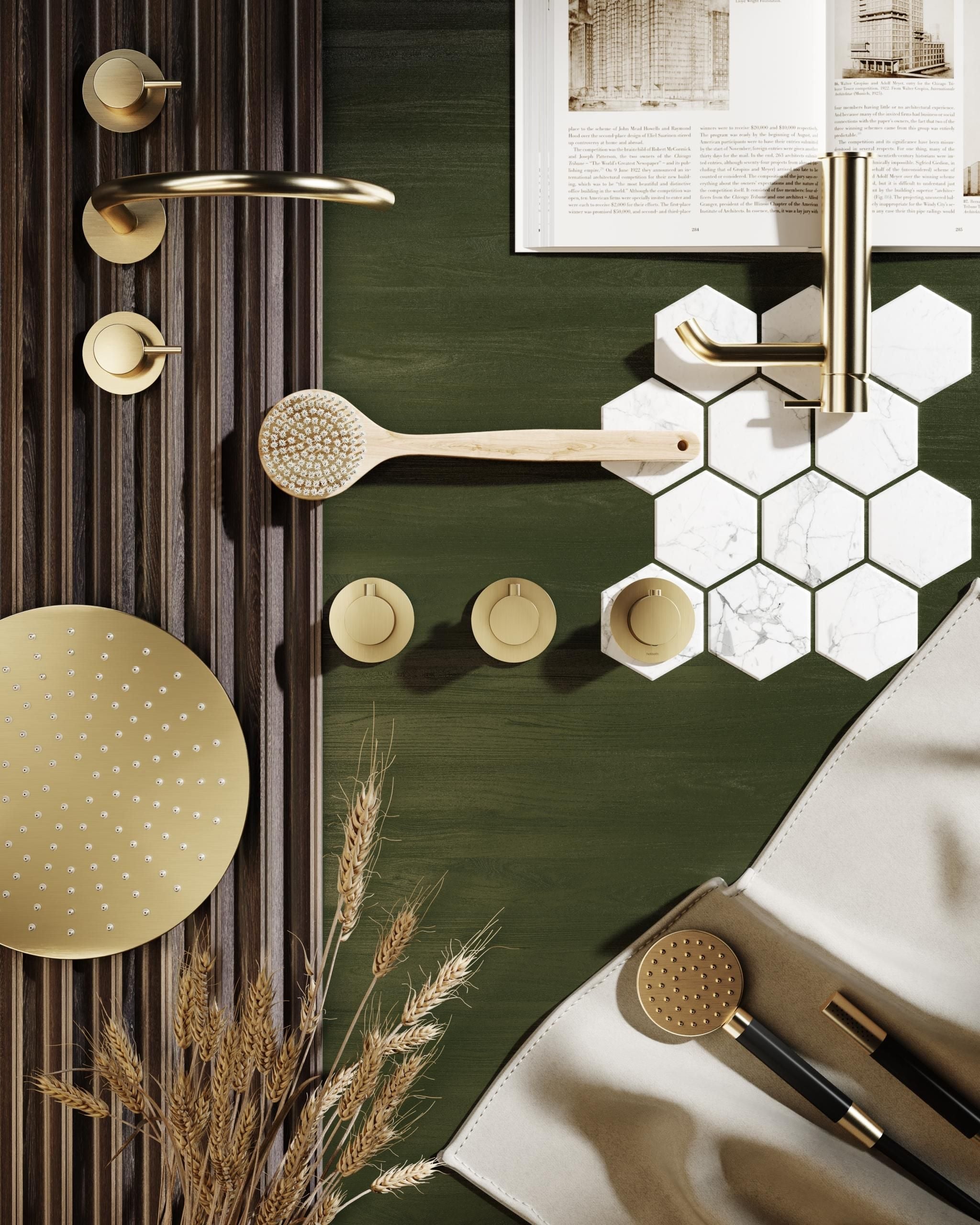
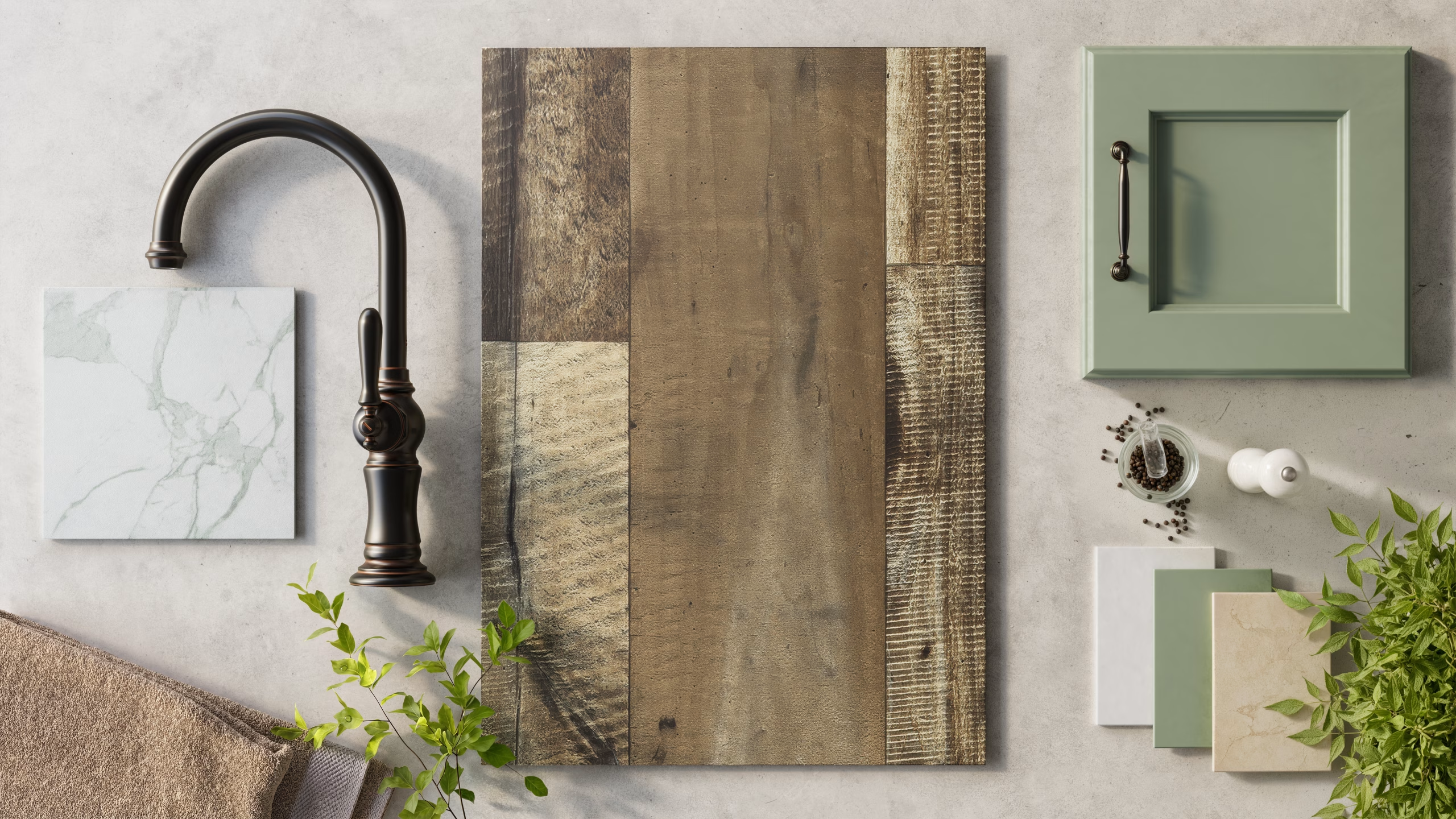
Beauflor, a US luxury vinyl flooring brand, has worked with us for over two years, with more than 30 projects across lifestyle scenes, close-ups, animation and flat lays. For the flat lays, Beauflor sends its own reference moodboards and brand color palettes, and we compose the flooring together with matching textiles, ceramics, plants and hardware as a styled top-down arrangement.
Those flat lays go straight into Beauflor’s marketing collateral and social channels. The post below is from their LinkedIn page.
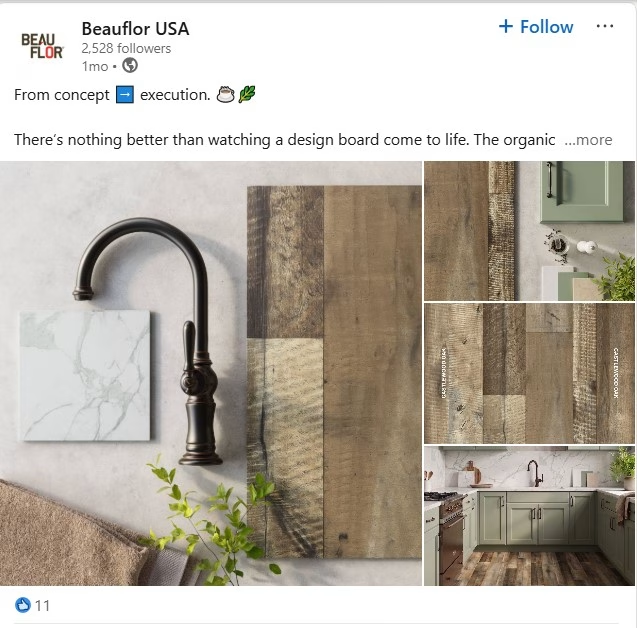
A flooring plank is a good example of a product that is hard to shoot as a flat lay: real samples are small, a full plank is too long for a tabletop set, and every colorway would need its own shoot. In CGI, one styled scene takes each new colorway. The full project is in the Beauflor case study.
10 Flat Lay Ideas for Product Photography
These ideas work for both camera and CGI. Most strong flat lays combine two or three of them.
1. Hero product with a supporting cast
Put the product in the visual center or on a strong diagonal, then add three to five supporting items that explain its use. Supporting items should be smaller, quieter in color, or partly cropped by the frame, so the eye always lands on the product first.
2. Material and finish board
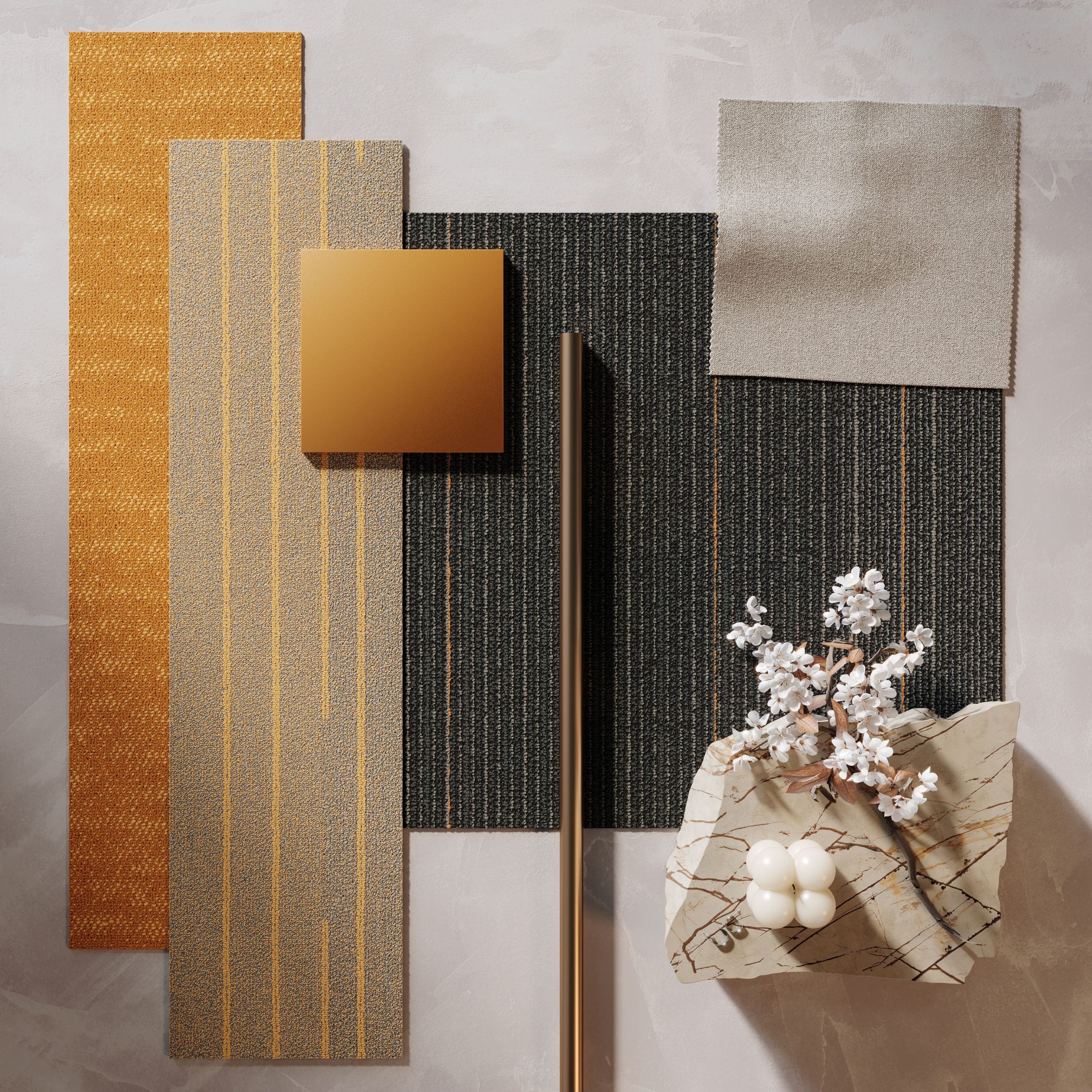
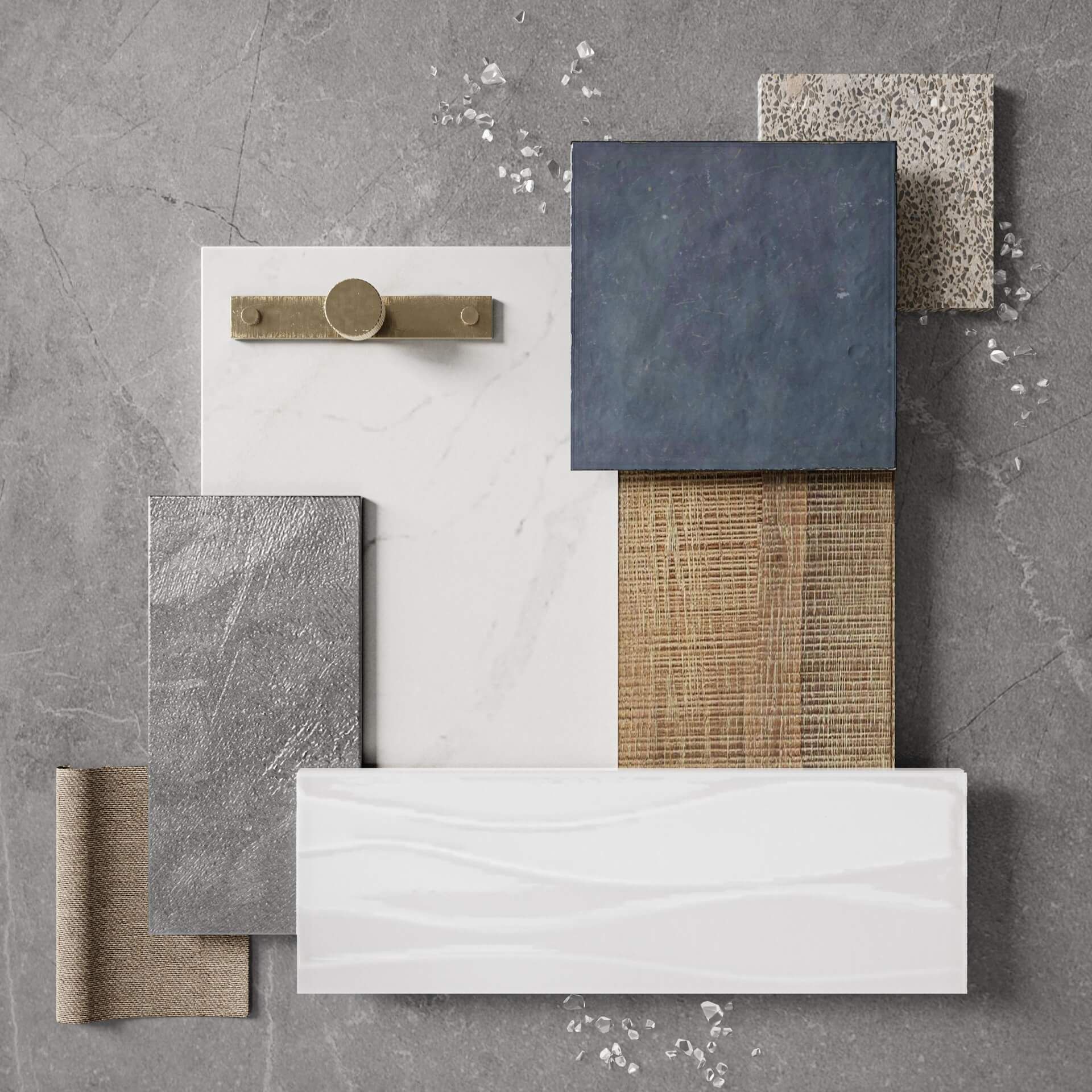
Lay out the finishes a product comes in: wood veneers, fabric swatches, metal chips, stone samples. This is the flat lay version of a showroom sample table, and it answers the question “what does this come in?” faster than a dropdown menu.
3. Collection side by side
Show several variants of one product in a single frame: tile sizes, colorways, a set of handles. Because the camera is straight overhead, everything keeps its true proportions, which is exactly what a buyer comparing options needs.
4. Knolling: everything at right angles
Knolling means arranging every item in parallel lines or right angles, evenly spaced. It reads as precise and technical, so it suits tools, hardware, kits and anything sold as a set of parts.
5. What is in the box, or the product taken apart
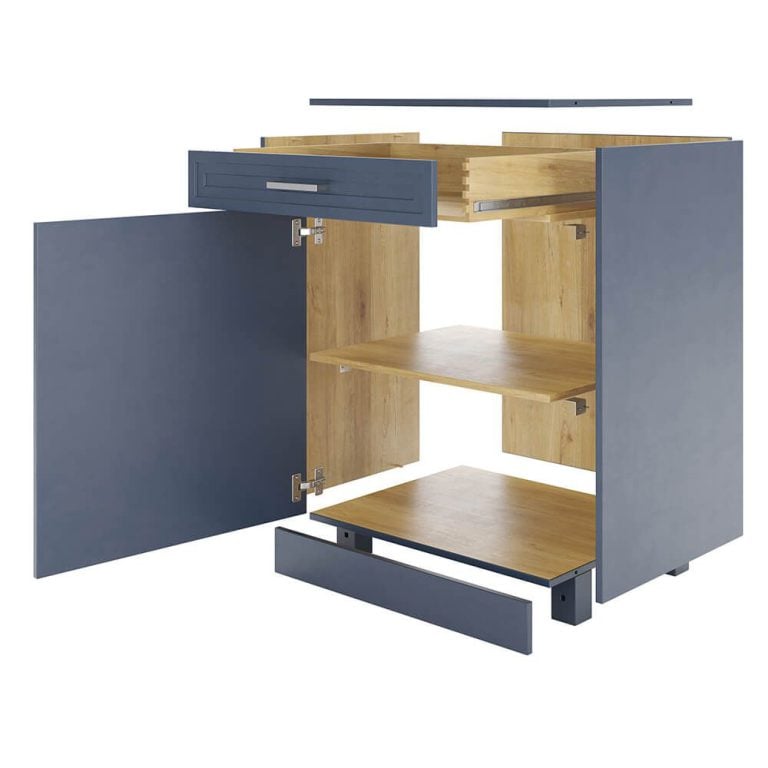
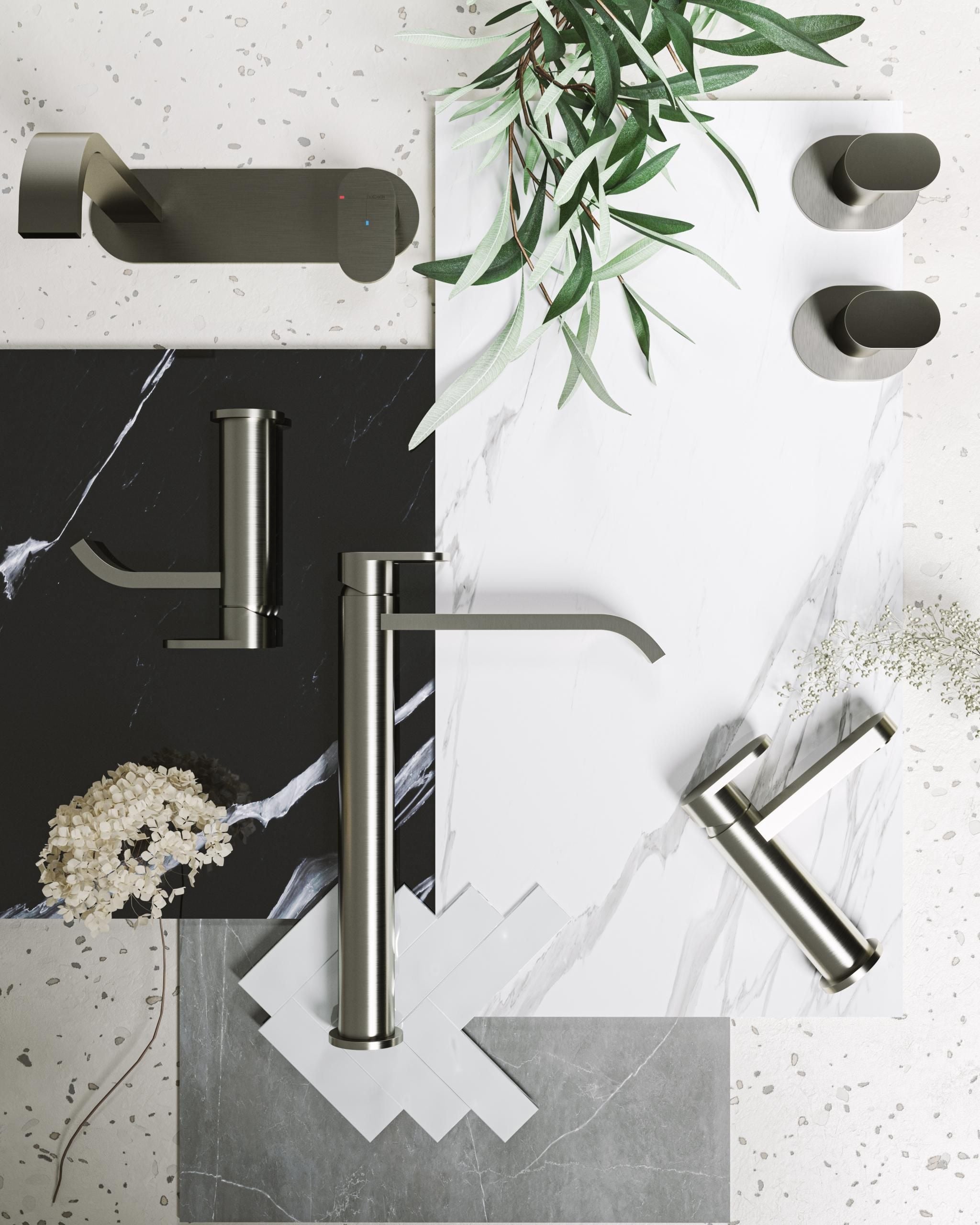
Lay the product out as its components: a faucet with its handle, spout and trim, or a modular piece with every part next to it. Physically this means disassembling a sample. In CGI the model is already built from separate parts, so each one can be placed exactly where you want it.
6. Room in a frame
Combine the product with fragments of the room it belongs to: a flooring sample with a cabinet door and a faucet, a rug with a throw and a side table top. It is a moodboard that sells, and it suits interior products that are too large to show whole from above.
7. Pattern and texture up close
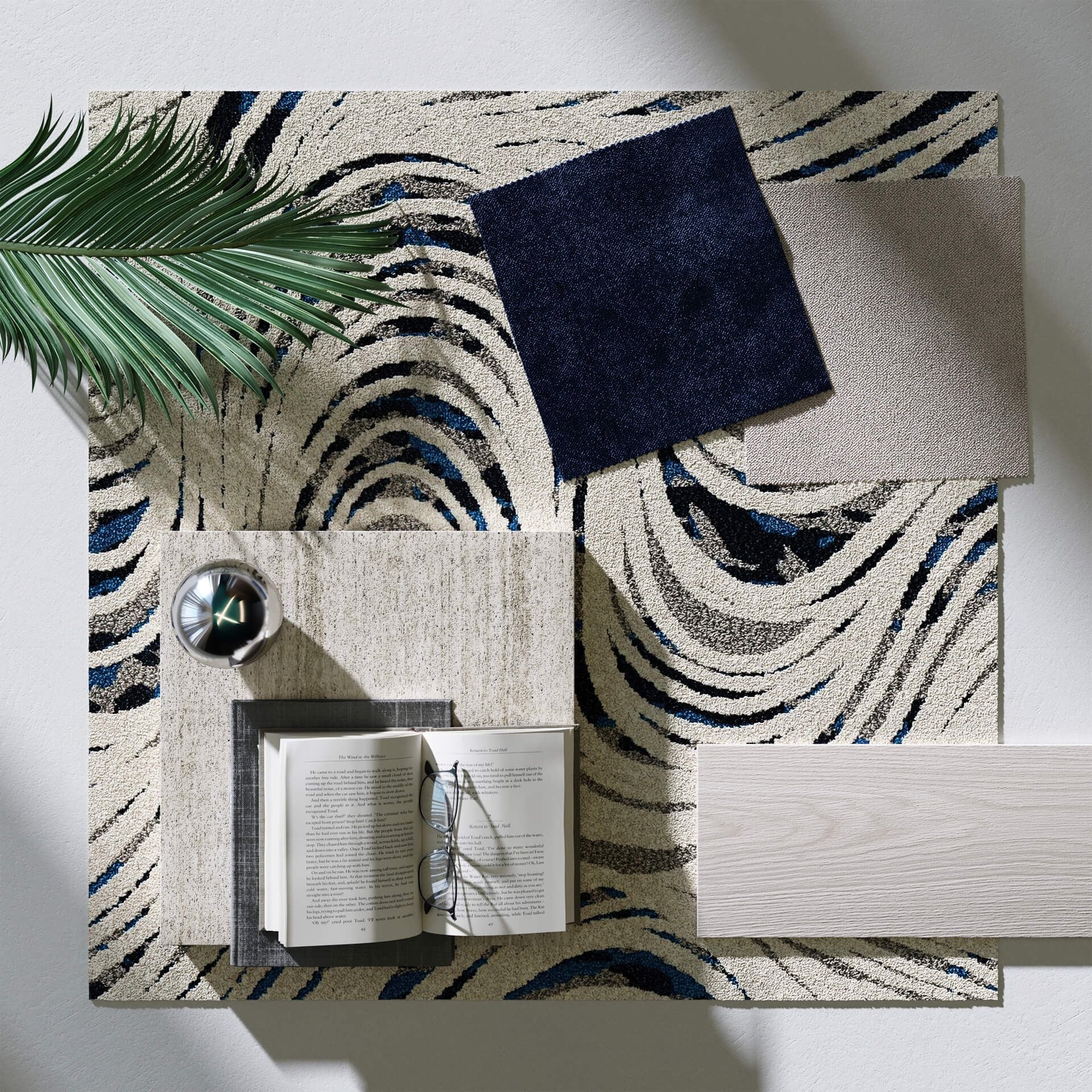
For rugs, fabrics and surfaces, let the product fill most of the frame and keep props at the edges. The top-down angle shows the pattern repeat and texture without perspective distortion.
8. One color story
Pick one palette and build the whole set around it: tone-on-tone neutrals, a single accent color, or two complementary colors. A clear palette is what makes a series of flat lays look like one brand rather than a set of unrelated photos.
9. Play scene for kids’ products
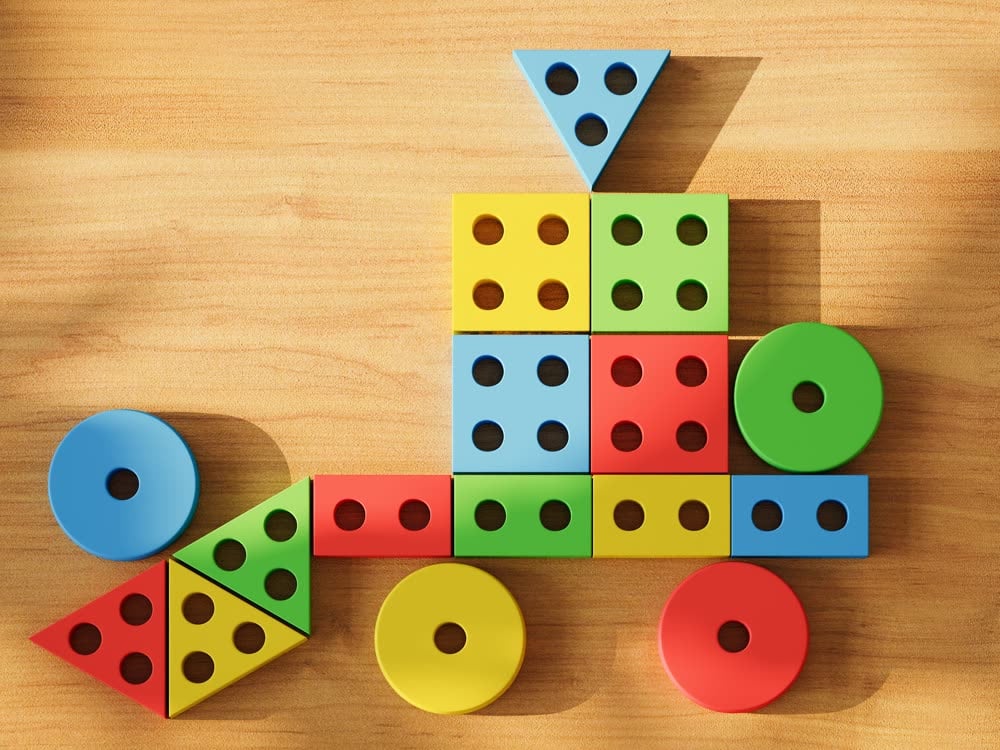
Toys work best when the flat lay shows them in use: blocks stacked into a vehicle, a railway laid out as a track. It tells parents what the set can become, not only what is in the box.
10. Space for copy
Plan the empty part of the frame before you style anything. Keep one side or one corner calm so a headline, a price or a logo can sit there. The same image then works as a banner, an email header and a social post.
How to Set Up a Flat Lay Photo Shoot
If you shoot flat lays on camera, the basics decide most of the result:
- Camera straight overhead. The sensor has to be parallel to the surface, or the edges of square items will lean. Use a tripod with a horizontal arm or an overhead rig, and check with a level.
- Soft, directional light. Window light from one side, diffused, gives soft shadows that show depth. Bounce a white board on the opposite side to lift the shadows.
- One shadow direction. Mixed light sources create shadows going different ways, which immediately looks wrong from above.
- A surface that supports the product. Marble, linen, wood, concrete or paper backdrops set the mood. Keep the surface quieter than the product.
- Shoot wider than the final crop. Leave margin so the same image can be cropped to 1:1, 4:5 and wide banner formats.
- Style in layers. Place the product first, then the main props, then small details. Odd numbers of supporting items usually look more natural than even ones.
The hard part is not one good flat lay. It is keeping the same light, angle and style across a whole collection, every colorway, and next season’s launch.
Flat Lay Photography or CGI Flat Lay: Which to Choose
A camera is often the right tool. CGI earns its place when the product, the range or the schedule makes a shoot impractical.
| Situation | Photo shoot | CGI flat lay |
|---|---|---|
| A few small products that already exist | Fast and simple | Works, but a model must be built first |
| The product is not manufactured yet | Not possible | Built from CAD files or drawings |
| Many colorways or finishes | A reshoot or retouch for each one | Swap the material, render again |
| Large items: flooring, rugs, furniture | Hard to fit and light from above | Any size, any scale |
| One style across a whole catalog | Depends on matching every shoot | Same scene, light and camera every time |
| Restyling for a new season | New props and a new shoot | Change props or surface in the scene |
There is a second benefit. The 3D model built for a flat lay is the same one used for white background images, lifestyle scenes and animation, so the flat lay is not a one-off cost. For more on that trade-off, see lifestyle vs white background imagery.
How We Make a CGI Flat Lay
What we need from you is the same as for any product render: CAD files, drawings or photos of the product, material references, and an idea of where the images will run. A moodboard or brand palette helps, as Beauflor’s did.
- Brief and layout. We agree on the idea, the props, the palette and the formats you need.
- Model and materials. We build or reuse the product model and match materials to your samples.
- Styling and light. The scene is composed from above, with props and surface chosen for the brand.
- Review. You comment on the draft, and we adjust layout, colors or props.
- Variants and delivery. Once one image is approved, every colorway or finish is rendered from the same scene.
We produce flat lays for flooring, tile, bathroom products, rugs, home decor and toys.
Start with one product
Send us one product and the finishes it comes in, and we will show you a flat lay built for your brand.
See flat lay renderingFAQ
What is flat lay photography?
Flat lay photography is shooting objects from directly above, arranged on a flat surface. The camera is parallel to the surface, so items keep their true shapes and proportions and the composition reads like a layout.
What is the difference between a flat lay and a top-down shot?
Every flat lay is a top-down shot, but not every top-down shot is a flat lay. A flat lay is a styled arrangement of objects on a surface. A top-down shot can also be an overhead view of a room or a large product in place.
What is the best lighting for flat lay photography?
Soft, directional light from one side, such as diffused window light, with a white bounce board on the other side. Keep a single light direction so all shadows fall the same way.
Can you make a flat lay without the physical product?
Yes. A CGI flat lay is built from the product’s 3D model, which can be made from CAD files, drawings or photos. This is how brands get flat lays for products that are still in production or for colorways that have no samples yet.
Which products work best as flat lays?
Products with visible materials, patterns or several variants: flooring, tile, rugs, textiles, bathroom fittings, hardware, decor, cosmetics and toys. Large furniture usually works better as a lifestyle scene, with its finishes shown in a flat lay.