The modern global market increasingly turns information into the most critical strategic commodity and communication tool. Advertising is one of the active forms of interaction between the masses and the external environment. It is currently dynamically changing under the influence of trends such as globalization and digitalization. This, in turn, determines a new level of advertising depth and the range of its impact on a potential audience.
As the world and its diversities change, so do human relationships. People’s lifestyles are evolving to meet the growing demands of an increasingly mobile-first society. Our understanding of consumer relations has evolved from the relationship between a brand and its customers to those based on one-on-one, omnichannel, immersive, personalized communications.
Learn more about CGI services for E-commerce and take your online business to the next level.
See moreBut how has advertising changed and evolved under the consequences we mentioned above? What in advertising will remain eternal, and what has been reborn into new advertising trends, methods, tools, formulas, or algorithms? And, of course, the most important is how you can implement those into your business and ad practics?
You can find everything you need to know about advertising here: this article will help fill in the gaps in your knowledge from the beginning to the future of advertising. In the course of reading the article, you will discover recent trends in advertising products and will get tips for creating valuable and outstanding advertising time after time.
As a bonus, you will learn how to create effective ads using CGI, which is the key to successful online advertising, increased conversions, and a better customer experience. The marketing department of our product CGI company is happy to be your guide on this adventure.
Table of Contents
[Advertising: The Basics](#basics)
- A Brief History of Advertising
- What is Advertising and How Does It Work?
- Why Use Advertising?
- What are the 4 Roles of Advertising?
- Why Digital Advertising is the Future?
[Product Advertising: Framework](#framework)
- What is a product advertisement?
- What are the 3 types of product advertising?
- How product advertising shapes a products value?
- How to build an ad for a product?
[Recent Trends in Advertising of Products](#trends)
[How to Create an Effective Advertisement](#effective)
Advertising: The Basics

A Brief History of Advertising
The history of advertising can be traced to the early stages of civilization when the use of signs and other visual devices was used for communication purposes.
Over time, advertising techniques have improved and in the 19th century, media such as newspapers and billboards had been developed to increase the number of people reached. [Modern advertising emerged in the 20th century](the rise of modern advertising](https://www.sutori.com/en/story/a-brief-history-of-modern-advertising–ccr64muhhMWUandTVc7qxRLZ) thanks to advanced techniques including radios and televisions which enabled businesses to reach out to an even larger audience. Advertising has evolved from the initial stage where people depended on the use of roadside billboards and town criers to pass their messages.
Nowadays, [advertising is one of the largest industries in the world with billions of dollars (https://firsthand.co/industries/advertising) flowing around as advertising messages appear on TV, radios, Internet and even in the daily conversation between people. But what is advertising, and how did it become so influential?
What is Advertising and How Does It Work?
Ad is a form of persuasive communication intended to make people buy a certain product, service or brand. Advertisers use media to pass a message to the desired audience. Traditional forms of advertisement include TV, radio, print (such as newspapers, magazines, and flyers) and online media. Good advertisement increases awareness and stimulates people to buy a product or service.
To be effective, an advertisement should target the particular audience and provide a relevant message. Various approaches exist on how marketers determine who they address in an ad and what they are interested in. Having all this information, one may create an advertisement campaign that would perfectly fit for the selected audience.
There is no doubt that numerous aspects influence a successful advertisement. Advertisers should consider a target audience, media, a message to pass to the audience, and the desired response from the latter. When all these aspects are combined, an advertisement becomes a very powerful marketing tool.



Why Use Advertising?
Advertising is meant for the promotion of a product or service. In increasing consumer awareness of products or services offered by the firm through advertising, the sales of a business can be increased and aid in its growth.
Adverts can build up brand equity in an organization since customers will become loyal to the brand, making it easier for them to buy the products and services of the organization than those of the competitors.
Moreover, advertisement can provide important information to consumers like discounts on products. In doing so, advertising can be vital in the operations of an organization.
What are the 4 Roles of Advertising?
Advertising is a pervasive force in today’s society, and it plays four essential roles.
- The first is to inform consumers about available new products or services. This is especially important for businesses introducing new products or entering new markets.
- The second role is to persuade consumers to purchase a particular product or service. This involves creating an advertising campaign that highlights the features and benefits of the product or service to convince consumers to make a purchase.
- The third role of advertising is to build brand awareness. This involves creating an emotional connection between consumers and a brand to increase brand loyalty and repeat purchases.
- Finally, advertising can also reinforce existing purchasing decisions and remind consumers why they chose a particular product or service or how it meets their needs better than other options on the market.
By fulfilling these 4 roles, advertising plays a vital part in sales and marketing efforts.
Why Digital Advertising is the Future?
Digital advertising is one of the most efficient and effective ways to reach your target audience. By targeting ads to specific demographics, interests, and even locations, you can ensure that your message goes to the right people. Our guide to advertising products online explains how to choose and run these channels.
Digital advertising is highly affordable, making it an excellent option for businesses. It’s easy to track and measure digital advertising. You can see how many people have seen your ad, clicked on it, and even made purchases. This allows you to optimize ad campaigns to get the best results possible, so that’s why digital advertising is the future of marketing.
Product Advertising: Framework

What is a product advertisement?
Product advertising is a type of marketing that focuses on promoting and selling products to consumers. While each type of product advertising has its unique benefits, there are some common elements that all successful product advertising campaigns share.
- All effective product advertising must be able to capture the attention of potential customers. This means creating ads that are eye-catching and memorable.
- Product advertising must communicate information about the product clearly and concisely.
- The main goal of product advertising is to persuade potential customers to purchase the product. This may involve creating a sense of urgency or highlighting the product’s unique features.
- Product advertising must be able to generate positive word-of-mouth buzz. This can be done by offering incentives for customers to write reviews or by creating social media campaigns that encourage customers to share their experiences with others.
By following these standard guidelines, businesses can create product advertising campaigns that are more likely to succeed.
What are the 3 types of product advertising?
There are 3 main types of product advertisements: comparative, emotional, and informational.
- Comparative advertising directly compares the product to a competitor, often highlighting its superiority.
- Emotional advertising seeks to tap into consumers’ feelings and create an association between the product and positive emotions like happiness or excitement. For example, many people associate Coca-Cola with joy because it has been advertised extensively through music festivals and other events where people have fun together.
- Informational product advertisements provide factual information about a product so that consumers can understand how it works or what benefits it offers them.
No matter what type of product advertising is used, the goal is always to convince consumers that it is worth purchasing. By understanding the different types of product advertising, businesses can more effectively market their products and promote sales.
How product advertising shapes a products value?
Product advertising influences not just whether people buy, but how much they think a product is worth. By framing a product as desirable, scarce or status-defining a campaign can lift its perceived value above its raw cost. Which is exactly why luxury goods spend so heavily on image rather than specs.
Product advertising is about creating a narrative around your product and making it desirable to your target audience.
###How to build an ad for a product?
Start with the goal. An ad meant to build awareness looks nothing like one meant to drive a weekend sale so name the outcome before writing a word. From there the message follows.. The ads that land usually rest on a mix of data a clear creative idea and genuine emotion.
Then choose the medium because format shapes everything after it: a 15-second video, a search ad and a printed insert each demand visuals and copy. Whatever the channel end with one action. The thing you want the viewer to do next. A few habits keep the work honest:
-Know who you are talking to and write to that person than everyone.
-Give yourself room to try formats you have not used before.
-Track. Let the numbers, not opinions decide what to repeat.
Recent trends in advertising of products

The advertising industry is constantly evolving, and the past few years have seen some significant changes. There has been a shift toward digital advertising. As more and more people spend time online, businesses increasingly turn to the internet to reach their target audiences. This has led to new trends such as programmatic advertising, which uses sophisticated algorithms to target ads to the right people.
We’re seeing growth in video advertising. Video is a compelling medium, and it’s no surprise that it’s becoming increasingly popular with marketers. Thanks to platforms like YouTube and Meta, businesses can reach many people with their video ads.
Social media marketing is becoming more critical than ever. With most people using social media platforms like Meta, Twitter, and Instagram, businesses need to be present on these channels to reach their audiences. Social media marketing allows companies to build relationships with potential and current customers and create a connection with their brand.
With the new digital advertising models, technological progress, and various creative ways to promote a product – let’s not delay and dive into recent trends in the advertising of products.
1. Programmatic Advertising
Programmatic advertising hands the buying and placing of ads to software. Of negotiating spots by hand advertisers set rules and budgets and algorithms bid for the right impression in real time. The payoff is precision and lower waste: ads reach the intended audience accurately and cost less to place. It already powers a share of digital display and its footprint keeps growing.
2. Targeted Online Ads

Targeted ads are served based on what a platform knows about a user. Age, location, interests, browsing history. Done right they feel relevant of random.
The trade-off is real though: the same data that makes targeting useful also raises privacy concerns and rules like GDPR plus the slow death of third-party cookies are pushing the industry toward first-party data and consent. For advertisers the lesson is to target without crossing into territory that feels invasive.
3. AI and Analytics in Advertising
For years AIs role in advertising was mostly invisible. Sorting audiences, buying media and predicting which version of an ad would perform. That still happens. What changed is that AI now helps make the itself. Generative tools draft copy, spin up image and video variations. Let teams test a dozen concepts in the time one used to take.
4. Mobile-First Advertising

Most ads are now seen on a phone so the phone is where they should be designed first. Mobile-first means more than shrinking a desktop layout: it means video, thumb-friendly interactions, fast load times and creative that works with the sound off.
Because a phone is always within reach it also opens the door to timely location-aware messaging that older channels never allowed.
5. Omnichannel Advertising

Buyers rarely live on one channel and omnichannel advertising meets them across all of them. Search, social, email, mobile and in-store. With a message. The point is continuity: someone who sees a product on Instagram reads a review later.
Gets a reminder by email should feel like they are following one conversation, not three disconnected ads. As tracking matures this joined-up approach is becoming the standard than the exception.
6. Visual Advertising
It is often said that one picture is worth a thousand words. And, especially with today’s era of mass media, it is never more true. The scope of influence of visual advertisements is huge and unlimited, being capable of overcoming any language barriers and touching people on an emotional level.
One image may tell a story, stir up emotions, and make a long-lasting impression. That is why it is not surprising that so many companies have put visual advertising into their marketing strategies.
Visual advertising is an effective and persuasive way to reach consumers, spreading numerous types of media ads from billboards and television commercials to online ads and product packaging. With its ability to capture attention and communicate messages clearly and quickly, visual advertising is a powerful tool that should not be underestimated.
Looking for the best CGI solution for your business? Talk to an expert!
Book a DemoThere are many types of product advertising, each with its strengths and weaknesses.
For instance, display advertising is a cheap form of advertising that can help reach a wide range of people; however, such type of advertising may be easily overlooked by the target audience. On the other hand, printed advertisements like banners might be more appealing, but they can be expensive to create and modify after publication. Video advertising can arguably be considered one of the most effective forms of advertising a particular product. However, video advertising is very costly and time-consuming just like a photo shoot.
But are there technical and innovative solutions that guarantee effective and eye-catching advertising? And is it possible to create pis-of-advertising art on a low budget nowadays? Yes! And one of the most popular product photography trends is the use of 3D technology.
It’s not surprising because this technology allows you to achieve stunning effects that are impossible to create using traditional methods. It is easier for companies to produce excellent quality 3D graphics at affordable prices than to spend effort and money on other less effective ways of creating a visual.
How important is CGI for advertising?
If you watch a good commercial you might wonder: where did CGI help out? CGI lets brands make products, settings and even whole worlds that would be really hard or impossible to film. This freedom is the point. It means you do not have to worry about where you’re what the weather is like or if you have a prototype. Brands without an in-house 3D team usually get such scenes from CGI rendering services.
For products that do not exist yet CGI is not just helpful. It is necessary. You can market a design before the first one is made.. For products that do exist CGI is still really useful. There are a reasons it is often the go-to choice for visual advertising:
- It makes scenes and settings that’re hard or costly to shoot on location look really real.
- It gives you control. You can change every angle, material and light source to match the rest of your campaign.
- It helps you make visuals that’re just right for your audience, including lifestyle scenes that show the people you want to reach. For example, you can use a 3D lifestyle in advertising that features characters that are popular among children or teenagers.
- It usually costs less than taking a lot of pictures especially when you have a lot of products.
7. Immersive Advertising
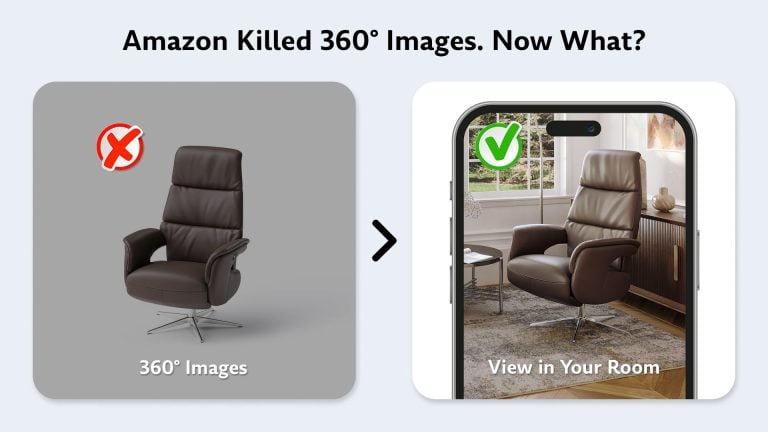
With growing numbers of customers purchasing products online, immersive formats will come to replace what the showroom had been doing so far. 3D formats, animated demonstrations and interactive scenes allow the customer to learn about the product not by watching an ad but rather by interacting with it.
Virtual, augmented and mixed reality technologies will provide the potential buyers with a chance to place the sofa into the living room or rotate the product and see all its angles from different sides prior to buying it. When dealing with such products as furniture when its touch and look are important this kind of technology makes the difference. For more furniture advertisement ideas built on formats like these, see our separate guide.
This example demonstrates the future trend for product advertisement.
8. Short-Form and Creator Video
Short vertical video on TikTok and Instagram Reels is now a standard format for product ads, and shoppers often trust footage from real customers more than a polished brand film. That makes user-generated content and small creators worth a place in the plan. Many brands now work with nano- and micro-influencers instead of celebrities. When choosing one, check:
- whether their followers match your target audience;
- engagement on their posts, not just follower count;
- whether their content feels authentic and fits your brand;
- their experience with other brands.
Measure a collaboration like any other ad: engagement, clicks, conversions, and sales during the campaign compared with the period before it.
9. Values-Led Advertising
Shoppers increasingly expect brands to be open about materials and production. IKEA, for example, builds campaigns around its use of renewable and recycled materials. Claims like these work only when they are specific and true, so show the actual material or process rather than general green language.
Product Ads Worth Studying
A few campaigns show what these trends look like in practice:
- IKEA, Place In Your Room. In 2013, shoppers could scan the printed catalog with a phone and place a life-size piece of furniture in their room in AR. It solved the most common online furniture problem, buying the wrong size, and grew into the IKEA Place app in 2017.
- Balmain, Virtual Army. In 2018, the fashion house presented a new collection on three fully digital models.
- LEGO, Rebuild the World. A 2019 fully CG commercial with the scale of a film trailer, built around a brand message rather than a single product.
- Fender, Acoustasonic Jazzmaster. A CG product film about one feature, the control that blends acoustic and electric sound, with motion timed to the music and every color option shown.
- Magnum, Double Caramel. A fantasy-style CG ad carried by extreme close-ups of chocolate and caramel textures.
What they share is that the product exists as a 3D asset first. For a furniture brand, the same model can become an AR placement, a feature animation and a close-up of the fabric. Our guide to marketing for furniture brands shows where these assets fit in a wider plan.
How to create an effective advertisement

Once one understands how advertising works, making an effective advertisement will become much clearer. Start with the buyer. What is their problem? How could this be solved in such a way that the buyer will react? New developments in the area of product advertising should provide some clues. The first step towards making the advertisement is always understanding the individual receiving it.
Following this comes the matter of conveying the message through a suitable medium. Be sure that the communication is clear, that it is suited to the medium used and that it facilitates action. Uncertainty is the main source of errors in advertising. The ideal balance is clear but difficult to achieve: creativity enough to be remembered and technology enough to be efficient without interfering with either one of the two.
Looking for images that can carry a campaign? Our 3D rendering services can help you create incredible visuals for your advertising campaign.