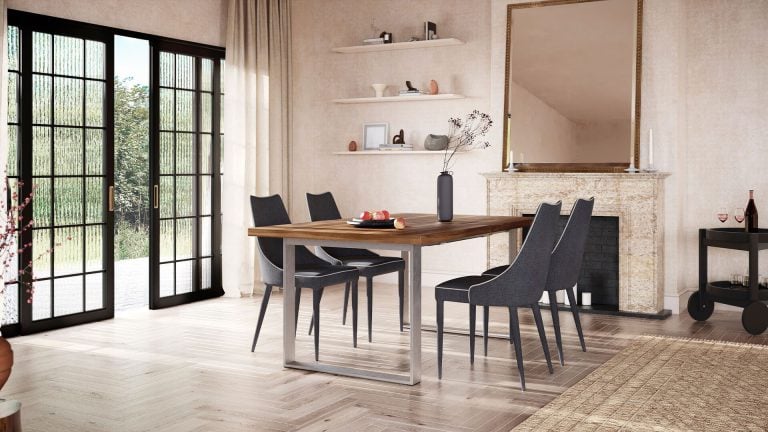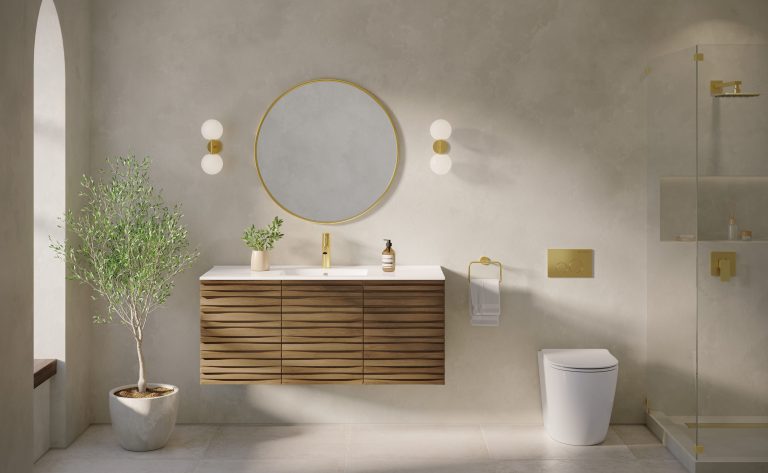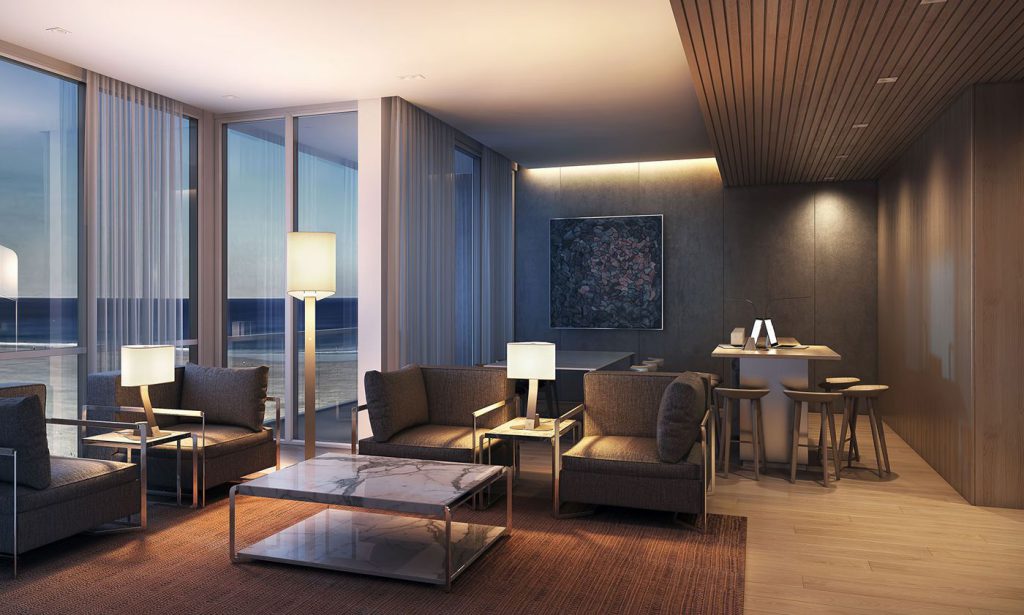
According to statistics, 75% of consumers buy goods online every month. Buyers are comfortable choosing a product from photos and videos alone, so manufacturers and retailers need strong visuals to sell.
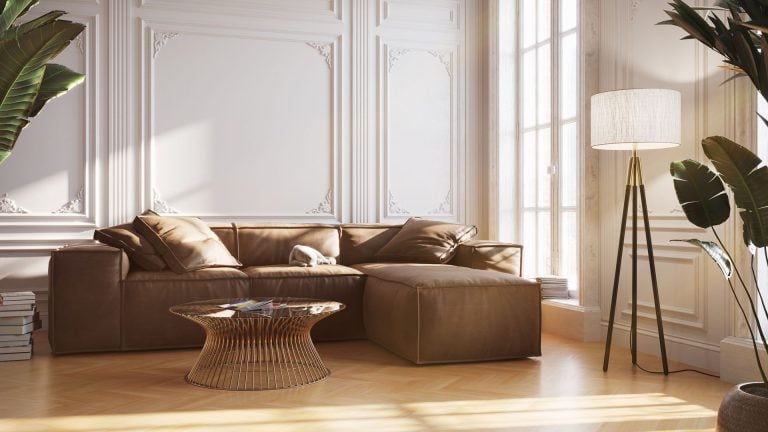
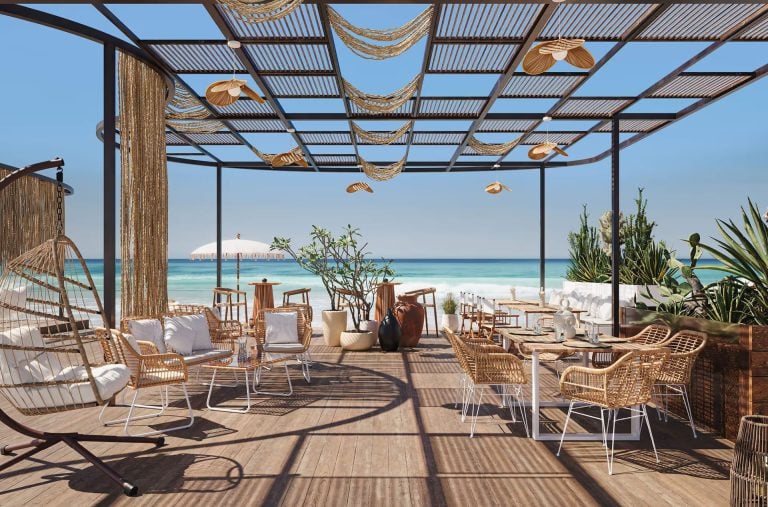
In furniture sales, manufacturers often present products in roomsets or lifestyle images that show them in a suitable interior. To get such a roomset, they either organize a traditional photoshoot or order a 3D scene. Our guide to 3D lifestyle images covers this format in more detail.
A photoshoot takes a lot of time and money. You need to rent a studio with equipment and backgrounds, buy the decor, and hire movers, designers and a photographer. For each new roomset, a designer has to rearrange all the items, which takes extra time and puts the product at risk of damage.
With 3D technology, CG artists can build any type of roomset and render a photoreal 3D visualization of it, with no decor to buy and no extra staff to hire. Still, creating a 3D scene that actually sells the product takes skill. With so many product visuals competing for attention online, how do you make a roomset that stands out?
Below are 7 tips our 3D rendering company uses to make organic and dynamic 3D scenes for furniture marketing.
Start With a Finished Product Model
The scene exists to support the product, so the product’s 3D model should be finished and approved before anyone builds a room around it. To model it accurately, the artist needs:
- photos of the product from several angles;
- drawings, schemes or sketches with dimensions;
- samples or references of every fabric, material and finish;
- the full list of variants.
For example, a dining chair might come with three seat fabrics (maroon velour, turquoise oxford weave, mocha twill) and three leg finishes (oak, greystone, walnut). All of these options should be in the brief from the start, not added after the scene is built.
1. Build a 3D Scene with Perfectly Matched 3D Models
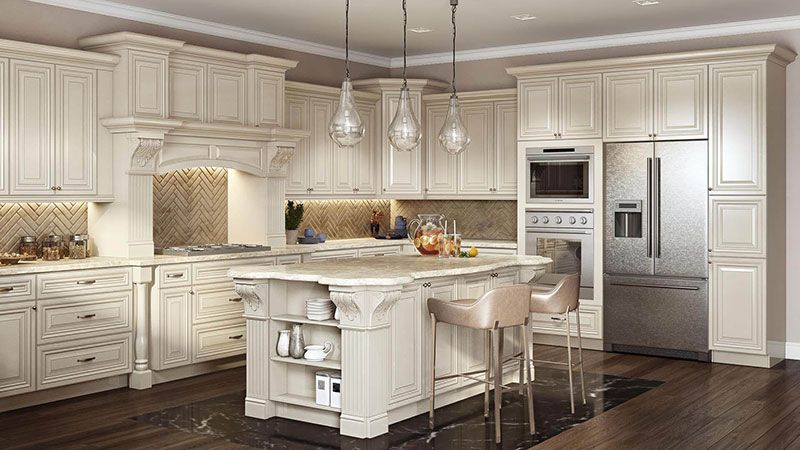
Any 3D scene consists of 3D models of furniture and decor, and the scene can only look as good as these models. When the geometry of every object is correct, the textures map cleanly and look photorealistic in the final 3D visualization.
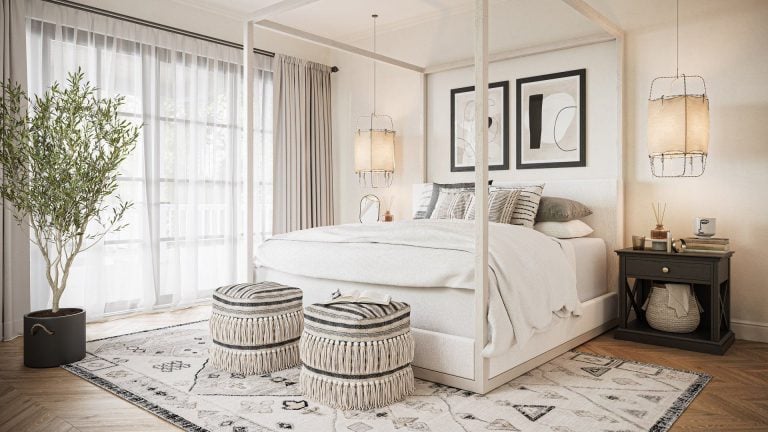
All models in a 3D scene should also match each other in style and context. For a luxury bed, for example, 3D artists pick high-end furniture and decor to go with it, so the whole 3D scene creates the right atmosphere.
2. Add Decor and Accessories that Complement the Product
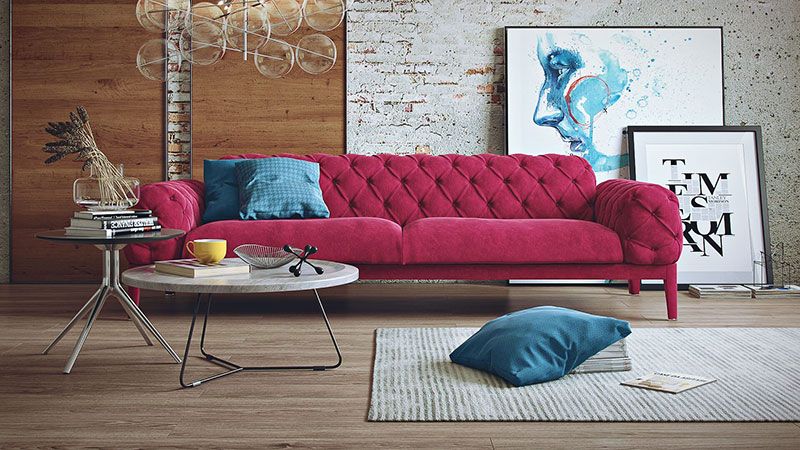
To make a 3D scene look stylish and organic, CG artists choose decor that complements the main object without pulling attention away from it. Accessories should match in style both each other and the hero product. Size matters as much as style.
For example, in a lifestyle 3D scene for a low sofa, 3D artists pick mostly low-profile surrounding objects that form a horizontal line. To balance the 3D scene, they add a few thin vertical elements that create rhythm without drawing attention to themselves.
3. Use Custom High-Quality Textures and Materials
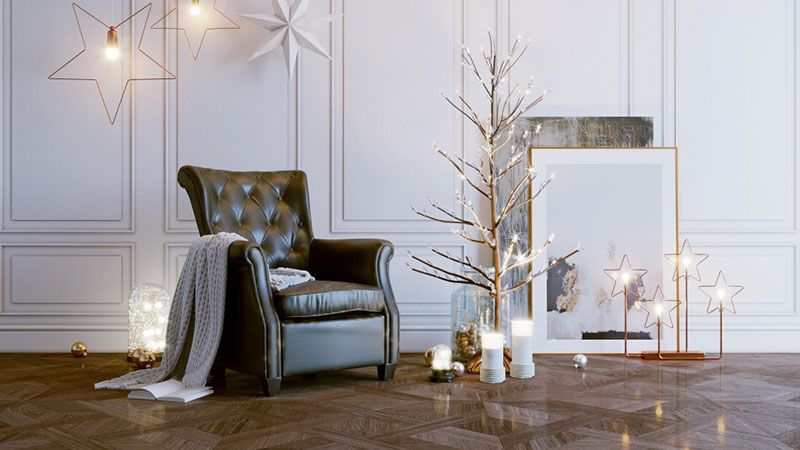
Established 3D studios keep their own texture libraries that cover most materials a manufacturer might need. CG artists also follow design trends and keep adding new materials and textures to provide lifestyle 3D product rendering services.
For a product with a distinctive look, it’s worth ordering custom textures and materials. In CG software, 3D artists can create any texture map from references, photos and drawings.
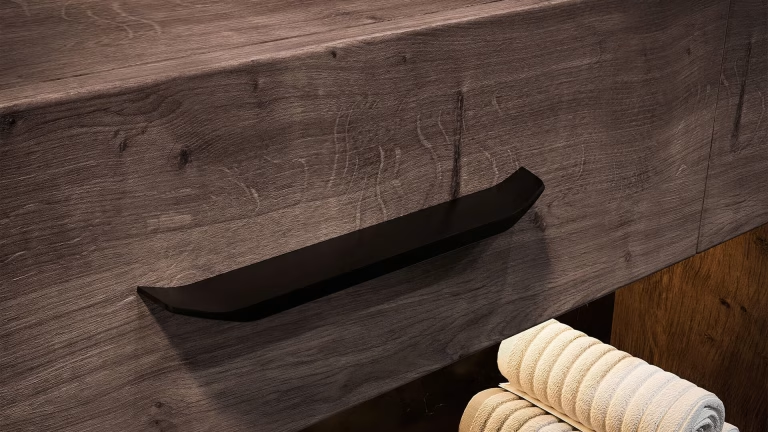
Besides the texture map itself, 3D artists adjust the material properties, such as gloss, transparency and density. With a custom texture and well-tuned material settings, even complex surfaces like premium wood and leather look natural in lifestyle images.
4. Create a 3D Scene for Each Product Design Option
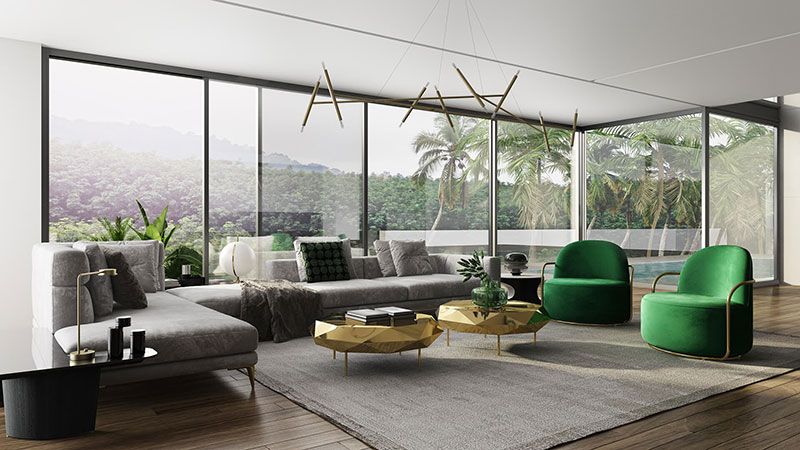
When a manufacturer wants to present multiple designs of the same product, they shouldn’t show them in the same 3D scene. Otherwise, the color or the style of the roomset won’t be in sync with the product itself. Experienced 3D artists can slightly adjust the existing 3D scene or build a new one, depending on the situation. Brands on a tight schedule can also start from ready-made 3D interior scenes and place the product inside.
If a brand offers many colors for one product, 3D artists can keep the composition of the lifestyle images and adjust only the colors for each option. In 3D software, changing the color of any object in a 3D scene takes a couple of clicks. This way, a manufacturer gets a roomset for every color option while keeping one consistent style.
When a manufacturer needs to showcase products in various styles, 3D experts can create several 3D scenes in different interior styles. Based on the product, they will create a new roomset with matching accessories that will tie together the object and space.
It helps to agree up front which interior suits each variant. The same chair in mocha with oak legs may look best in a dining room with plenty of daylight and greenery, while the turquoise and greystone version may work better in a minimal space with chrome accents.
5. Choose the Right Lighting Scheme
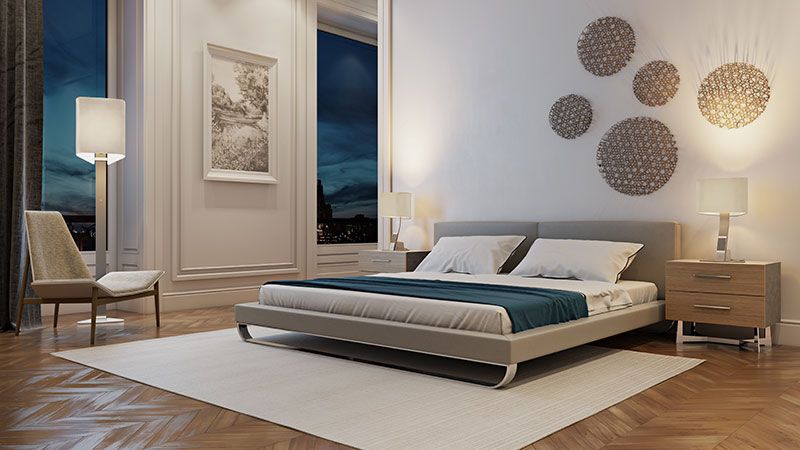
3D software lets artists set up the lighting scheme that shows the product best. Depending on the 3D scene, they can create bright daylight or soft evening lighting with additional light sources. Our overview of 3D rendering lighting describes more setups for product images.
Furniture with glass or mirror elements looks especially good in a sunny room. Sunlight passing through translucent surfaces leaves reflections and highlights around the space, which makes the 3D scene brighter and livelier. Morning light also works best for kitchen roomsets, since most buyers picture their first cup of coffee in a sunlit kitchen.
Furniture that calls for a calmer presentation looks better in a darker room. For a bedroom set, for example, 3D artists dim the main light in the 3D scene and use only soft additional sources. Bedside lamps and backlighting create a cozy, private atmosphere, and warm undertones make it feel even more intimate.
Before setting the light, decide on the wider context of the room. A few questions make the scene feel natural:
- What season is it outside, and what time of day?
- What is behind this room, and where are the entrance and windows?
- Where do the light sources sit?
- Where is the home located? A New York apartment and a Lisbon apartment call for different details.
The answers show up in small details, such as a wool throw on the sofa for a winter scene.
6. Arrange a Well-Thought-Out Composition of the Whole Scene
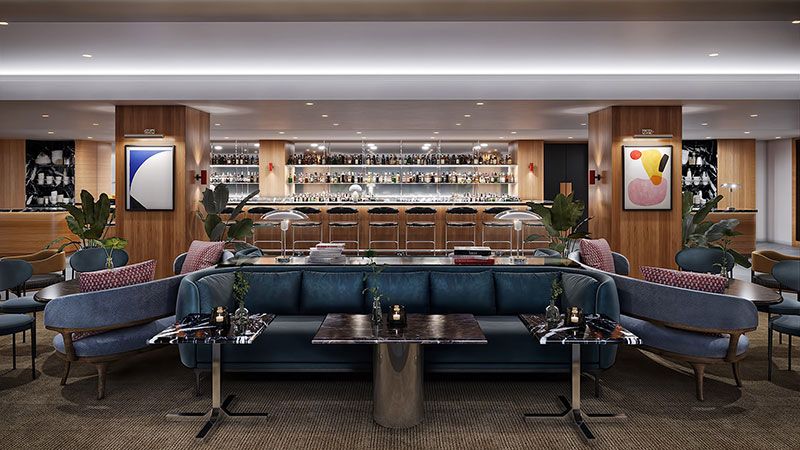
Once 3D artists have selected all the 3D objects and adjusted the textures, they arrange the furniture and decor in the 3D scene into a balanced composition. There are many ways to do it, but two are especially common.
Symmetry is the simplest technique and works for any type of 3D scene. In a symmetrical interior, 3D artists arrange the furniture symmetrically too, and double symmetry makes the composition look even more elegant. People tend to perceive symmetry as harmony, which is why symmetrical compositions make some of the most effective product presentations.
The second method is built around a ¾ camera angle. 3D artists plan the camera position in advance and arrange the furniture so that it flatters the product from that view. Both symmetrical and ¾ compositions are classic techniques, but the ¾ angle adds more depth and dynamics to a 3D scene.
7. Choose the Most Flattering Camera Angles
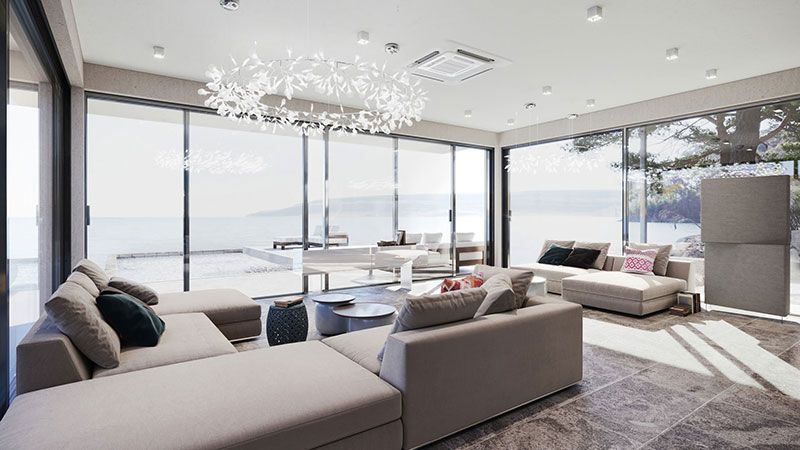
Camera setup is the last stage before rendering, and a bad angle can still spoil the result. A poorly chosen view distorts the geometry and changes how the product is perceived. That’s why it’s important to show a 3D scene from the angle that flatters the product most.
For example, for a large furniture set, it’s best to shoot from a high camera position. This way, all objects will fall into the frame and the scale of the set will be accurate and clear to customers. However, if a manufacturer needs to draw the viewer’s attention to the texture or certain details of the design, close-up views are the way to go.
Surely, one angle doesn’t exclude the other. Professional 3D artists know that having several angles for the same product makes advertisements more convincing and dynamic. By ordering multiple views, a manufacturer will be able to use wide shots to show the whole look of furniture and emphasize particular design elements with close-up views.

Download CGIFURNITURE price guide and learn the costs of top-tier 3D visualization projects of different scales!
See our pricingTo make a roomset that sells, 3D artists build a 3D scene from high-quality 3D models and use custom textures and materials. Then they arrange the objects into a balanced composition, set up the lighting and choose the best camera angles. When you work with an experienced 3D studio, each of these stages is handled by specialists who know how to make lifestyle 3D visualization look right.
Need lifestyle visuals for your product? Order our 3D product modeling services and get roomsets that help your furniture stand out on the market.
FAQ
What is a 3D scene?
A 3D scene is a 3D room set that consists of 3D models of all furniture and decor items. CG artists not only arrange 3D models inside a scene but also apply realistic textures and materials, regulate the light and install the cameras. As a result, they get photoreal 3D visualization of a product in a room.
What type of 3D models do I need for a 3D scene?
For 3D visualizations, professional 3D artists use only quality high-polygonal 3D models. It takes some time for CG software to render them but the final images are of high-resolution and work perfectly for online and print promo. However, for VR and AR apps, 3D experts use low-poly ones because it takes fewer resources to render a 3D scene and apps run faster.
Should I order a new 3D scene for each design option?
It depends. If you want to display the same product but in various colors, 3D artists can simply adjust the color palette for each design. But for a completely different style, they need to replace all the furniture and decor in the scene, which means building a new roomset.
How much does it cost to make a 3D scene?
Again, there’s no precise answer because of many factors that modify the cost. Also, every 3D company has its own price list. In our current CGIFURNITURE price list a simple lifestyle is $100 and a complex one $200 at volume (200+ items a year), or $200 and $470 for a one-off order.